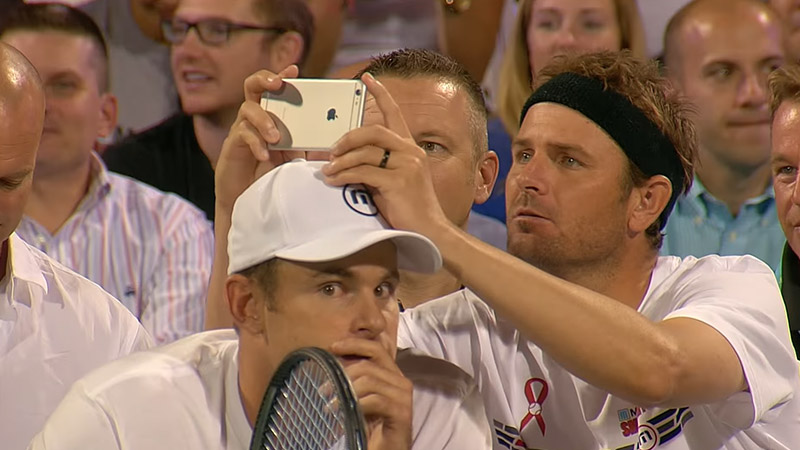
Yes, Mardy Fish and Andy Roddick remain the closest of friends, maintaining a brotherhood that has lasted over thirty years. Their bond is widely recognized as one of the most genuine and enduring relationships in professional sports.
From teenage roommates living under a strict military household to fierce Top-10 rivals on the ATP Tour, their connection has never wavered.
Today, they continue to support each other through podcast collaborations, social media banter, and mental health advocacy.
Whether roasting each other over celebrity golf or discussing the pressures of pro tennis, their friendship is stronger than ever before.
How the Mardy Fish and Andy Roddick Brotherhood Began
The origin story of this legendary duo is as humble as it is disciplined, rooted in a shared childhood that provided the foundation for their lifelong connection.
Long before they were household names, they were simply two kids trying to make it in a grueling individual sport.
The 1999 Move and Life Under the Roddick Roof
In 1999, a teenage Mardy Fish made the life-changing decision to move to Florida to train, eventually settling into the Roddick family home. At the time, Andy’s brother, John Roddick, was a top collegiate player, and the environment was hyper-competitive.
Fish lived with Andy’s parents, Blanch and Jerry Roddick, in a household defined by order and hard work. Jerry Roddick, a military veteran, instituted a strict regimen that included 5:00 AM wake-up calls for stretching and training.
While Fish was described as a “laid-back beach kid,” he adapted to the disciplined lifestyle that would eventually propel both boys to the top of the tennis world.
High School Legends at Boca Prep International
During their time living together, Fish and Roddick were far from just tennis specialists; they were elite multi-sport athletes.
They attended Boca Prep International School, where they were simultaneously stars of both the varsity tennis and varsity basketball teams.
This period allowed them to bond outside the tennis court, fostering a team-oriented mindset that is often rare in the lonely world of professional tennis.
Their shared history as classmates and teammates created a level of trust that survived the transition into the professional ranks.
The Accidental Invention of the “Tantrum Serve”
One of the most legendary anecdotes from their youth is the birth of Roddick’s signature lightning-fast serve. Roddick credits Fish with the “origin” of this weapon during a high school practice match where Fish was consistently beating him.
Frustrated by the score, Roddick had a minor “tantrum” and decided to slap the ball as hard as possible with a shortened motion.
Surprisingly, the ball flew over the net at an incredible speed. This accidental adjustment, born out of a practice session with his best friend, became the most feared serve of the 2000s era.
Did the Intense Professional Rivalry Create Any Friction?
In a sport where top players are often isolated and friendships are rare, the professional rivalry between Roddick and Fish was an anomaly. They were forced to compete for the same titles, rankings, and prize money for over a decade.
| Category | Andy Roddick | Mardy Fish |
|---|---|---|
| ATP Singles Titles | 32 | 6 |
| Career High Ranking | World No. 1 | World No. 7 |
| Grand Slam Titles | 1 (US Open 2003) | 0 |
| Head-to-Head Record | 9 Wins | 2 Wins |
| Significant Matches | 2003 Cincinnati Final | 2007 Australian Open QF |
Navigating the ATP Tour as Top-10 Competitors
Despite being best friends, they turned professional and directly competed at the highest echelons of the ATP Tour. They played each other 11 times in official singles matches, with Roddick leading their head-to-head record 9–2.
Major clashes occurred on the biggest stages, including the final of the 2003 Cincinnati Masters and the quarterfinals of the 2007 Australian Open.
Throughout these high-stakes encounters, the two managed to maintain their personal bond, never allowing on-court competition to bleed into their off-court brotherhood.
The Psychological Toll of the “Shadow Factor”
For a significant portion of his career, Fish was often overshadowed by Roddick’s immense success and status as the World No. 1.
Fish later admitted that the internal pressure to match the achievements of his former roommate contributed heavily to his inner anxieties.
Being the “second best” American behind your best friend can be a psychological burden, but Fish’s admiration for Roddick eventually outweighed any professional jealousy.
He famously stated that if icons like Roger Federer or Rafael Nadal hadn’t been active, Roddick could have easily won up to eight Grand Slam titles.
The Era of the Big Three and Shared Struggles
Both players had to navigate their careers during the most difficult era in tennis history, dominated by Federer, Nadal, and Djokovic. Fans and commentators often note that being a professional tennis player is exceptionally tough, especially when you are a brilliant player in your own right but surrounded by three of the greatest to ever play the game.
This shared experience of “chasing” the elite legends helped Roddick and Fish bond even closer, as they were among the few who truly understood the physical and mental toll required to stay at the top during that period.
Facing the Storm: Roddick as the Ultimate Support System
The true test of their friendship came not during a match, but during Fish’s well-documented struggle with mental health toward the end of his career.
The 2012 US Open and the Breaking Point
In 2012, Mardy Fish reached a breaking point during the US Open. Suffering from severe, paralyzing panic attacks, Fish was scheduled to play a massive fourth-round match against Roger Federer.
Unable to take the court, Fish withdrew from the tournament. Roddick was one of the first people Fish leaned on during this crisis.
Recognizing the severity of the situation, Roddick acted as a protective shield, helping Fish navigate the immediate media scrutiny and ensuring he had the privacy needed to address his health.
Mental Health Advocacy and the Netflix Documentary
Their shared journey through Fish’s recovery was brought to the global stage in the Netflix documentary Untold: Breaking Point. Roddick took a central role in the film, providing deep insight into their relationship and the pressures of the tour.
The documentary is widely praised for its focus on mental health, helping to de-stigmatize these challenges for male athletes across all sports.
By participating so openly, Roddick helped validate Fish’s experience, proving that even the toughest competitors need support.
Challenging the Stigma of Male Vulnerability in Sport
The friendship between these two men has become a case study in male vulnerability and emotional intelligence in professional sports. By being open about their bond and the help they provided each other, they have influenced the next generation of players.
Their willingness to discuss the loneliness and severe mental toll of the tennis tour has set a new standard for how athletes interact with one another off the court.
Where Are Mardy Fish and Andy Roddick Now?
Post-retirement life has not slowed down the interaction between these two legends. If anything, their relationship has become more public as they embrace modern media.
The Roasts, the Golf, and “Big Timing”
Today, their friendship is frequently visible through highly public, sarcastic banter on social media platforms like X (formerly Twitter).
Roddick regularly roasts Fish for “big timing” him now that Fish has found significant success on the celebrity golf circuit, often playing alongside superstars like Stephen Curry.
This playful ribbing is a hallmark of their dynamic, showing that despite their professional achievements, they still treat each other like the teenage roommates they once were.
Reunited on the Served Media Platform
Fish recently appeared as a special guest on Andy Roddick’s podcast, Served with Andy Roddick. The episode featured a raw, unfiltered conversation about their decades-long brotherhood, the pressures of professional rankings, and the transition into life after the tour.
These public collaborations provide fans with a rare, behind-the-scenes look at the level of trust and mutual respect that defines their connection. It is an “unfiltered” look at two friends who have seen it all.
A Final On-Court Farewell
In a touching gesture that solidified their legacy, Roddick briefly came out of retirement in 2015. His goal was specific: he wanted to play doubles with Fish at the Atlanta Open so they could share the court one final time before Fish officially retired from the sport.
Although a previous attempt to play together at the 2014 US Open was blocked by administrative hurdles, the 2015 Atlanta appearance served as the perfect closing chapter to their competitive lives.
Common Questions About the Roddick-Fish Bond
When did Mardy Fish move into Andy Roddick’s house?
Fish moved into the Roddick family home in 1999 to train and attend school in Florida.
What documentary features their friendship?
The Netflix documentary Untold: Breaking Point focuses on Mardy Fish’s mental health journey and his relationship with Roddick.
Did they ever play on the same team?
Yes, they played on the varsity basketball and tennis teams together at Boca Prep International.
Did Roddick help Fish during his panic attacks?
Absolutely. Roddick was a primary pillar of support during Fish’s 2012 health crisis, helping him navigate the aftermath of his withdrawal from the US Open.
Are they involved in any charity work together?
Both players have aligned on social initiatives, including publicly joining Athlete Ally to combat homophobia and promote inclusion in professional sports.
Conclusion: A Legacy Beyond the Baseline
The enduring connection between Andy Roddick and Mardy Fish represents far more than just Grand Slam titles or record-breaking serves. It stands as a powerful testament to a genuine brotherhood that successfully weathered the intense pressures of professional fame and a decade of high-stakes rivalry.
Their journey, which began in a disciplined military household and transitioned into the elite levels of the ATP Tour, highlights a bond that never faltered despite competing against one another eleven times as Top-10 professionals.
Perhaps most significantly, their relationship provided a critical safety net during Fish’s battle with severe anxiety and panic attacks, with Roddick acting as a primary pillar of support and a vocal advocate for mental health.
By sharing their story through modern media and deeply personal documentaries, they have helped dismantle the stigma surrounding vulnerability for male athletes.
Ultimately, their thirty-year history serves as an inspiring example for the tennis community, proving that even in the solitary world of individual sports, true friends ensure you never have to walk alone.