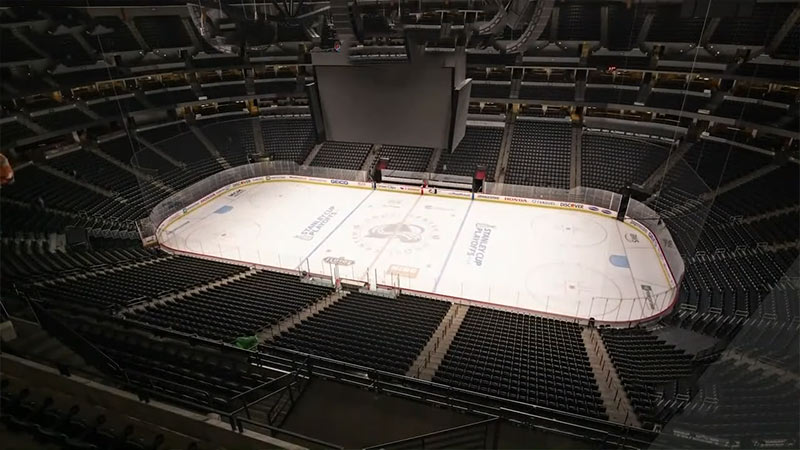
Attending a live hockey game offers an electric atmosphere defined by rapid on-ice execution, powerful physical plays, and an energetic crowd.
However, first-time attendees and seasoned fans alike often confront a fundamental question before stepping into the building: how cold is it inside a hockey stadium?
The straightforward answer is yes—hockey arenas are deliberately kept cool. However, the exact temperature experience varies significantly depending on venue architecture, crowd size, geographic location, and seating elevation.
To understand the environment inside a modern ice facility, one must first recognize that the primary operational objective of the venue engineering team is ice preservation.
The playing surface must remain solid, slick, and structurally sound throughout sixty minutes of high-impact play.
Achieving this level of surface integrity requires precise thermal regulation, creating a unique microclimate inside the building.
Arena Temperature Metrics: Quantifying the Cold
When entering a major professional venue—such as an NHL stadium—spectators experience a climate that is strictly managed by industrial heating, ventilation, and air conditioning systems.
On average, spectator seating areas in professional arenas are maintained at temperatures ranging from 50°F to 65°F (10°C to 18°C).
While this climate is far warmer than an outdoor winter environment, it remains cool enough that remaining stationary for several hours can lead to discomfort without proper clothing.
To maintain playing conditions, the ice surface itself is chilled down to 24°F to 26°F (-4°C to -3°C). This sub-freezing benchmark ensures that the ice retains its hardness.
Soft or slushy ice drastically degrades puck movement, reduces skating velocity, and introduces dangerous hazards for players.
Consequently, the ambient air directly above the rink must be continually cooled to prevent thermal transfer from warming the frozen surface.
| Arena Area | Temperature Range | Thermal Characteristics |
|---|---|---|
| Upper Deck / Nosebleeds | 60°F–65°F | Warmer zone as warm air rises |
| Main Concourse | 55°F–60°F | Moderate temperature zone |
| Glass-Side / Lower Bowl | 40°F–50°F | Colder zone near the ice |
| Ice Surface | 24°F–26°F | Below-freezing surface temperature |
Specific Venue Climate Averages
The specific ambient temperature can fluctuate noticeably depending on the individual stadium’s design and operational parameters. Below are key baseline spectator climate averages across major professional arenas:
- Madison Square Garden (New York, NY): Maintains a target temperature of 65°F (18°C) in general seating areas.
- TD Garden (Boston, MA): Operates at an average spectator temperature of approximately 60°F (15°C).
- Bell Centre (Montreal, QC): Maintains an ambient spectator climate near 58°F (14°C).
- Little Caesars Arena (Detroit, MI): Operates around 56°F (13°C).
- Rogers Place (Edmonton, AB): Maintains an average climate of 55°F (13°C).
Elevation and Microclimates: Glass-Side vs. Upper Deck
Temperature within an arena is not uniform; it is governed by thermal stratification and physical proximity to the cooling source. Spectators sitting close to the action experience a markedly different climate than those seated high above the ice.
- Glass-Side and Lower Bowl Seating: Fans in the first few rows near the glass reside in the coldest microclimate within the venue. Because cold air is denser than warm air, it settles near the ice bed. Combined with radiant cooling extending directly off the 24°F ice sheet, lower-bowl temperatures often drop to between 40°F and 50°F (4°C to 10°C). Sitting glass-side requires heavier attire to offset this proximity effect.
- Upper Deck and Nosebleed Seating: Conversely, fans occupying seats in the upper levels encounter warmer conditions. As heat generated by the crowd rises toward the rafters, the ambient temperature in upper sections trends toward the higher end of the spectrum, often reaching 60°F to 65°F (15°C to 18°C). Spectators here frequently feel comfortable in moderate layers.
Professional Arenas vs. Local Community Rinks
It is important to differentiate major multi-use professional arenas from local youth or community rinks. Professional facilities benefit from sophisticated climate-control technology, heavy insulation, and multi-zone heating systems that buffer spectators from extreme cold.
In contrast, local community or recreational rinks feature significantly less thermal regulation. These smaller venues lack high-capacity climate systems, and their structural insulation is often minimal.
Spectator stands in youth rinks frequently hover between 34°F and 43°F (1°C to 8°C). Additionally, smaller crowd sizes fail to generate sufficient ambient body heat, making community rinks feel substantially colder than major professional venues.
The Science of Arena Thermodynamics & Climate Control
Managing the climate of a professional stadium housing up to 20,000 people over an ice surface is an ongoing engineering challenge.
Venue operators must continuously balance three key thermodynamic variables: human heat loads, air circulation patterns, and atmospheric humidity.
The Human Radiator Effect
An empty arena prior to doors opening is notably colder than during game action. A full crowd introduces thousands of individuals acting as continuous heat sources. This collective thermal output warms the upper air volume of the stadium.
To counteract this rising heat and maintain the integrity of the ice surface below, facility engineering systems must run high-capacity air conditioning units throughout the event.
The Dehumidification Requirement
While managing temperature is critical, controlling humidity represents an even greater operational challenge.
When thousands of fans enter a stadium, their respiration—along with outdoor air entering through concourse entry points—introduces significant moisture into the facility.
High ambient humidity coming into contact with an ice surface causes condensation, creating a layer of moisture or frost on top of the ice. This moisture softens the surface and ruins its consistency.
To combat this, stadium HVAC systems prioritize heavy dehumidification. In extracting atmospheric moisture, these systems run cooling cycles that lower the felt air temperature inside the seating bowl.
The Sunbelt Regional Paradox
A fascinating phenomenon occurs when comparing hockey venues in northern climates to those in warmer southern regions. Intuitively, one might assume that arenas in warm locations—such as Florida, North Carolina, or Arizona—would feel warmer inside. In practice, the opposite is often true.
In southern climates, outdoor heat and high humidity force venue managers to run air conditioning and dehumidification systems at maximum capacity to maintain stable ice conditions.
As a result, attendees in Sunbelt venues frequently report feeling colder inside the arena than fans attending games in northern cities, where ambient outdoor humidity is lower during the winter months.
The Complete Fan Preparation & Layering Guide
Navigating an arena climate comfortably requires a strategic approach to clothing. Because seating positions and personal thermal tolerances vary, adopting a dynamic three-layer clothing strategy provides maximum flexibility throughout the game.
Layer 1: The Moisture-Wicking Base Layer
The foundation of your arena wardrobe must focus on temperature regulation.
- Recommended Materials: Synthetic blends (such as polyester or polypropylene) or fine merino wool long-sleeve tops. These fabrics pull moisture away from the skin, preventing chill.
- What to Avoid: Cotton long-sleeve shirts. Cotton absorbs moisture from body heat and retains it, leading to a lingering chill in a cool room.
Layer 2: The Insulating Mid-Layer
The middle layer provides primary thermal insulation.
- Recommended Garments: Heavy fleece pullovers, knit sweaters, hooded sweatshirts, or authentic hockey jerseys.
- Pro-Tip: A team jersey worn over a heavy hoodie represents both a classic aesthetic and an effective thermal buffer against stadium air.
Layer 3: The Protective Outer Layer
An outer layer acts as a shield against cold airflow generated by arena cooling systems.
- Recommended Outerwear: Light-to-medium jackets, insulated softshells, or down vests.
- Design Feature: Opt for full-zip jackets rather than pullover styles. A full zip allows you to open or close your outer garment easily as arena temperatures shift or when moving between the chilly seating bowl and warmer concourses.
Lower Body Apparel & Footwear Selection
Cold air naturally settles near floor level, meaning exposed or under-insulated legs and feet will feel cold quickly.
- Pants: Full-length denim jeans, fleece-lined trousers, or thermal leggings are recommended. Shorts should be strictly avoided regardless of outdoor weather conditions.
- Footwear: Wear fully closed-toe footwear. Canvas sneakers, leather boots, or insulated casual shoes paired with thick wool-blend socks will shield your feet from cold concrete floors. Open-toed shoes or sandals should never be worn to an ice event.
Essential Cold-Weather Accessories
For fans seated near the ice or those sensitive to cooler temperatures, key accessories can significantly elevate comfort levels:
- Beanies and Knit Caps: Retain head heat in cooler lower-bowl sections.
- Gloves or Mittens: Compact gloves protect hands while holding cold beverages or sitting near the ice.
- Scarves: Provide neck coverage against cool drafts created by arena air circulation systems.
- Packable Lap Blankets: A compact fleece blanket placed over the knees provides excellent insulation when seated close to the glass.
- Pocket Hand Warmers: Air-activated chemical hand warmers placed in jacket pockets offer immediate warmth throughout the three periods.
In-Game Tactics for Maintaining Comfort
Preparation extends beyond what you wear; how you move and interact during the game impacts your overall warmth.
Leverage Intermission Circulation
A standard professional hockey game consists of three 20-minute periods separated by two intermissions. Remaining seated in one spot for three hours reduces blood circulation, making you feel colder over time. Use intermissions to stand up and walk around the main concourse.
Concourse areas are insulated from direct ice air, offering a warmer climate that restores body heat.
Utilize Thermal Concessions
Strategic concession choices double as personal heating devices. Purchasing hot coffee, tea, or hot chocolate provides internal thermal warmth while giving you a heated vessel to keep your hands warm between periods.
Conclusion
Attending a live hockey game offers one of the most dynamic live experiences in professional sports. While the cool indoor environment is essential for keeping the ice frozen and smooth, it should never diminish your enjoyment of the game.
By understanding arena microclimates, dressing in a flexible three-layer system, choosing appropriate closed-toe footwear, and utilizing smart in-game comfort strategies, you can easily adapt to any venue environment.
Whether you are sitting glass-side at an NHL showcase or supporting a local team in a community rink, proper preparation ensures you stay warm, comfortable, and fully focused on the action on the ice.