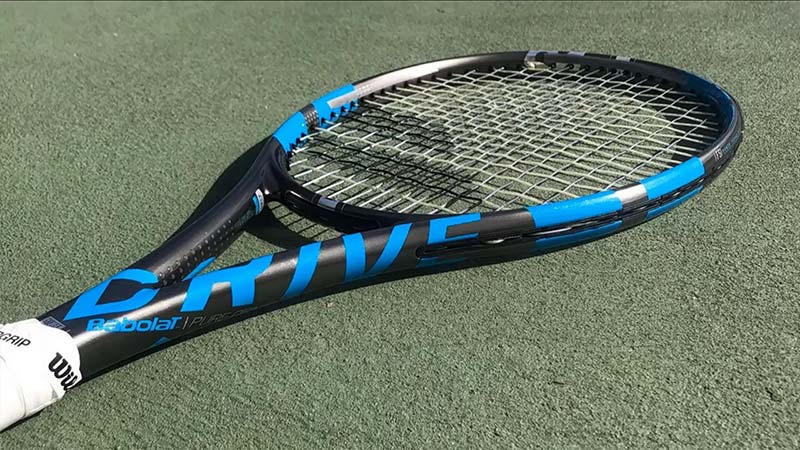
Standing in a sporting goods aisle or browsing a specialized online retailer, the price discrepancies between tennis rackets jarring.
On one rack, you see entry-level frames priced similarly to a modest dinner; on another, professional-grade equipment carries a price tag equivalent to a high-end smartphone.
For the aspiring player or the weekend enthusiast, the central question is clear: Is the premium for an expensive tennis racket a genuine investment in your game, or is it merely a marketing triumph?
The answer is not a simple binary. The value of a high-end frame is intrinsically linked to your frequency of play, your physical condition, and your long-term athletic goals.
While a beginner playing once a month may find a budget-friendly option sufficient, those who commit to the court frequently or struggle with physical discomfort will find that the premium price point is backed by substantial engineering advantages.
The Engineering of Excellence: Material Science in Tennis
The most significant driver of cost in a tennis racket is the material used in its construction. This is the foundation upon which every other performance metric is built.
The Limitations of Aluminum
Entry-level rackets, typically priced between $15 and $50, are almost exclusively manufactured from aluminum. While aluminum is cost-effective and durable for casual use, it possesses several inherent flaws for serious tennis.
Aluminum frames are relatively heavy and lack the structural integrity to withstand high-velocity impacts without microscopic bending.
This flexibility is not a benefit; rather, it results in a frame that “shakes” significantly upon contact with the ball. This vibration is not just a nuisance—it is a performance killer and a physical hazard.
The Graphite Revolution
In contrast, expensive rackets, which generally range from $150 to $300 and upward, utilize advanced graphite or carbon fiber composites.
These materials are the standard for professional athletics because they offer an unparalleled strength-to-weight ratio. A graphite frame is remarkably light, allowing for faster swing speeds, yet it is rigid enough to maintain its shape under the stress of a 100-mph serve.
Crucially, these high-end materials are engineered to “soak up” the shock of the ball, dissipating energy throughout the frame rather than sending it directly into the player’s hand and arm.
Performance Metrics: Power, Control, and the “Feel” of the Game
Beyond the raw materials, the price of a racket dictates the level of precision a player can achieve. This is often described by players as the “feel” of the racket, but it is actually a result of deliberate mechanical design.
Precision and Spin
Cheap rackets often provide a stiff, basic response. Because the frame lacks stability, the ball may fly unpredictably depending on where it hits the string bed.
For a beginner just trying to get the ball over the net, this may go unnoticed. However, as a player develops, they require a racket that allows them to “place” the ball with intentionality.
High-end graphite rackets are designed to facilitate precision and spin. The stability of the carbon fiber allows for a more consistent response across the entire hitting surface.
This means that when you swing for a cross-court winner, the racket behaves exactly as expected.
Furthermore, the engineering of these frames allows for greater “snap-back” of the strings, which is essential for generating the topspin required in the modern game.
Customization for Playing Styles
When you invest in a premium racket, you are not just buying a tool; you are selecting a specialized instrument tailored to your style of play.
Manufacturers offer professional frames in various “specs,” including different head sizes, string patterns, and balance points.
Whether you are a “baseliner” who relies on heavy power or a “net-player” who requires quick maneuverability, the premium market provides a frame that fits your exact playing style.
The Health Implications: Protecting the Kinetic Chain
One of the most overlooked aspects of the racket investment is the long-term impact on the player’s physical health. Tennis is a demanding sport that puts repetitive stress on the wrist, elbow, and shoulder.
The Danger of Vibration
As previously noted, aluminum rackets are prone to significant vibration or “shaking”. When an aluminum frame strikes a tennis ball, that kinetic energy must go somewhere.
Much of it travels directly up the handle and into the player’s arm. Over time, this repetitive shock can lead to chronic conditions, most notably lateral epicondylitis, commonly known as “tennis elbow”.
Investing in Injury Prevention
For players who already experience arm pain or those who play multiple times a week, an expensive racket is a medical necessity rather than a luxury. The shock-absorbing properties of graphite and carbon fiber act as a buffer for your joints.
By dampening the impact, these materials allow players to stay on the court longer and with less recovery time required between sessions.
In this context, the extra $200 spent on a quality racket can be viewed as a way to avoid much higher costs in physical therapy or medical consultations later.
The Strategic Purchase: Finding the “Sweet Spot”
For many players, the choice is not between a $20 grocery-store racket and a $300 professional model. There is a middle ground that offers the best value for the majority of enthusiasts.
The Simple Rule for Beginners
If you are in the early stages of learning the game, you do not need to jump to the most expensive equipment on the market. The nuances of a $300 racket may be lost on someone who is still mastering the basic swing path.
However, starting with a $20 aluminum frame can actually hinder your progress by teaching you to compensate for the racket’s weight and lack of control.
The Mid-Tier Advantage
The recommendation for most serious beginners and intermediate players is to look for a “mid-tier” racket made of graphite.
These frames typically retail between $100 and $150. At this price point, you move away from the heavy, vibrating aluminum frames and into the world of carbon fiber technology.
A $125 graphite racket provides about 80-90% of the performance of a professional model while remaining much more accessible for those who are still committed to improving their game.
Assessing the Long-Term ROI
When evaluating whether an expensive racket is “worth it,” it is helpful to look at the cost per session.
- The Casual Player: If you play twice a year at a local park, a $30 aluminum racket costs you $15 per session in the first year. In this scenario, a $250 racket is an unnecessary expense.
- The Weekly Enthusiast: If you play twice a week (roughly 100 times a year), a $200 graphite racket costs only $2 per session. When you factor in the improved performance, the reduction in arm fatigue, and the fact that a well-cared-for graphite frame can last several years, the investment becomes negligible.
Frequently Asked Questions
Does a more expensive racket automatically make me a better player?
No equipment can replace proper technique and practice. However, a higher-quality racket removes the technical limitations imposed by poor materials.
It provides a consistent platform that allows your natural skills to develop without the “interference” of a vibrating, unstable frame.
At what point should I upgrade my current racket?
You should consider an upgrade if you find yourself playing more than once a week or if you begin to feel a “nagging” pain in your hitting arm.
Additionally, if you feel that your current racket is “fighting” you—meaning you are swinging correctly but the ball is not going where you intended—it is likely time to move to a graphite frame.
Can I just buy a used expensive racket?
Yes, buying a used professional-grade graphite racket can be a great way to get high-end technology at a mid-tier price.
However, be cautious of older frames that may have structural “dead spots” or cracks that are not visible to the naked eye.
Final Verdict: Making the Right Choice for Your Game
The decision to invest in an expensive tennis racket should be based on your personal relationship with the sport.
If your goal is occasional recreation and physical activity, a budget-friendly aluminum frame is a perfectly acceptable tool. It serves the purpose of getting you out on the court without a significant financial commitment.
However, if you are serious about your development, if you value precision and control, or if you want to protect your body from the wear and tear of the sport, the investment in a graphite or carbon fiber racket is undeniably worth it.
By choosing a frame that matches your frequency of play and physical needs—perhaps starting in the $100 to $150 range—you ensure that your equipment is an asset to your game rather than a liability.
Tennis is a game of margins. A few millimeters of accuracy can be the difference between a ball that is “in” or “out.” By investing in the right technology, you give yourself the best possible chance to succeed, stay healthy, and enjoy the game for years to come.