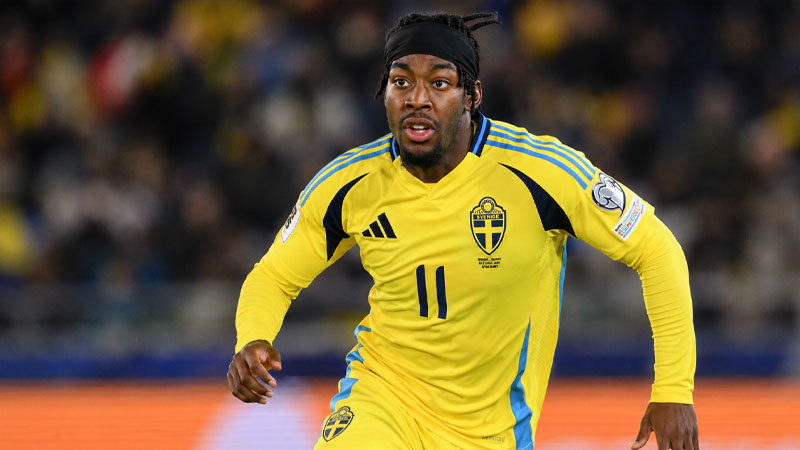
The international career of Anthony Elanga serves as a definitive case study in the complexities of modern footballing identity.
Born to Cameroonian parents in Scandinavia and professionally polished in the prestigious academies of England, Elanga possessed the rare privilege of choosing between three distinct footballing heritages.
Ultimately, his decision to represent Sweden was not merely a matter of administrative convenience but a profound reflection of his personal sense of home.
This choice has since defined his trajectory, allowing him to establish himself as a cornerstone of the Swedish national setup while navigating an elite career in the Premier League.
The Foundations of a Triple-Threat Heritage
Before analyzing the professional motivations behind his international allegiance, one must examine the diverse cultural threads that define Anthony Elanga’s background.
His upbringing was characterized by a blend of European infrastructure and Central African sporting discipline, creating a multifaceted identity that would later spark significant debate among football associations.
The Swedish Birthright and Malmö Upbringing
Born on April 27, 2002, in Malmö, Sweden, Elanga’s connection to the country is foundational. His early years were spent immersed in the Swedish language and culture, providing him with an inherent sense of belonging that would ultimately dictate his senior career.
Growing up in the Swedish football system allowed him to benefit from world-class youth coaching, which shaped his technical abilities as a forward.
The Cameroonian Lineage and Sporting DNA
While his daily environment was Swedish, Elanga’s household was deeply rooted in the traditions of Cameroon.
Both of his parents brought a high level of athletic discipline to his upbringing; his mother, Daniella, had a competitive sports history, while his father, Joseph, was a professional footballer.
This dual citizenship meant that while his technical development was European, his family legacy remained firmly tied to the “Indomitable Lions” of Cameroon.
The English Residency Factor
A pivotal shift occurred when Elanga was 12 years old, as his family relocated to Manchester. This move introduced a third dimension to his eligibility.
By spending his formative teenage years in the United Kingdom and progressing through the Manchester United academy, he eventually qualified for UK residency status.
This phase of his life led to years of speculation regarding whether the Football Association (FA) would attempt to secure his services for England.
The Decision-Making Process: Why Sweden Won
The selection of a national team is a defining moment for any dual-national athlete, often involving immense pressure from various governing bodies.
For Elanga, the choice involved balancing the pull of his birth nation against the legacy of his parents’ homeland and the tactical allure of his adopted home in England.
Identifying with the Swedish Identity
The primary driver behind Elanga’s final selection was a profound, internal sense of home. He has consistently stated in public forums that despite his multicultural background, his identity is unmistakably Swedish.
Having spent the most critical years of his childhood in Malmö, the call of the Swedish national project felt like the realization of a lifelong dream rather than a tactical career move.
Systematic Progression Through Youth Ranks
Consistency played a vital role in cementing his loyalty to Sweden. Unlike many dual-nationals who switch allegiances late in their development, Elanga remained committed to the Swedish system from the beginning.
- Under-17 Level: Established his pace and clinical finishing against international peers.
- Under-19 & Under-21 Levels: Became a focal point of the attack, proving he could translate his club form to the international stage.
- Senior Debut: Once he transitioned to the senior squad, his commitment was finalized, effectively ending any speculation regarding a potential switch.
Navigating Competing Interests: Cameroon and England
Choosing one nation inevitably means declining others. Elanga’s decision required him to navigate the high-stakes world of international recruitment, particularly from a Cameroonian side eager to leverage his family’s prestigious history with the team.
The Emotional Pull of the Indomitable Lions
Cameroon’s pursuit of Elanga was both strategic and sentimental. His father, Joseph Elanga, was a celebrated defender for Cameroon, earning 17 caps and participating in the 1998 FIFA World Cup.
Former Cameroon manager Rigobert Song made several high-profile attempts to convince the young winger to follow in his father’s footsteps.
Despite the deep respect Elanga holds for his heritage, structural differences and his personal bond with Sweden led him to decline these formal approaches.
The Silent Interest from the English FA
While Elanga’s residence in Manchester technically opened the door for England, the path was never as clear as it was for Sweden or Cameroon.
Although scouts tracked his rapid ascent through the Manchester United ranks, the English FA never made a formal, aggressive push for his commitment.
This was largely due to Elanga’s transparent and early communication regarding his absolute dedication to the Swedish national project.
Professional Club Trajectory and its Impact
Anthony Elanga’s club career has served as the ultimate testing ground for his international ambitions. His moves across the Premier League have not only increased his market value but have also refined the tactical skills he brings to the Swedish frontline.
| Period | Football Club | Core Role & Operational Impact |
|---|---|---|
| 2021 – 2023 | Manchester United | Senior breakthrough asset; notable for clutch Champions League performances. |
| 2023 – 2025 | Nottingham Forest | Primary attacking catalyst; registered 11 goals and 20 assists. |
| 2025 – Present | Newcastle United | Marquee £55 million signing; tactical fixture for a high-pressing system. |
Developing at Old Trafford
The foundation of Elanga’s professional game was built at Manchester United. Known for his rapid acceleration and relentless work ethic, he broke into the first team under Ole Gunnar Solskjær and saw increased utility under Ralf Rangnick.
His equalizer against Atlético Madrid in the Champions League remains a standout moment, signaling to the world—and the Swedish national team—that he was ready for high-pressure environments.
Establishing Elite Status at Nottingham Forest
To ensure he remained a regular starter for Sweden, Elanga moved to Nottingham Forest in 2023.
In a counter-attacking system that perfectly complemented his raw speed, he became one of the most productive wingers in the league, delivering 31 goal involvements over two seasons.
This period of his career was essential for his international development, as it provided the match sharpness required for major tournaments.
The Generational Milestone: A Father-Son Legacy
A unique aspect of Anthony Elanga’s nationality story is how it connects two different eras of football history. His journey represents a full circle for the Elanga family, albeit under two different flags.
Mirroring the World Cup Journey of Joseph Elanga
The family achieved a historic milestone when Anthony took the field for a World Cup tournament, exactly 28 years after his father, Joseph, represented Cameroon at France ’98.
This achievement is a testament to the family’s enduring sporting excellence, marking a rare instance where a father and son have competed in the world’s most prestigious tournament for different continents.
Leadership in the New Swedish Generation
Today, Elanga is viewed as a leader within a highly athletic and dynamic generation of Swedish talent.
Alongside other stars like Alexander Isak and Viktor Gyökeres, he forms a formidable attacking trio designed to keep Sweden competitive on the global stage for the next decade.
His experience in the high-intensity English Premier League provides him with a tactical edge that is invaluable to Sweden’s modern setups.
Technical Eligibility and Frequently Asked Questions
Can he still switch to Cameroon?
No. Under current FIFA rules, because Elanga has played multiple competitive senior matches—including World Cup fixtures and European Championship qualifiers—he is permanently “cap-tied” to Sweden.
What languages does he speak?
Elanga is a true polyglot. He is fluent in Swedish and English and possesses a strong understanding of French and the local dialects spoken by his parents.
Did he ever represent England?
No. Despite his eligibility through residency, Elanga never appeared for England at any youth or senior level, choosing instead to progress exclusively through the Swedish ranks.
How did his family react to his choice?
While there was early sentiment for him to choose Cameroon, his father and mother have fully supported his decision, recognizing that Sweden’s development system was the bedrock of his success.
The Future of a Global Icon
Anthony Elanga’s journey is a powerful narrative of how heritage and home can coexist in the modern athlete. By choosing Sweden, he honored his own personal journey while still paying tribute to his Cameroonian roots through his professional excellence.
As he continues his career at Newcastle United and as a mainstay for the Swedish national team, he remains a symbol of the successful integration of multicultural identities in world football.
His story encourages a broader understanding of nationality—one that is defined by where a person grows, dreams, and ultimately chooses to belong.