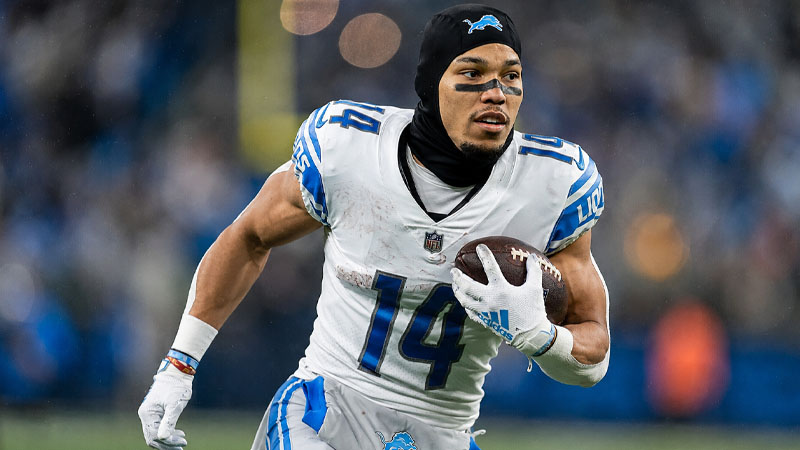
The landscape of professional football underwent a tectonic shift on April 24, 2024, when the Detroit Lions finalized a landmark four-year extension for wide receiver Amon-Ra St. Brown.
This agreement, valued at $120.01 million, represents more than just a financial milestone for a former fourth-round draft pick; it serves as a definitive statement on the organizational philosophy of the Detroit franchise and the evolving economics of the wide receiver market.
The Architecture of an Elite Agreement
In the modern era of professional sports, the total value of a contract often dominates the headlines, yet the underlying structure provides the true narrative of a team’s commitment.
The St. Brown extension is a masterclass in balancing immediate player liquidity with long-term cap flexibility. The following table provides a granular breakdown of the primary financial pillars supporting this deal.
| Financial Metric | Contract Value |
|---|---|
| Total Contract Value | $120,010,000 |
| Average Annual Salary | $30,002,500 |
| Total Guaranteed Money | $77,000,000 |
| Signing Bonus (Immediate) | $16,500,000 |
| Free Agency Year | 2029 (Unrestricted) |
This $120.01 million commitment ensures that St. Brown remains the cornerstone of the Detroit passing attack through the 2028 season.
By securing an average annual salary of $30.00 million, St. Brown has effectively vaulted into the highest echelon of offensive earners, reflecting his status as a premier “volume-plus-efficiency” threat in the league.
Strategic Roster Management and Financial Milestones
The decision to execute this deal in April 2024 was a calculated move by the Lions’ front office.
By finalizing the extension before the subsequent explosion of the wide receiver market, Detroit managed to lock in a core asset while maintaining a competitive edge in salary cap management.
Key Structural Components of the Deal:
- Duration and Security: The extension adds four years of team control, keeping the player in Detroit through his physical prime.
- The Power of Guarantees: The $77 million in total guarantees provides the player with massive financial security while signaling the team’s belief in his long-term durability.
- Liquid Capital: The $16.5 million signing bonus provides immediate cash flow for the player while allowing the team to spread the cap hit over the life of the agreement.
- Unrestricted Agency: By the time St. Brown reaches unrestricted free agency in 2029, he will have completed eight seasons of professional service, potentially positioning himself for another significant contract during his age-30 season.
The 2026 Fiscal Peak: A Deep Dive into Cap Dynamics
While the contract begins with manageable figures, the 2026 season represents the most significant financial hurdle for the Detroit Lions’ front office. This “peak year” is when the base salary and prorated bonuses converge to create a substantial impact on the team’s available resources.
In 2026, St. Brown’s base salary climbs to $27,500,000. When combined with the necessary bonuses and incentives, his total cap hit for the season reaches $33,110,000.
This figure is particularly noteworthy because it represents a high percentage of the projected salary cap for that year, requiring the team to have a roster largely composed of affordable, rookie-contract talent to maintain balance.
Furthermore, the 2026 season carries a dead cap value of $51,617,000. In professional football terms, “dead cap” refers to the money a team must account for if a player is released or traded.
A figure exceeding $51 million serves as a functional “no-cut” clause, effectively guaranteeing that St. Brown will remain a central fixture of the roster through at least the end of that season.
To ensure peak physical readiness, the contract also includes a $100,000 workout bonus for the 2026 cycle, incentivizing participation in the team’s official off-season programs.
The Cultural Impact of the “Sun God” Extension
Beyond the spreadsheets and cap tables, this contract serves a vital role in the cultural revitalization of the Detroit Lions.
Amon-Ra St. Brown, often referred to by his nickname “The Sun God,” has become the personification of the team’s “grit” philosophy.
Rewarding a player who was famously selected 112th overall in the draft sends a powerful message to the rest of the locker room: Detroit is a destination where performance and work ethic are met with elite-level compensation.
Why This Extension Matters for the Franchise:
- Market Setting: By establishing a $30 million annual average, Detroit has set the floor for future negotiations with other internal stars.
- Offensive Continuity: Quarterbacks thrive on chemistry; by securing St. Brown through 2028, the Lions ensure their passing game has a consistent “WR1” who understands the nuances of the scheme.
- Brand Identity: St. Brown is a fan favorite whose jersey sales and community presence bolster the franchise’s commercial appeal.
Analyzing the Wide Receiver Market Context
To understand the magnitude of $120.01 million, one must look at the broader landscape of the league.
In recent years, the premium placed on pass-catchers has skyrocketed, rivaling the compensation previously reserved only for elite quarterbacks and left tackles.
The St. Brown deal was part of a wave of extensions that redefined the market. By reaching the $30 million per year threshold, St. Brown joined an exclusive club of receivers whose impact is deemed essential to their team’s championship aspirations.
This contract represents a shift toward “guaranteed-heavy” structures, as evidenced by the $77 million floor established in this agreement.
Technical Breakdown: Salary Cap Implications
The following list outlines the specific financial obligations the Lions have committed to for the 2026 season, which serves as the most critical year for the contract’s accounting:
- Yearly Base Salary (2026): $27,500,000
- Condition-Based Bonus: $100,000 Workout Bonus
- Aggregated Cap Impact: $33,110,000
- Organizational Liability: $51,617,000 Dead Cap
These figures illustrate the high stakes of modern roster construction. While the 2026 cap hit is high, the Lions have likely structured the deal with the expectation that the league-wide salary cap will continue to rise, mitigating the overall percentage of the hit.
Frequently Asked Questions: The St. Brown Extension
When does Amon-Ra St. Brown’s new contract expire?
The extension runs through the 2028 season, meaning he will be under contract for five more seasons following the 2023 campaign. He is scheduled to become an unrestricted free agent in 2029.
How much of the $120 million is actually guaranteed?
Of the total $120,010,000 value, $77,000,000 is fully guaranteed. This ensures that even in the event of injury or a change in roster status, the player is protected for more than 60% of the contract’s total face value.
What is the significance of the $16.5 million signing bonus?
The signing bonus is paid upfront but is prorated over the life of the contract (up to five years) for salary cap purposes. This allows the Lions to give St. Brown immediate wealth while keeping his early-year cap hits lower than they would be otherwise.
Why is the 2026 “Dead Cap” so high?
The $51,617,000 dead cap figure in 2026 is a result of the high base salary ($27.5M) and the remaining unamortized portions of his signing bonus. It acts as a safety net for the player, making it financially prohibitive for the team to move on from him during that specific year.
The Path Forward: 2024 to 2029
As the Detroit Lions transition from a rebuilding phase to a perennial contender, the St. Brown extension will be viewed as a foundational moment
. The team has successfully navigated the complexities of the salary cap to retain a generational talent while providing that talent with the security of a $120 million agreement.
For the player, the path is clear: maintain the elite production that led to this historic payday. For the team, the challenge lies in managing the rest of the roster around the $33 million cap hit that looms in 2026.
However, given St. Brown’s trajectory and his importance to the Detroit community, most analysts agree that this is a price worth paying.
In the high-stakes world of professional sports, the “Sun God” has found his permanent home, and the Detroit Lions have found their leading light for the foreseeable future.