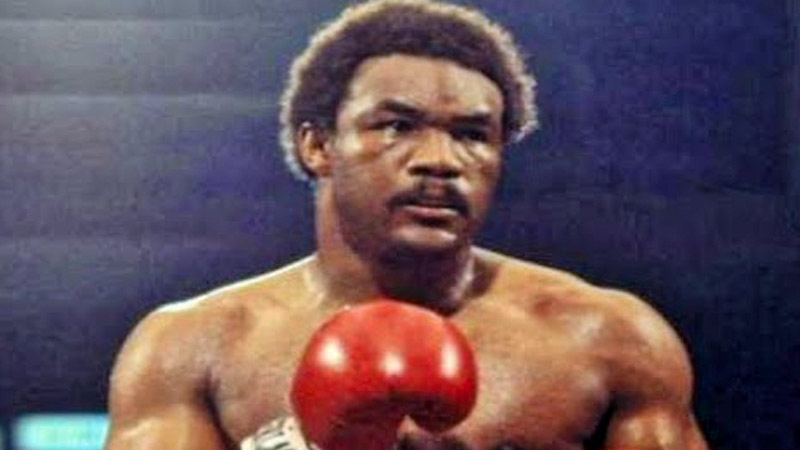
For decades, the name George Foreman has been synonymous with strength, resilience, and an infectious smile that could light up a room as easily as his punches could knock out a heavyweight contender.
Whether you knew him as the terrifying powerhouse of the 1970s, the jovial champion of the 1990s, or the man behind the world’s most famous indoor grill, George Foreman was a constant in the cultural landscape. Recently, however, many fans have been asking a somber question: Is George Foreman still alive?
It is with a heavy heart that we look back at the life of this icon, as the sources indicate that George Foreman passed away at the age of 76 on March 21, 2025.
He died peacefully, surrounded by his loved ones, leaving behind a legacy that transcends the world of sports and enters the realm of American folklore.
In this post, we will explore the incredible journey of “Big George,” from the streets of Houston to the pinnacle of boxing and business, celebrating the man who taught the world that it is never too late for a second act.
The Passing of a Giant
The news of George Foreman’s death on March 21, 2025, marked the end of an era. Known affectionately to the world as “Big George,” he was 76 years old at the time of his passing.
While the loss of such a vibrant figure is profound, there is comfort in knowing that he spent his final moments in peace, flanked by the family he cherished so deeply.
Foreman was more than just an athlete; he was a two-time world heavyweight champion and an Olympic gold medalist whose career spanned eras and inspired millions.
But beyond the ring, he was a revolutionary entrepreneur, forever changing the way we think about athlete endorsements and healthy eating through the creation of the George Foreman Grill.
The Making of a Champion: From Houston to Mexico City
The story of George Foreman began long before the world knew his name. Born in Marshall, Texas, and raised in the Fifth Ward of Houston, Foreman’s early life was defined by struggle.
He often described himself as a troubled youth who found a way out through the Lyndon B. Johnson Job Corps. It was there that he discovered boxing, a discovery that would set him on a path toward global stardom.
His ascent was meteoric. At the 1968 Summer Olympics in Mexico City, Foreman captured the world’s attention. He wasn’t just a powerful fighter; he was a symbol.
After winning the gold medal, Foreman famously walked around the ring carrying a small American flag, a moment that became one of the most iconic images in Olympic history.
The First Reign: The Powerhouse Era
In the early 1970s, George Foreman was arguably the most feared man in boxing. His punching power was legendary, often described as having the force of a wrecking ball.
In 1973, he faced the undefeated Joe Frazier in Kingston, Jamaica. In what remains one of the most dominant displays in heavyweight history, Foreman knocked Frazier down six times in two rounds to become the World Heavyweight Champion for the first time.
His reign was characterized by terrifying efficiency, but it eventually led to the “Rumble in the Jungle” in 1974. Facing Muhammad Ali in Zaire, Foreman was the heavy favorite.
However, Ali’s “rope-a-dope” strategy exhausted the younger champion, leading to a stunning knockout victory for Ali. This defeat would eventually lead Foreman down a path of soul-searching that changed his life forever.
A Spiritual Transformation and the Ten-Year Hiatus
Following a loss to Jimmy Young in 1977, Foreman had a life-altering experience in his dressing room. He spoke of a religious awakening that led him to retire from boxing immediately.
For the next decade, “Big George” stepped away from the spotlight. He became an ordained minister and dedicated his life to his family and his church in Houston.
He also founded the George Foreman Youth and Community Center, providing a safe haven for kids in the same neighborhood where he grew up.
During this time, the fearsome scowl of his youth was replaced by the warm, charismatic persona that would define the second half of his life.
The Miracle Comeback: Defying the Odds
Perhaps the most inspiring chapter of George Foreman’s life began in 1987. At the age of 38, an age when most boxers are long retired, Foreman announced a comeback. Many in the media treated it as a joke, but Foreman had a mission: he wanted to raise money for his youth center and prove that age was just a number.
Over the next several years, he fought his way back up the rankings, sporting a new look—a shaved head and a friendly smile—and a new philosophy.
The “miracle” culminated in 1994 when, at 45 years old, Foreman faced Michael Moorer for the heavyweight title.
Wearing the same red trunks he wore when he lost to Ali twenty years earlier, Foreman landed a devastating right hand in the 10th round, reclaiming the title and becoming the oldest heavyweight champion in history.
An Entrepreneurial Icon: The George Foreman Grill
While his boxing comeback was legendary, George Foreman’s second act as an entrepreneur was equally impactful. In the mid-1990s, he partnered with Salton, Inc. to promote a lean-mean fat-reducing grilling machine.
The George Foreman Grill became a global phenomenon. Foreman’s “everyman” appeal and his genuine enthusiasm for the product made him one of the most successful pitchmen in history.
It wasn’t just a gadget; it was a cultural touchstone. The grill sold over 100 million units worldwide, and Foreman eventually sold the naming rights for a staggering sum, proving that his business acumen was as sharp as his jab.
A Legacy of Family and Faith
Beyond the titles and the grills, George Foreman was a man of deep convictions. He was famously a father to twelve children, including five sons all named George.
He often joked that he named them all George so that they would always have something in common—and so he’d never forget their names.
The sources remind us that when he passed away on March 21, 2025, he did so surrounded by this very family.
His transition from a man of anger to a man of peace and ministry remains one of the most profound character arcs in the history of public figures. He didn’t just change his career; he changed his soul.
Conclusion: Remembering Big George
Is George Foreman still alive? While he is no longer with us in body, having passed away in March 2025 at the age of 76, his spirit remains ubiquitous.
We see it in every young boxer who believes they can overcome a loss; we see it in every entrepreneur who thinks outside the box; and yes, we see it in millions of kitchens across the globe.
George Foreman taught us that failures (like the Rumble in the Jungle) do not define us. He taught us that we can reinvent ourselves at any age. Most importantly, he taught us that a “Big” heart is just as important as “Big” muscles.
Rest in peace, Champ. Your legacy will never be knocked out.