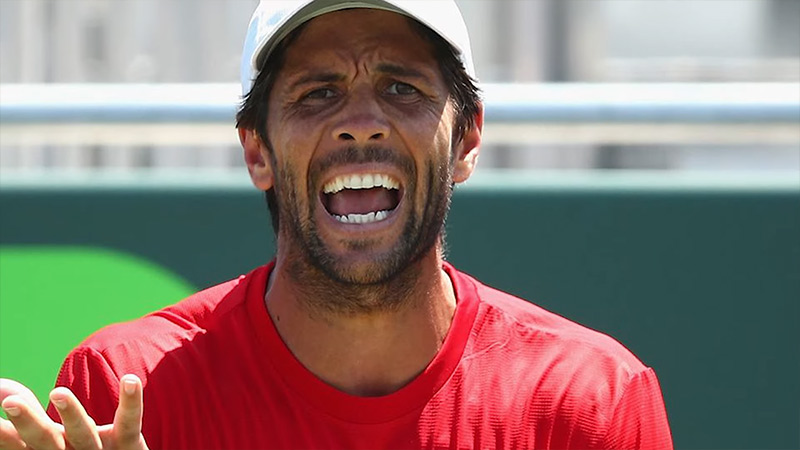
Fernando Verdasco is not playing professional tennis because he officially retired in February 2025 at the age of 41. Following a distinguished 25-year career on the ATP Tour, the former World No. 7 concluded his journey at the Qatar ExxonMobil Open in Doha.
His departure followed a significant 17-month hiatus from competitive play, driven by the cumulative physical toll of decades at the elite level and a declining world ranking.
Verdasco’s final appearance featured a high-profile doubles partnership with Novak Djokovic, marking the definitive end of one of tennis’s most resilient and powerful left-handed legacies.
Why Did Fernando Verdasco Decide to Retire in 2025?
The decision for Fernando Verdasco to step away from professional competition was not an overnight development but rather the culmination of a long-term transition.
At 41 years old, Verdasco had reached a stage where the rigorous demands of the ATP Tour were no longer sustainable for his body.
After two and a half decades of high-intensity play, he recognized that his ability to compete at the elite level had naturally diminished, leading to his formal announcement in early 2025.
The Natural Transition of an Elite Athlete
For a player who spent 25 years on the tour, the transition to retirement is often a matter of physical reality. Verdasco expressed that the “time had come” to move on to the next chapter of his life, signaling that he was at peace with leaving the active draw.
His choice to retire was characterized as a natural progression rather than a sudden reaction to a single event, reflecting a mature assessment of his current capabilities and the state of his professional career.
The Physical Toll of Professional Longevity
The longevity of Verdasco’s career is remarkable, yet it came with a significant cost. Years of competing in grueling matches—most notably his legendary five-hour battles—placed immense stress on his joints and muscles.
By 2025, the accumulation of past injuries to his leg, knee, and elbow had made the daily requirements of training and competing professionally a monumental challenge, ultimately making retirement the most logical path forward.
The 17-Month Competitive Absence Explained
One of the primary reasons fans were asking why Verdasco was not playing during late 2023 and throughout 2024 was a “silent” hiatus from the sport. Between September 2023 and February 2025, Verdasco did not enter a single professional draw.
This 17-month period served as a precursor to his official retirement, as he navigated the final stages of his career without the fanfare of a farewell tour during the majority of that time.
A Silent Departure from the Active Draw
This extended absence began after his final matches in September 2023. During this time, Verdasco faced practical difficulties in maintaining a steady tournament schedule.
He did not make an official announcement regarding his status for over a year, leaving many to speculate about his future while he privately weighed his options and allowed his body to rest after years of wear and tear.
Rankings and the Difficulty of Maintaining a Tour Schedule
As Verdasco aged, his world ranking began to decline sharply, making it increasingly difficult to gain direct entry into the prestigious tournaments he had frequented for decades.
This “steep decline” in ranking meant he would often have to compete in qualifying draws or lower-level Challenger events, a significant shift for a former World No. 7.
The logistical and physical effort required to rebuild his ranking at age 40 was a major factor in his decision to remain on the sidelines until his official farewell.
Physical Challenges: A Timeline of Career-Altering Injuries
The final years of Verdasco’s career were heavily impacted by a series of significant physical setbacks that required medical intervention and long recovery periods. These injuries are summarized in the table below:
| Injury Type | Date Range | Cause and Treatment | Impact on Play |
|---|---|---|---|
| Right Leg Bone Bruise | Oct 2019 – Aug 2020 | Severe bruise suffered in Vienna; treated with PRP therapy and physical therapy. | 9 months of interrupted recovery and extreme pain. |
| Knee and Elbow Surgeries | Nov 2020 – Mar 2021 | Surgeries to clean out long-standing joint issues. | 4 months out; ranking dropped out of top 100 for the first time since 2004. |
| Natural Wear-and-Tear | 2023 – 2025 | Cumulative impact of 25 years on the professional tour. | Led to 17-month absence and ultimate retirement. |
The Role of the 2022 ADHD Medication Suspension
Beyond physical injuries, Verdasco’s absence from the tour in late 2022 was due to a brief administrative hurdle that complicated the final stage of his career.
This incident involved a violation of anti-doping protocols, though it was determined to be entirely unintentional. The situation highlighted the rigorous administrative requirements elite athletes must manage alongside their physical training.
Administrative Errors and the TUE Process
Verdasco, who was medically diagnosed with ADHD, had been using methylphenidate as part of his prescribed treatment. However, he failed to renew his Therapeutic Use Exemption (TUE) paperwork in a timely manner.
When he tested positive for the substance, it triggered an automatic review by the International Tennis Integrity Agency (ITIA), which confirmed that the presence of the medication was for legitimate medical reasons rather than performance enhancement.
The ITIA Ruling and Competitive Impact
Because the mistake was administrative rather than an attempt to cheat, the ITIA reduced what could have been a two-year ban to a two-month suspension. This suspension lasted from November 2022 until January 8, 2023.
While the physical impact was negligible, the suspension disrupted his momentum and added to the challenges of maintaining a high ranking during the twilight of his career.
A Historic Farewell: The Final Match in Doha
Verdasco did not want to leave the sport quietly. He chose the 2025 Qatar ExxonMobil Open as the stage for his final professional appearance, a tournament where he had experienced success in the past.
To make the occasion truly special, he opted to compete exclusively in the doubles draw, allowing him to focus on the celebratory aspect of his departure.
Partnering with a Legend: The Djokovic Connection
In a move that captured the attention of the sports world, Verdasco accepted a wildcard to play doubles alongside his long-time friend and legendary rival, Novak Djokovic. This partnership was a tribute to their mutual respect and shared history on the tour.
For Verdasco, sharing the court with one of the greatest players of all time provided a fitting bookend to a 25-year journey.
The Quarterfinal Finish and Emotional Exit
The pair won their opening round match, demonstrating that Verdasco still possessed the skill and power that defined his career. However, on February 19, 2025, they were defeated in the quarterfinals by Henry Patten and Harri Heliovaara.
This match served as the absolute conclusion of Verdasco’s professional playing days, leaving him with 559 career singles wins and a legacy of immense resilience.
Reflecting on the Legacy of a Spanish Tennis Icon
Fernando Verdasco leaves the sport as one of the most successful Spanish players of his generation. His game was defined by a massive left-handed forehand and an aggressive style that could challenge any opponent on any surface.
Beyond his individual accolades, he was a cornerstone of Spanish national pride for over two decades.
Statistical Greatness: Titles and Match Wins
Verdasco’s trophy cabinet is a testament to his consistency and skill across both singles and doubles formats. He earned 15 total tour-level titles, consisting of 7 in singles and 8 in doubles.
His career-high ranking of World No. 7, achieved in 2009, placed him among the elite tier of players during one of the most competitive eras in the history of the sport. Additionally, his three Davis Cup titles with Spain cemented his status as a national hero.
The 2009 Australian Open Semifinal Masterpiece
While titles are important, Verdasco is perhaps most famous for a match he did not win. His 2009 Australian Open semifinal against Rafael Nadal remains etched in tennis history.
Lasting 5 hours and 14 minutes, the match was a display of extraordinary shot-making and physical endurance.
It is widely considered one of the greatest matches ever played, perfectly capturing the “powerful and resilient” spirit that defined Verdasco’s entire career.
Frequently Asked Questions Regarding Verdasco’s Career
When did Fernando Verdasco officially retire?
He officially retired on February 19, 2025, following his final match in Doha.
What was his highest ranking?
Verdasco reached a career-high of World No. 7 in 2009.
Who was his last professional doubles partner?
He played his final tournament with Novak Djokovic.
How many Davis Cup titles did he win?
He won three Davis Cup titles representing Spain.
Why was he suspended in 2022?
He received a two-month administrative suspension for forgetting to renew his TUE paperwork for ADHD medication.
How long was his final hiatus before retirement?
He was away from competitive play for 17 months, from September 2023 to February 2025.
Conclusion: Transitioning Beyond the ATP Tour
The retirement of Fernando Verdasco marks the end of a significant chapter in modern tennis. For 25 years, he was a constant presence, known for his formidable left-handed game and his ability to push the world’s best players to their absolute limits.
While injuries and the natural progression of age eventually forced him to stop playing, his final match in Doha provided the closure that such a storied career deserved.
As he moves into life outside of active competition, Verdasco leaves behind a legacy of 559 wins, multiple titles, and some of the most memorable moments in the history of the Grand Slams.