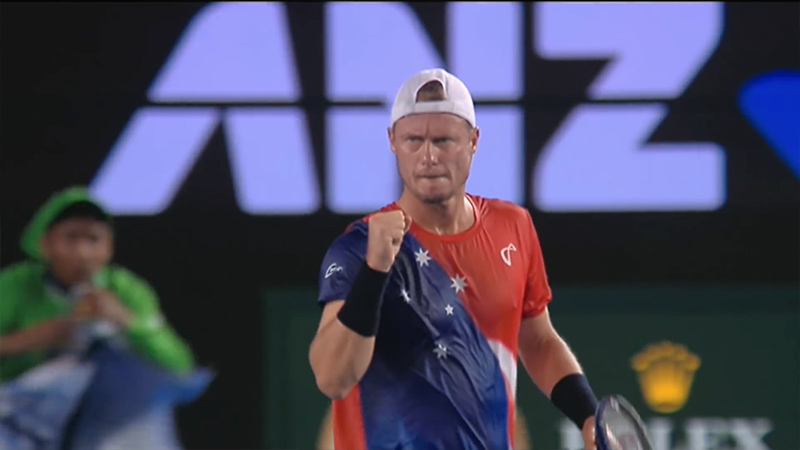
Lleyton Hewitt was indeed the World No. 1 in men’s singles tennis, holding the top spot for a total of 80 weeks. He first ascended to the peak of the ATP rankings on November 19, 2001, at just 20 years and 268 days old.
At that time, this milestone established him as the youngest male player in history to achieve the world number one ranking—a record he held for over two decades.
His era was defined by incredible consistency, two Grand Slam titles, and back-to-back year-end No. 1 finishes in 2001 and 2002.
How Many Weeks Was Lleyton Hewitt World Number 1?
To understand the magnitude of Hewitt’s dominance, one must look at the sheer duration of his stay at the top.
Hewitt occupied the World No. 1 position for 80 total weeks, placing him among an elite group of athletes who managed to maintain the highest level of performance across multiple seasons.
This tenure was not merely a brief stay; it represented a period where the Australian was the definitive force in the men’s game, acting as the focal point for the entire ATP tour at the turn of the millennium.
Breaking Down the Two Distinct Stints
Hewitt’s 80-week reign was divided into two specific periods. The first was his most dominant stretch, lasting 75 consecutive weeks from November 19, 2001, until April 27, 2003.
During this time, his presence at the top of the rankings was virtually unchallenged as he racked up points across all surfaces.
This long-term consistency is a testament to his physical conditioning and mental toughness, which allowed him to endure the rigors of the tour without a significant dip in form.
The Return to the Top in 2003
After a brief interruption, Hewitt reclaimed the throne for a second stint. This period lasted for 5 weeks, spanning from May 12, 2003, to June 15, 2003.
Although shorter than his initial run, this return to the top proved that he still possessed the competitive edge to fight back against a new wave of challengers and established veterans.
These final five weeks brought his career total to the landmark 80-week figure, cementing his legacy in the history books.
The Historic Milestone: Youngest Male Player at the Top
One of the most significant aspects of Hewitt’s journey to the top was the speed with which he achieved it. By becoming World No. 1 at the age of 20 years and 268 days, he shattered previous expectations of when a player should reach their physical and mental peak.
This achievement signaled a shift in the sport, where younger athletes began to believe they could dominate seasoned professionals through superior movement and relentless baseline aggression.
Setting a Record That Stood for 20 Years
Hewitt’s record as the youngest World No. 1 was so formidable that it remained unbroken for more than two decades. From 2001 until 2022, every rising star in the game was measured against Hewitt’s precocious rise.
It was not until the emergence of Carlos Alcaraz in 2022 that this particular piece of history was updated, further highlighting just how remarkable Hewitt’s early-career trajectory truly was.
Comparing the 2001 Era to Today’s Landscape
When Hewitt reached the top in 2001, the game was in a state of flux. The dominant serve-and-volley style of the 1990s was beginning to fade, and Hewitt was at the forefront of the new baseline-centric era.
His ability to hit passing shots and return powerful serves with interest made him a nightmare for the older generation of players. His youth was his greatest asset, providing him with the recovery speed necessary to outlast opponents in grueling five-set matches.
Key Titles That Propelled Hewitt to the ATP Peak
The ranking system rewards not just participation, but victory at the highest level. Hewitt’s climb to and maintenance of the No. 1 spot was backed by a collection of the sport’s most prestigious trophies.
| Tournament | Year | Achievement During No. 1 Era | Key Opponent Defeated |
|---|---|---|---|
| US Open | 2001 | Won first Grand Slam singles title | Pete Sampras |
| Masters Cup | 2001 | Won year-end championship to clinch No. 1 | N/A |
| Wimbledon | 2002 | Won second Grand Slam singles title | David Nalbandian |
| Masters Cup | 2002 | Defended year-end championship crown | Juan Carlos Ferrero |
Analyzing the Tactical Evolution: Speed and Counter-Punching
Hewitt did not possess the towering serve of a Pete Sampras or the raw power of some of his successors. Instead, he relied on a tactical approach often referred to as “counter-punching”.
This style involved using an opponent’s pace against them, combined with an almost supernatural ability to track down balls that would be winners against almost any other player.
Redefining Baseline Defense in Men’s Tennis
Before Hewitt, many baseline players were seen as defensive specialists who waited for errors. Hewitt changed this perception by being an “aggressive” counter-puncher.
His baseline speed allowed him to turn defensive situations into offensive ones in a single stroke. By consistently hitting deep, accurate shots, he forced his opponents into uncomfortable positions, eventually breaking their rhythm and their will.
Navigating the Transition Between Tennis Generations
Hewitt’s reign is often described as occurring during a “transition era”. He was the bridge between the legendary dominance of Pete Sampras and Andre Agassi and the subsequent rise of the “Big Three”—Roger Federer, Rafael Nadal, and Novak Djokovic.
During this window, Hewitt’s style was the gold standard. He proved that consistency and speed could overcome the pure power and variety that had dominated the 1990s, setting the stage for the modern baseline game we see today.
The Battle for the Top: Rivals and Ranking Shifts
The World No. 1 ranking is never a static achievement; it is a position that must be constantly defended against a field of hungry competitors. Hewitt’s time at the top involved high-stakes battles with some of the greatest names in the sport’s history.
Dethroning the Clay-Court King Gustavo Kuerten
Hewitt’s first ascent to the top required him to overtake Brazil’s Gustavo Kuerten. Kuerten was a formidable No. 1, particularly dominant on clay, but Hewitt’s all-surface consistency eventually allowed him to pull ahead in the points race by November 2001.
This transition marked the beginning of Hewitt’s long stint at the top and signaled that the Australian was ready to lead the tour into a new century.
The Final Stretches Against Andre Agassi
As Hewitt’s reign neared its conclusion, his primary rival for the top spot was the legendary Andre Agassi. The two traded the No. 1 ranking during the spring of 2003.
Agassi briefly unseated Hewitt in April, only for Hewitt to reclaim the spot for five final weeks in May and June. Ultimately, Agassi permanently took over the top position on June 16, 2003, bringing an end to Hewitt’s 80-week tenure.
Frequently Asked Questions (FAQ)
What made Lleyton Hewitt such a successful World No. 1?
His success was built on exceptional consistency across all playing surfaces and a relentless competitive spirit.
Unlike specialists who thrived on only one surface, Hewitt’s counter-punching style was effective on the grass of Wimbledon, the hard courts of the US Open, and the indoor carpets of the Masters Cup.
How many Grand Slams did Hewitt win while chasing or holding the No. 1 ranking?
He won two Grand Slam singles titles during his peak: the 2001 US Open and the 2002 Wimbledon championships. These victories provided the massive influx of points necessary to secure and hold the top spot against legends like Pete Sampras and Andre Agassi.
Did Lleyton Hewitt finish the year as World No. 1?
Yes, Hewitt achieved the prestigious Year-End World No. 1 ranking for two consecutive seasons in 2001 and 2002.
This is often considered a higher achievement than simply reaching No. 1, as it requires maintaining the top position through the very last tournament of the calendar year.
Conclusion: The Legacy of Hewitt’s Number 1 Status
The 80-week reign of Lleyton Hewitt stands as a pivotal chapter in the history of professional tennis.
By becoming the youngest World No. 1 of his time and defending that position for over a year and a half, he proved that grit, speed, and tactical intelligence could conquer the world stage.
His back-to-back year-end No. 1 finishes and his two Grand Slam titles highlight a period of dominance that redirected the evolution of the sport.
While other legends have since surpassed his total weeks at the top, Hewitt’s impact as a “bridge” between eras remains undeniable.
He didn’t just hold the ranking; he redefined what it meant to be a modern baseline warrior, leaving a blueprint that many of today’s champions still follow.