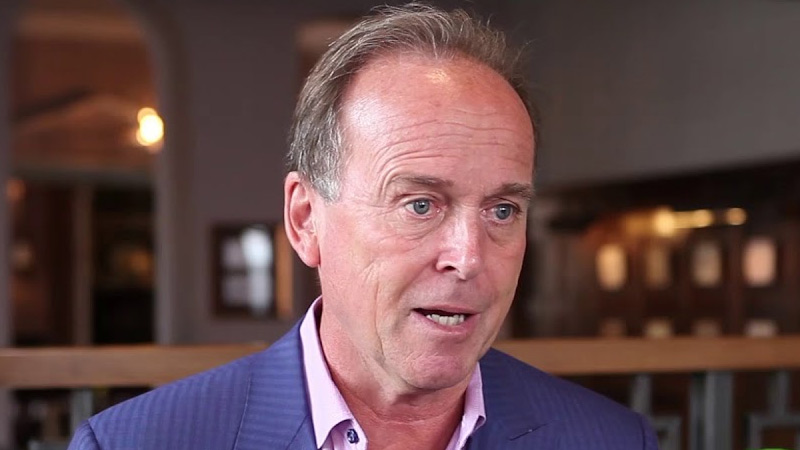
John Lloyd recently made headlines by announcing his retirement from his long-standing role as a BBC Wimbledon commentator in July 2026.
The 71-year-old former British No. 1 shared the news live on air during the men’s doubles final, marking the end of nearly three decades in broadcasting.
While his departure signals a significant shift in sports media, Lloyd’s legacy extends far beyond the commentary booth.
From his 1977 Australian Open final appearance to his high-profile marriage and resilient battle with prostate cancer, Lloyd remains a definitive, respected figure in the world of professional tennis.
Why Did John Lloyd Retire from the BBC?
The announcement of John Lloyd’s retirement was as unexpected as it was significant for the landscape of British tennis coverage.
After serving as a core fixture of the BBC’s summer programming for nearly thirty years, his exit represents the conclusion of an era that defined the “conversational” style of sports analysis.
Lloyd’s decision to step away was not a sudden impulse but a calculated move designed to coincide with a broader transformation within the network’s broadcasting team.
The Live Announcement on Centre Court
The news broke during the BBC’s coverage of the Wimbledon Championships in July 2026. Right after the conclusion of the men’s doubles final on Centre Court, Lloyd’s co-commentator, Todd Woodbridge, shared the surprise announcement live on air.
Although the public was caught off guard, Lloyd later revealed to the media that he had actually made the firm decision to retire back in January.
His original intention was to have a “quiet exit” without grand gestures or public fuss, but the magnitude of his contribution to the sport made a silent departure nearly impossible.
A Strategic Shift in Sports Media
Lloyd’s departure is part of a significant “changing of the guard” at the BBC, which has recently seen the exits of other veteran analysts like Andrew Castle and Jo Durie.
Beyond simple personnel changes, Lloyd noted a fundamental shift in how tennis is presented to modern audiences. He observed that the industry is moving heavily toward data analytics and intense statistical breakdowns.
For a broadcaster who built his reputation on storytelling and a conversational approach, this pivot toward cold data felt like the natural time to pass the torch to a new generation of analysts.
A Comprehensive Look at John Lloyd’s Professional Career
Before he was known as the “voice” of Wimbledon, John Lloyd was one of the most successful tennis players Britain had ever produced.
His career, which spanned from 1973 to 1986, was characterized by high-stakes matches and a mastery of the doubles format that few could rival.
He was a consistent presence in the upper echelons of the sport, representing the pinnacle of British achievement during the late 1970s and mid-1980s.
| Milestone | Achievement and Context |
|---|---|
| Grand Slam Singles Peak | Reached the Australian Open singles final in 1977, finishing as runner-up. |
| Mixed Doubles Titles | Won 3 Grand Slam titles with Wendy Turnbull (Wimbledon ’83, ’84; French Open ’82). |
| Global Ranking High | Achieved a world singles ranking of No. 21 in 1978. |
| UK National Ranking | Held the official British No. 1 ranking in both 1984 and 1985. |
| Final Professional Match | Officially retired after a first-round defeat at Wimbledon in 1986. |
Reaching the Summit of Singles Tennis
Lloyd’s finest individual hour remains his run at the 1977 Australian Open. Reaching a Grand Slam final is an achievement few players ever realize, and though he finished as the runner-up to Vitas Gerulaitis, it cemented his status as a world-class competitor.
During this era, he was known for his tactical intelligence on the court. He successfully translated this success into the British rankings, where he held the No. 1 spot for two consecutive years in the mid-1980s, a period when British tennis was looking for a hero to lead the charge.
Dominance in the Mixed Doubles Arena
While his singles career was impressive, Lloyd was a formidable force in the doubles circuit. Alongside his partner Wendy Turnbull, he became one of the most feared mixed doubles players in the world.
Together, they secured three Grand Slam titles, including back-to-back victories at Wimbledon in 1983 and 1984, and a French Open title in 1982.
These victories demonstrated his versatility and ability to perform under the immense pressure of a home crowd on Centre Court.
Personal Trials and the Impact of Public Life
The personal life of John Lloyd was often as much a topic of public interest as his tennis matches. Being thrust into the global spotlight through a high-profile marriage brought both glamour and intense scrutiny.
Navigating the intersection of a professional sports career and a celebrity personal life presented unique challenges that Lloyd has discussed candidly in recent years, particularly in his autobiography.
Navigating the Spotlight with Chris Evert
In 1979, Lloyd married American world No. 1 Chris Evert, creating what the media dubbed tennis’s “golden couple”. However, the intense scrutiny that followed had a tangible impact on his professional life.
As his ranking dipped following the marriage, some sections of the press began to refer to him as “Mr. Evert,” a characterization he admitted took a psychological toll on his confidence and focus.
American sports media was particularly harsh, sometimes labeling his singles career as “mediocre” when compared to Evert’s legendary status.
Resilience Through Personal Loss and Recovery
Lloyd’s personal journey has been marked by significant resilience. His first marriage to Evert ended in 1987, and he later married Deborah Taylor-Bellman, with whom he shared 30 years and two children.
This second marriage also ended in divorce in 2017, a year that proved to be one of the most challenging of his life. In his 2022 book, Dear John, he opened up about his son’s severe struggle with addiction.
The emotional weight of these family hardships, coupled with the end of a long-term marriage, required a level of mental fortitude that matched his performance on the court.
What Are John Lloyd’s Major Health Battles?
John Lloyd’s story is also one of survival. His health journey serves as a powerful reminder of the importance of proactive medical care.
By sharing his personal medical history, Lloyd has transitioned into an advocate, using his platform to influence men’s health awareness on a global scale.
Surviving Cancer and Promoting Awareness
In 2017, a routine medical check led to a life-altering discovery. Having moved to Florida following his first divorce, a decision he credits with inadvertently saving his life, Lloyd was diagnosed with prostate cancer.
The diagnosis was caught early enough for successful major surgery. Today, he is in full remission and has become an active supporter of Prostate Cancer UK.
He frequently uses his public appearances to urge men to undergo regular annual checks, transforming his private battle into a public mission to save others.
The Emotional Toll of Professional Retirement
Interestingly, Lloyd’s retirement from playing professional tennis in 1986 was not due to a catastrophic physical injury. Unlike many of his peers who were forced out by failing knees or backs, Lloyd’s exit was entirely emotional and psychological.
He officially stepped away after a tearful press conference at Wimbledon following a first-round loss.
This highlights the immense mental pressure professional athletes face and underscores why Lloyd has remained such a relatable and empathetic voice in the commentary booth for so many years.
Leadership Roles and Coaching the Greats
John Lloyd’s expertise was not confined to his own playing days. Following his retirement from the professional tour, he transitioned into leadership and coaching roles where he could impart his deep understanding of the game to the next generation and even to established legends of the sport.
Leading the British Davis Cup Team
Lloyd’s commitment to British tennis was most evident during his tenure as the captain of the Great Britain Davis Cup team from 2006 to 2010. His leadership period was a time of transition for the team, and he faced intense public pressure throughout his captaincy.
The role ultimately ended in a difficult resignation in March 2010. This decision followed a disappointing 3-2 defeat to Lithuania, a loss that pushed the British team toward relegation to the tournament’s lowest tier.
Despite the challenging end, his dedication to the national team remains a key part of his professional legacy.
Mentoring World-Class Tennis Greats
Beyond team leadership, Lloyd briefly ventured into the world of high-level individual coaching. In the early 1990s, he stepped into a coaching capacity for two of the most iconic names in tennis history: Björn Borg and Tracy Austin.
Both legends were attempting comebacks at the time, and they turned to Lloyd for his tactical insights and experience.
While these coaching stints were relatively brief, they speak volumes about the respect he commanded among his peers as one of the sharpest minds in the game.
The Evolution of John Lloyd’s Media Career
Transitioning from the court to the microphone is a common path for athletes, but few have done it with the longevity and grace of John Lloyd.
His career in the media spanned several major networks and decades of technological change in how sports are consumed.
From HBO to the BBC
Lloyd’s high-profile commentary career actually began in the United States. In 1993, following the passing of the legendary Arthur Ashe, Lloyd was tapped by HBO to join their broadcasting team.
He also spent time covering events for Sky Sports before becoming an indispensable part of the BBC’s summer tennis programming.
For nearly 30 years, he was a staple of the coverage for both the Queen’s Club Championships and Wimbledon, providing a bridge between the classic era of tennis and the modern game.
A Legacy of Conversational Commentary
What set Lloyd apart in the booth was his ability to make viewers feel like they were watching the match with a knowledgeable friend.
He favored a conversational style that focused on the psychology of the players and the flow of the match rather than just the numbers on the screen.
As the industry shifted toward heavy data, Lloyd stayed true to his roots, providing context and emotional depth that algorithms simply cannot replicate. His retirement marks a significant loss for viewers who valued the human element of sports broadcasting.
Frequently Asked Questions About John Lloyd
When did John Lloyd officially retire?
John Lloyd announced his retirement from BBC commentary in July 2026. He had previously retired from professional tennis as a player in 1986 and stepped down as Davis Cup captain in 2010.
What is John Lloyd doing now?
Following his 2026 retirement from broadcasting, Lloyd remains a vocal advocate for prostate cancer awareness, working closely with Prostate Cancer UK.
He is also an author, having released his autobiography Dear John in 2022, and remains a passionate supporter of the Wolverhampton Wanderers football club.
How many Grand Slams did John Lloyd win?
While he did not win a Grand Slam singles title (reaching the final in 1977), Lloyd won three Grand Slam mixed doubles titles: Wimbledon in 1983 and 1984, and the French Open in 1982.
Is John Lloyd still involved in tennis?
While he has retired from active broadcasting and captaincy, his influence remains through his advocacy and his storied history as a player and coach for legends like Björn Borg.
Conclusion: The Enduring Impact of a Tennis Icon
John Lloyd’s journey from a UK No. 1 player to a beloved broadcaster is a testament to his adaptability and enduring passion for tennis.
While his surprise retirement from the BBC in 2026 marks the end of his time in the commentary booth, his legacy is firmly etched into the history of the sport.
He navigated the pressures of fame, survived significant health battles, and mentored some of the greatest players to ever pick up a racket.
As the world of tennis broadcasting moves into a more data-driven future, Lloyd’s conversational and deeply human approach will be remembered as the gold standard for sports analysis.
His story is not just one of athletic success, but of personal resilience and a lifelong commitment to the game he loves.