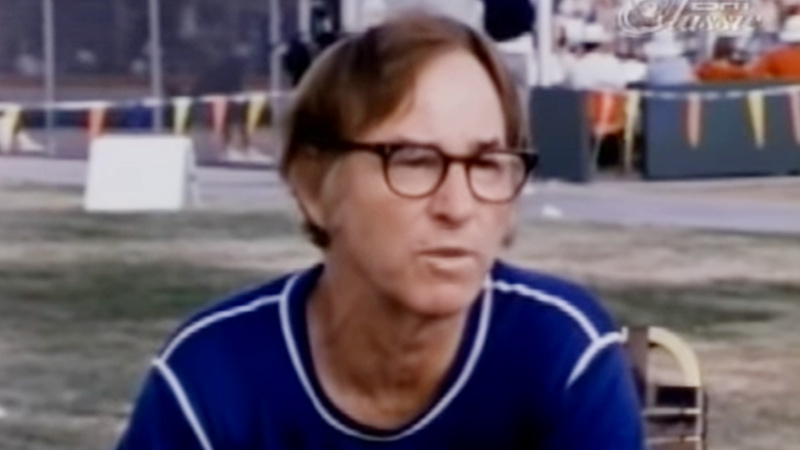
Bobby Riggs, a former World No. 1 and tennis provocateur, died on October 25, 1995, at the age of 77. He passed away at his home in Leucadia, California, following a courageous eight-year battle with prostate cancer.
While often remembered for his theatrical 1973 “Battle of the Sexes” loss to Billie Jean King, his later years were defined by a successful career as a casino ambassador in Las Vegas, a reconciliation with his second wife, and a deep, lasting friendship with King herself.
His legacy endures through his Hall of Fame career and his namesake tennis museum.
The Passing of a Tennis Legend
The world of sports lost one of its most colorful and skilled characters when Bobby Riggs succumbed to his illness in 1995.
His final years were a testament to his resilience and the complex nature of his personal life, far removed from the “male chauvinist pig” persona he famously inhabited during the 1970s.
Battling Prostate Cancer in California
Bobby Riggs was diagnosed with prostate cancer in 1987, beginning a difficult eight-year struggle with the disease. Despite the diagnosis, he remained active in the tennis community and continued to manage his public image with his trademark charisma.
He chose to spend his final years in Leucadia, California, a coastal community that provided a peaceful backdrop for his final match against the illness.
This period of his life was marked by a significant shift from the spotlight toward private reflection and reconciliation with those closest to him.
Family Reconciliation and Final Care
During his battle with cancer, Riggs experienced a profound personal transformation. He had divorced his second wife, Priscilla Wheelan, shortly before his 1973 media heights. However, as his health declined, the two reconciled and remarried.
Priscilla played a pivotal role in his twilight years, nursing him through the final, challenging stages of his illness until his death. This reconciliation highlights a softer side of the man often viewed only through the lens of his public stunts and aggressive gambling.
A Definitive Timeline of Bobby Riggs’ Life and Career
To understand what happened to Bobby Riggs, one must examine the trajectory from his early dominance to his final days. The following table provides a comprehensive overview of his milestones and achievements.
| Era / Year | Phase / Milestone | Core Details & Achievements |
|---|---|---|
| 1918 | Birth | Born Robert Larimore Riggs on February 25 in Los Angeles, California. |
| 1930s | Amateur Dominance | Won the U.S. National Junior Championship at 17; helped win the 1938 Davis Cup. |
| 1939 | World No. 1 | Won the Wimbledon Triple Crown and U.S. National Championships; ranked World No. 1 amateur. |
| 1941–1949 | Professional Peak | Turned pro in 1941; served in the U.S. Navy; ranked World No. 1 professional in 1946, 1947, and 1949. |
| 1950s–1960s | The Hustler Era | Focused on tennis promotion and high-stakes gambling on golf and tennis matches. |
| 1967 | Hall of Fame | Inducted into the International Tennis Hall of Fame for his elite career achievements. |
| May 1973 | Mother’s Day Massacre | Defeated World No. 1 Margaret Court (6-2, 6-1) at age 55 to fuel his chauvinist persona. |
| Sept 1973 | Battle of the Sexes | Lost to Billie Jean King in straight sets in front of a global audience of 90 million. |
| 1987 | Cancer Diagnosis | Diagnosed with prostate cancer, beginning his eight-year health battle. |
| 1995 | Death | Passed away on October 25 at age 77 in Leucadia, California. |
What Did Bobby Riggs Do After the Battle of the Sexes?
After his high-profile defeat in 1973, Bobby Riggs did not retreat from the public eye. Instead, he transitioned into a new chapter of his life that capitalized on his fame while allowing him to indulge in the activities he loved most, particularly gambling and promotion.
The Las Vegas Casino Years
Riggs eventually relocated to Las Vegas, a city that perfectly matched his high-energy personality and love for wagering. He found a professional home at a prominent casino, where he worked as a tennis host and celebrity greeter.
In this role, he was a fixture on the courts, playing exhibition matches with guests and serving as a corporate promoter. This position allowed him to remain a public figure while enjoying the fast-paced lifestyle of the Nevada desert.
A Lifelong Passion for Gambling
Las Vegas provided the ultimate playground for Riggs to continue his lifelong obsession with sports betting. Even as he aged, he was notorious for placing bets on nearly any athletic competition, ranging from golf matches to high-stakes tennis sets.
His role at the casino enabled this passion, keeping him connected to the world of betting that had defined much of his earlier “hustler” era. For Riggs, the thrill of the wager was as much a part of his identity as his backhand.
The Unlikely Bond with Billie Jean King
Perhaps the most surprising aspect of Bobby Riggs’ later life was his evolving relationship with his former rival, Billie Jean King.
While the 1973 match was built on a foundation of theatrical conflict and gender-based taunting, the reality behind the scenes was much different.
From Public Rivals to Close Friends
Despite his “male chauvinist pig” persona, Riggs and King developed a genuine and deep friendship that lasted for more than two decades.
They moved past the televised spectacle of their rivalry to build a bond based on mutual respect and their shared history as elite athletes.
King has often noted that the theatricality of their match was largely a promotional tool, and the two found common ground in their passion for the sport of tennis.
Their Final Conversation
The strength of their bond was most evident at the end of Riggs’ life. Billie Jean King visited him on his deathbed, just a night before he passed away. During this final visit, they reflected on the impact of their 1973 match.
Riggs famously told her, “We really did change things that day, didn’t we?”. This moment of shared reflection cemented their legacy, acknowledging that their match had significantly accelerated the drive for equality and prize-money parity in women’s sports.
Investigating the Match-Fixing Rumors
Even decades after the “Battle of the Sexes,” rumors have persisted regarding the legitimacy of the outcome. These theories often focus on Riggs’ well-known gambling habits and potential external pressures.
Claims of Mafia Involvement
A persistent rumor suggests that Riggs deliberately threw the match against Billie Jean King to settle massive gambling debts owed to the Mafia.
These theories gained renewed attention following a 2013 investigative report that highlighted a witness who claimed to have overheard mob figures planning a fix for the match.
Proponents of this theory point to Riggs’ unexpected straight-sets loss as evidence that he was not playing at his full potential.
Consistent Denials and Defense
Despite the longevity of these rumors, they have been steadfastly rejected by those who knew Riggs best. His family, close associates, and even Billie Jean King herself have always maintained that the match was fair.
They argue that Riggs was simply outplayed by a younger, better-prepared opponent who took the match more seriously than he did. To his supporters, the idea of a fix diminishes the legitimate athletic achievement of King and the unpredictable nature of sports.
The Enduring Legacy of an Elite Champion
Bobby Riggs left behind a legacy that is often overshadowed by his showmanship. However, his historical standing as a world-class athlete remains unquestioned by tennis historians and those who track the sport’s development.
Hall of Fame Recognition
Riggs was more than just a hustler; he was one of the greatest players of his generation. He amassed a staggering career record of 534 wins against only 93 losses, according to historical data.
His induction into the International Tennis Hall of Fame in 1967 serves as a permanent reminder of his dominance in the 1930s and 1940s, including his legendary 1939 Wimbledon Triple Crown where he won the Singles, Doubles, and Mixed Doubles titles.
The Bobby Riggs Tennis Museum Foundation
Shortly before his death, Riggs took steps to ensure his history was preserved by establishing the Bobby Riggs Tennis Museum Foundation in Encinitas, California.
The foundation serves two primary purposes: preserving tennis artifacts and memorabilia from his storied career and actively raising awareness for prostate cancer.
Through this organization, Riggs’ name continues to be associated not just with the spectacle of 1973, but with the preservation of the sport’s history and the fight against the disease that took his life.
Frequently Asked Questions About Bobby Riggs
How old was Bobby Riggs when he died?
Bobby Riggs was 77 years old at the time of his passing on October 25, 1995.
What was the cause of death for Bobby Riggs?
He died following an eight-year battle with prostate cancer, which was originally diagnosed in 1987.
Where did Bobby Riggs live in his final years?
He lived in Leucadia, California, a community where he eventually passed away at home.
Did Bobby Riggs and Billie Jean King stay friends?
Yes, they developed a very close friendship that lasted the rest of his life, with King visiting him the night before he died.
What was Bobby Riggs’ career record?
Historically, he is credited with an elite record of 534 wins and 93 losses.
Was the “Battle of the Sexes” match fixed?
While rumors of Mafia involvement have circulated for years, his family and Billie Jean King have always denied these claims, stating he simply lost to a better player.