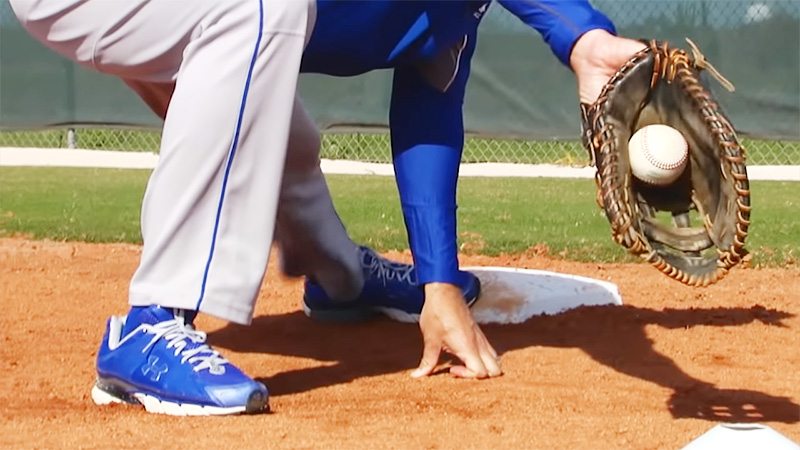
First base is the first canvas bag a batter must touch counterclockwise on the infield diamond to score a run in baseball. Physically located on the right side of the infield, it serves as a critical focal point for both offense and defense.
Offensively, hitters aim to reach the bag safely through hits, walks, or errors. Defensively, the first baseman (position #3) acts as the defensive anchor, recording outs by catching throws from other infielders while keeping one foot on the bag.
Understanding positioning, footwork, and running mechanics is essential for mastering this foundational position.
Fundamentals of First Base in Baseball
Mastering first base requires a clear understanding of its physical role on the diamond, defensive assignments, and offensive goals. Both fielders and runners must execute specific duties effectively during every game.
Definition and Physical Layout on the Diamond
First base is a square white canvas bag located on the right side of the infield diamond. It is the first of four bases that a hitter must touch in a counterclockwise direction to successfully score a run in baseball.
Because the vast majority of infield groundouts end with a throw to this location, the bag serves as the primary defensive anchor for recording outs during play.
Defensive Role and Position Assignment
Assigned as position #3 in official scorekeeping, the first baseman plays a vital defensive role on the field. To perform effectively, players need physical flexibility, sharp situational awareness, and solid catching mechanics.
The position demands constant focus because most infield plays culminate in a high-velocity throw aimed directly at the bag to eliminate base runners.
Offensive Objective for Hitter-Runners
For offensive players, reaching first base safely represents the primary objective upon entering the batter’s box.
Hitters can reach the bag through multiple outcomes, including base hits, walks, hit-by-pitches, defensive errors, fielder’s choices, or dropped third strikes.
Once on base, runners monitor the pitcher carefully while attempting to advance counterclockwise around the diamond.
Essential First Base Mitt and Defensive Gear
Selecting specialized gear is critical for defensive performance at first base. The unique construction of a first base mitt directly supports catching high-speed throws and scooping erratic bounces out of the dirt.
Unique Design and Pocket Features
Unlike standard infield gloves, a first base mitt features a longer and wider outline with no individual finger slots on the exterior. It is built with a deep pocket designed to secure high-velocity throws coming across the infield.
This distinct structure provides defensive players with superior ball control during fast-moving fielding situations.
Scooping Low Throws and Catching High-Velocity Balls
The curved, solid outer edge of a first base mitt is engineered specifically to pick balls cleanly out of the dirt. When infielders make off-target or low throws, the rounded design helps fielders scoop bouncing balls smoothly.
This specialized equipment minimizes throwing errors and ensures reliable catches on critical infield plays.
Defensive Positioning and Pre-Pitch Alignment
Defensive alignment at first base changes dynamically based on game situations and base runner presence. Positioning correctly before every pitch maximizes fielding range and enables rapid pickoff execution.
Positioning With No Runner on Base
When no base runners are on base, the first baseman stands roughly 10 to 12 feet off the foul line and 8 to 10 feet behind the base in the grass.
This depth offers optimal defensive range to field ground balls hit to either the left or right side. Positioned here, fielders can react quickly to sharply hit grounders.
Alignment When Holding a Base Runner
When an opponent reaches first base, the fielder must shift to hold the runner close to the bag. Position your right heel against the inside corner of the base facing the pitcher.
This stance allows you to catch rapid pickoff throws cleanly and apply a quick tag down onto the runner’s hand or foot before they dive back.
Executing the Secondary Lead Step
If the pitcher delivers the ball toward home plate instead of attempting a pickoff, immediately take two quick steps up into fair territory. This movement is known as the secondary lead step.
It resets your body into an athletic fielding stance, preparing you to react if the batter hits a grounder or pop-up.
Core Defensive Mechanics and Footwork Techniques
Flawless footwork and catching mechanics are mandatory for recording outs consistently at first base. Mastering bag setup, stretching timing, and low-ball scooping prevents costly defensive mistakes during competitive play.
Proper Bag Setup and Footwork Shift
Never rush to anchor your foot to the bag while waiting for an incoming throw. First, run to the base and plant your heels against the side of the bag while keeping your body athletic and centered. Watch the flight and direction of the throw before shifting.
Once you trace the trajectory, plant your anchor foot opposite your glove hand against the bag—right foot for right-handed fielders and left foot for lefties.
Executing the Perfect Stretch Mechanics
Stretching toward incoming throws shortens the distance the ball travels through the air, providing a crucial split-second advantage to beat fast runners. Avoid stretching too early, which locks your body into a rigid, immobile position.
Instead, initiate the stretch while the ball travels toward you. Keep your anchor foot pinned to the side of the bag, step toward the ball with your non-anchor leg, and fully extend your glove arm.
Technique for Scooping Dirt Throws
Infielders frequently throw balls that bounce directly in front of first base. To pick these low throws cleanly, never hold your glove passively. Execute a fluid downward-to-upward sweeping motion right through the bounce of the ball.
Lower your center of gravity by dropping your back knee and hips down so your eyes remain level with the ball’s short bounce.
Tactical Responsibilities and Fielding Synergy
First basemen handle complex tactical assignments beyond basic catches at the bag. Seamless communication with pitchers, cutoff awareness, and foul pop-up tracking ensure total defensive control across the infield.
Covering the Bag on Infield Groundouts
Whenever a ground ball is hit to the third baseman, shortstop, or second baseman, your primary duty is to sprint straight to first base. Arrive quickly, turn around to face the throwing infielder, and establish your athletic stance.
Keeping one foot anchored on the bag’s edge allows you to catch the incoming throw and secure the out.
Pitcher Synergy and Fielding Grounders
When a grounder is hit to your right, you must move off the bag to field the ball. Because fielding pulls you away from first base, the pitcher must sprint over to cover the bag.
Toss the ball underhand or chest-high to the pitcher before they reach the bag so they can catch it in stride and step on the base.
Outfield Cutoff Duties and Alignment
On deep hits to right field or right-central field, the first baseman functions as the cutoff man.
Move out into shallow outfield grass with raised arms, aligning yourself between the outfielder and the base the runner is targeting—typically second or third base. This strategic alignment facilitates precise relay throws to stop advancing runners.
Tracking Pop-Ups in Foul Territory
Catching high pop-flies down the right-field line falls under your responsibility. When pursuing pop-ups in foul territory, locate obstacles like the hard plastic dugout railing or fence with your body first.
Identifying boundaries early allows you to measure your space accurately and catch the ball safely near the stands.
Offense Strategy and Running to First Base
Executing proper offensive mechanics when running to first base maximizes a hitter’s chances of reaching safely. Understanding overrun rules and curved paths ensures optimal base running performance.
Methods for Reaching First Base Safely
Batter-runners can reach first base safely through several specific play outcomes. These include hitting a single, drawing a four-ball walk, getting hit by a pitch, or reaching on a defensive error.
Additionally, hitters can gain first base via a fielder’s choice or by running on a dropped third strike.
Rules for Overrunning First Base
Unlike second and third base, runners possess a unique legal privilege when sprinting to first base.
You are allowed to overrun first base without risk of being tagged out, provided you sprint straight through the bag and veer immediately into foul territory before returning directly to the canvas.
Mastering the Banana Route to Round the Base
When hitting a ball deep into the outfield, running straight toward first base is inefficient. Instead, take a wide, curved ‘banana route’ prior to reaching the bag.
Step on the inside corner of the base with your foot while turning toward second base to evaluate whether you can safely advance further.
Key Differences Between First Base Offense and Defense
Understanding the contrasting roles between defensive fielders and offensive base runners clarifies how first base functions during active play. The following comparison outlines these distinct responsibilities clearly.
| Game Aspect | Defensive Role (First Baseman) | Offensive Role (Batter-Runner) |
|---|---|---|
| Primary Objective | Record outs by catching throws at the bag | Reach first base safely without getting out |
| Equipment Used | Specialized First Base Mitt with deep pocket | Standard batting gear and helmet |
| Base Contact Rule | Anchor one foot on bag edge during throws | Touch inside corner or run straight through |
| Overrun Privilege | Must stay near bag to make plays | Allowed to overrun straight into foul area |
| Field Trajectory | Cover bag, field grounders, or act as cutoff | Sprint straight or take curved banana route |
| Pitcher Interaction | Catch pickoff throws or toss grounders to pitcher | Avoid pickoffs and return quickly to bag |
Frequently Asked Questions About First Base
What position number is first base in baseball scorekeeping?
First base is officially assigned as position #3 in standard baseball scorekeeping.
Why is a first base mitt different from regular infield gloves?
A first base mitt is longer and wider with no individual finger slots, featuring a curved edge and deep pocket designed to scoop low throws out of the dirt.
Is a runner allowed to overrun first base on a ground ball hit?
Yes, runners can legally overrun first base without risk of being tagged out, provided they run straight into foul territory and immediately return to the bag.
Which foot should a first baseman place on the base when receiving a throw?
Fielders anchor the foot opposite their glove hand against the bag—right-handed throwers anchor with their right foot, while left-handed throwers anchor with their left foot.
What happens when a ground ball is hit to the right side of the infield?
The first baseman fields the ball while the pitcher sprints over to cover first base, catching a chest-high toss from the fielder in stride to record the out.
Conclusion and Final Takeaways
Mastering first base requires technical discipline on defense and smart execution on offense. Defensive success relies on proper positioning, precise stretching mechanics, smooth dirt scooping, and seamless coordination with the pitcher.
Offensively, knowing how to overrun the bag properly or round it using a banana route gives runners an edge.
By applying these foundational techniques, players at all levels can elevate their overall performance and contribute to game-winning plays across the diamond.