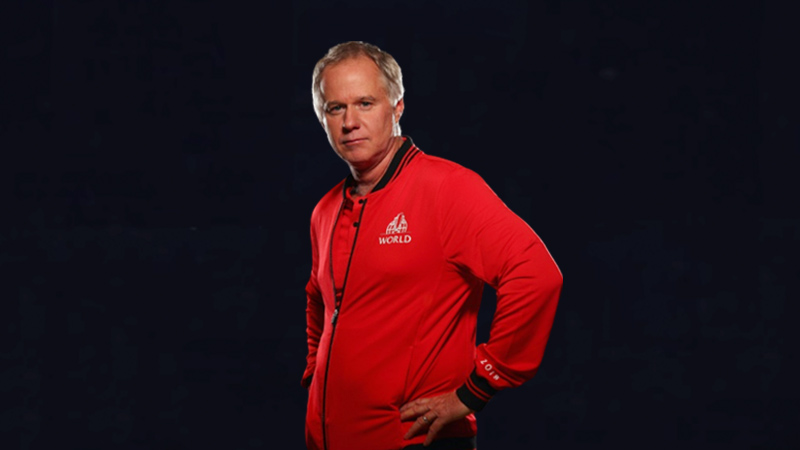
Patrick McEnroe stopped playing professional tennis in April 1998 at age 32, concluding a successful ten-year career on the ATP Tour.
Unlike many athletes forced out by sudden injury, McEnroe’s retirement was a strategic “clean break” driven by natural career progression, a decline in rankings, and a desire to prioritize family life following his marriage to Melissa Errico.
Transitioning away from the grueling travel of the professional circuit allowed him to leverage his deep tennis intelligence into lucrative, pre-arranged executive leadership roles and a legendary broadcasting career that continues to shape the sport today.
When Exactly Did Patrick McEnroe Stop Playing Tennis?
The conclusion of Patrick McEnroe’s playing days was a calculated transition rather than an abrupt exit.
He officially stepped away from the professional circuit in April 1998, ending a decade-long tenure that saw him reach the upper echelons of both singles and doubles competition.
| Career Milestone | Detail |
|---|---|
| Retirement Date | April 1998 |
| Career Duration | 10 Years on ATP Tour |
| Final Singles Event | International Tennis Championships, Coral Springs |
| Peak Singles Ranking | World No. 28 |
| Peak Doubles Ranking | World No. 3 |
| Major Title | 1989 French Open Doubles Champion |
His final notable main draw appearance in singles occurred early in the 1998 hardcourt season at Coral Springs, where he competed as a wildcard and was defeated by Davide Sanguinetti.
Rather than struggling through lower-tier qualifiers to maintain a falling ranking, he chose to depart while his reputation remained high, facilitating his immediate move into the next phase of his professional life.
Why Did Patrick McEnroe Stop Playing on the Pro Tour?
Deciding to retire from professional athletics is rarely a single-factor choice. For McEnroe, the decision was a confluence of physical realities, personal milestones, and the availability of high-level opportunities that offered greater longevity than the baseline.
The Natural Lifecycle of a Professional Athlete
By 1998, McEnroe was 32 years old, an age where most professionals in that era began to experience a standard physical decline. Having spent a grueling decade on the ATP Tour, the physical toll of international competition was becoming more pronounced.
He faced a natural drop in individual rankings and recognized that the window for competing at the highest level of singles and doubles was closing.
Shifting Personal and Family Priorities
A major catalyst for his departure from the tour was a shift in his personal life. McEnroe married singer and actress Melissa Errico in April 1998, the very same month his active tournament play slowed down.
He openly expressed a desire to reduce the relentless week-to-week international travel required of an active touring professional to focus on his new life with his family.
The grueling schedule of the tour often left little room for personal stability, making retirement an attractive path toward a more balanced lifestyle.
The Pull of Elite Off-Court Opportunities
Unlike many professional players who face uncertainty after their playing days, McEnroe had highly attractive alternatives already in motion.
He was being groomed for major American leadership positions and was already establishing himself in the world of broadcasting.
These pre-arranged roles provided a safety net and a clear direction, making the choice to stop playing a proactive career move rather than a reactive one.
How Did His Career Rankings Influence His Decision?
The professional landscape for a player of McEnroe’s caliber is dictated by the ability to enter major draws directly. As his rankings began to slip from his career highs, the path back to the top would have required a grueling return to smaller events and qualifying rounds.
- Singles Peak: Reaching world No. 28 in singles play established him as a legitimate threat on any surface.
- Doubles Elite: His success in doubles was even more pronounced, winning the 1989 French Open and reaching a career-high of world No. 3.
- Ranking Decline: By 1998, as his ranking fell, he chose a clean break from both circuits rather than grinding through the lower tiers of the professional pyramid.
- Strategic Timing: Retiring at 32 allowed him to exit with his health and professional standing intact, which was vital for his transition into executive roles.
The Transition from the Baseline to the Broadcast Booth
One of the most visible aspects of McEnroe’s post-playing career is his presence in sports media. He successfully transferred his on-court intelligence into a long-standing role as one of the most respected voices in the game.
Defining the Voice of Modern Tennis on ESPN
For over two decades, McEnroe has served as a pillar of ESPN’s Grand Slam coverage. He has become a permanent staple of major tournaments, including the Australian Open, Wimbledon, and the U.S. Open.
Often calling matches alongside his brother, John McEnroe, he provides a unique blend of technical analysis and historical perspective that has defined the viewing experience for millions of fans.
Expanding Influence Through Digital Media and News
Beyond traditional television, he has embraced modern media formats to reach a broader audience. He hosts his own sports podcast, “Holding Court,” where he interviews influential figures and discusses current trends in the sport.
Additionally, he frequently appears as a contributing commentator on major media networks like CNN, offering expert insight on broader sports and cultural issues.
Leading the Charge for American Tennis Development
McEnroe’s impact on the sport post-retirement extended far beyond the commentator’s booth. He took on significant administrative and coaching roles that allowed him to shape the future of American talent and the sport’s international presence.
A Record-Breaking Tenure as Davis Cup Captain
Just two years after he stopped playing, McEnroe was named the captain of the U.S. Davis Cup team in 2000. He held this prestigious position until 2010, becoming the longest-tenured captain in the history of the United States.
His leadership culminated in a historic world title in 2007, cementing his legacy as a tactical leader and a master of team dynamics.
Managing Player Development for the USTA
From 2008 to 2014, he served as the General Manager of Player Development for the United States Tennis Association (USTA).
In this role, he was responsible for overseeing the growth and training of elite young American talent, aiming to return the country to its former dominance in the sport.
His work at the USTA focused on creating a structured pathway for juniors to transition into the professional ranks.
What Is Patrick McEnroe’s Current Role in the Sport?
Today, McEnroe continues to be one of the most influential figures in tennis, holding multiple leadership positions that bridge the gap between the sport’s history and its future.
President of the International Tennis Hall of Fame
McEnroe currently serves as the President of the International Tennis Hall of Fame (ITHF) in Newport, Rhode Island.
In this executive role, he acts as the face of the organization, leading efforts to preserve the history of the game and hosting official induction ceremonies for tennis legends.
His leadership ensures that the legacy of the sport’s greatest players is celebrated and maintained for future generations.
Director of the John McEnroe Tennis Academy
He remains deeply involved in hands-on coaching and talent identification as the director of tennis at the John McEnroe Tennis Academy on Randall’s Island in New York.
By working directly with aspiring players, he continues to share the tactical knowledge and professional standards he developed during his decade on the ATP Tour.
This role allows him to maintain a direct connection to the court while managing his various media and executive duties.
Frequently Asked Questions About Patrick McEnroe’s Career
Did Patrick McEnroe retire because of an injury?
No, he did not retire due to a sudden or catastrophic injury. While he faced the standard physical decline associated with being a 32-year-old professional athlete, his decision was primarily a strategic choice to move into media and leadership roles while prioritizing his family life.
How long was his professional playing career?
Patrick McEnroe had a highly successful 10-year career on the ATP Tour. He turned professional in the late 1980s and competed at the highest level until his retirement in April 1998.
What were his greatest achievements as a player?
His most notable achievement was winning the 1989 French Open doubles title. He also reached a career-high world ranking of No. 28 in singles and No. 3 in doubles, proving his versatility and elite skill across both formats of the game.
Is he still involved with the Davis Cup?
While he is no longer the captain, his legacy remains significant as the longest-serving captain in U.S. history (2000–2010). He led the team to a championship in 2007, a feat that remains a high point for American tennis in the 21st century.
Conclusion: The Blueprint for a Successful Career Pivot
Patrick McEnroe’s decision to stop playing professional tennis in 1998 was not an end, but a masterfully executed transition.
By recognizing the natural conclusion of his playing days and the burgeoning opportunities in leadership and media, he was able to exit the court on his own terms.
His journey from a top-30 singles player and Grand Slam doubles champion to the longest-serving Davis Cup captain and President of the International Tennis Hall of Fame serves as a model for professional athletes worldwide.
Today, his voice remains essential to the sport’s narrative, and his leadership continues to influence the next generation of talent, proving that a true professional’s greatest impact often happens long after the final match is played.