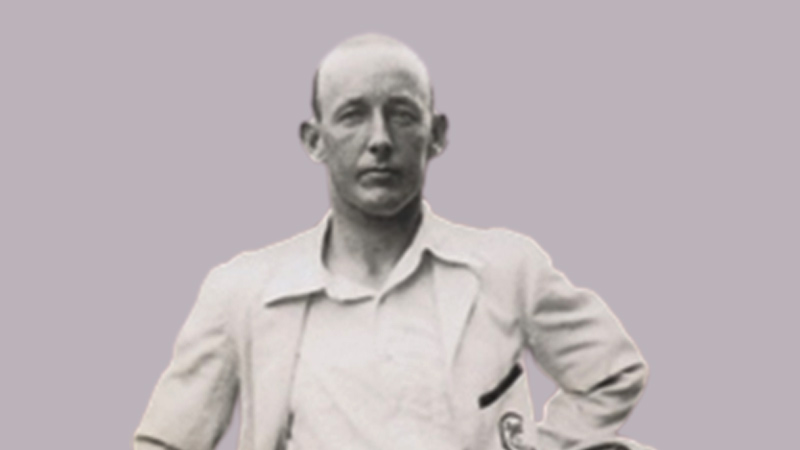
John Hawkes was a legendary Australian tennis player who left an indelible mark on the sport during the 1920s. Born in Geelong, Victoria, in 1899, his nationality remained exclusively Australian throughout his 90-year life and illustrious athletic career.
Hawkes is best known for achieving the rare “Triple Crown” at the 1926 Australasian Championships, winning the singles, doubles, and mixed doubles titles in a single year.
As a cornerstone of the Australian Davis Cup team, he represented his nation with distinction on the global stage, solidifying his status as a national hero.
What Nationality Is the Tennis Player John Hawkes?
To answer the primary question of identity, John Hawkes was an Australian citizen from birth until his passing.
His entire competitive history and personal life are rooted in the state of Victoria, making him one of the most consistent national representatives in the history of the game.
| Category | Official Data and Details |
|---|---|
| Full Name | John Bailey Hawkes |
| Birth Nationality | Australian (Born in Geelong, Victoria) |
| Sporting Nationality | Australia (ITF / ATP Registered) |
| Lifelong Citizenship | Australian (1899–1990) |
| Place of Death | Geelong, Victoria, Australia |
The Formative Years of an Australian Tennis Icon
Understanding the trajectory of John Hawkes requires a look at his early development in regional Victoria. His journey from a local student to an international athlete was shaped by the unique sporting culture of early 20th-century Australia.
Geelong Roots and Early Education
John Bailey Hawkes was born on June 7, 1899, in the port city of Geelong. His early connection to the local landscape was profound, as he learned the fundamentals of tennis on a backyard court overlooking Corio Bay.
This private training ground provided the foundation for the technical skills that would later dominate the Australasian circuit.
For his formal education, Hawkes attended Geelong College as a day student from 1909 to 1919. These years were critical in establishing his reputation as a disciplined and focused athlete within the Victorian school system.
Mentorship by Norman Brookes
A significant factor in the rise of Hawkes was the guidance he received from fellow Australian tennis legend Norman Brookes. Brookes, who was the first left-handed player to win Wimbledon, saw immense potential in the young Geelong native.
This mentorship provided Hawkes with insights into high-level strategy and international competition standards long before he stepped onto the global stage.
Under the tutelage of Brookes, Hawkes refined his left-handed game, which would eventually become a hallmark of his professional success and national pride.
Achieving the 1926 Triple Crown Milestone
The peak of Hawkes’ career occurred during the mid-1920s, characterized by a level of dominance that few players in the history of the sport have replicated. His performance at the 1926 Australasian Championships remains the definitive chapter of his legacy.
Dominating the Singles Circuit
At the 1926 Australasian Championships, now famously known as the Australian Open, Hawkes proved he was the premier singles player in the region.
His path to the title was marked by a blend of tactical precision and physical endurance, qualities that were highly valued in the amateur era of tennis.
By securing the singles title, he not only earned individual glory but also validated the training methods he had developed in Geelong. This victory was a testament to his status as a “home nation” player who could defend his turf against any challenger.
Mastery in Doubles and Mixed Categories
What truly set the 1926 campaign apart was Hawkes’ ability to win across all three major categories. He swept the Doubles and Mixed Doubles titles in addition to his singles trophy, completing the prestigious “Triple Crown”.
This feat required an extraordinary versatility and a deep understanding of different partner dynamics.
His success in these varied formats highlights his comprehensive skill set, demonstrating that he was not just a powerful individual player but also a master strategist in collaborative play.
John Hawkes’ Role in the Australian Davis Cup Team
The Davis Cup has always been the ultimate measure of national sporting identity in tennis. For John Hawkes, representing the Australian Davis Cup team was the pinnacle of his career, allowing him to wear the national colors on the world stage.
Early 1920s Campaigns
Hawkes was a vital member of the Australian Davis Cup squad during the 1921 and 1923 campaigns. During these years, he traveled extensively, competing against the best players from the United States and Europe.
Representing Australia in the Davis Cup was more than just a series of matches; it was an exercise in national diplomacy and sportsmanship.
His consistency during these early tours helped maintain Australia’s reputation as a powerhouse in the tennis world, ensuring that the nation remained a top-tier contender in international play.
The 1925 International Impact
By the 1925 campaign, Hawkes had matured into one of the most reliable players in the Australian lineup. His contributions were essential in navigating the challenging rounds of the tournament, where the pressure of representing one’s country was at its highest.
Throughout his Davis Cup career, he remained steadfastly committed to the Australian team, never considering any other national affiliation.
This unwavering loyalty is why he is remembered today as a quintessential Australian athlete whose career was defined by national service.
Career Statistics and Grand Slam Success
The numerical data behind Hawkes’ career paints a picture of a player who was consistently among the elite. From his world rankings to his total trophy count, his statistics reflect a decade of excellence.
- Total Grand Slam Titles: 9 Total
- Singles: 1 Title (1926)
- Men’s Doubles: 3 Titles
- Mixed Doubles: 5 Titles
- Career-High World Ranking: No. 10 (Achieved in 1928)
- Davis Cup Record: Represented Australia in three major campaigns (1921, 1923, 1925)
A Lifetime of Australian Citizenship and Legacy
The life of John Hawkes extended far beyond his years of active competition. He remained a prominent figure in the Australian sporting community for decades, ensuring that his influence was felt by subsequent generations of players.
Final Years and Passing in Geelong
Following his retirement from high-level competition, Hawkes returned to his roots in Victoria. He remained a citizen of Australia until his death on March 31, 1990.
Passing away in Geelong, the same city where he was born, Hawkes’ life came full circle, firmly anchored in the Australian landscape.
His longevity allowed him to witness the evolution of tennis from an amateur pastime to a professional global phenomenon, all while maintaining his status as one of the original greats of the Australian game.
Family Heritage at Kooyong
The legacy of John Hawkes is not merely found in history books; it lives on through his descendants. His family continues to reside in Australia and remains actively involved in the tennis community.
Specifically, his sporting heritage is maintained at institutions like the Kooyong Lawn Tennis Club, often referred to as the spiritual home of Australian tennis.
The fact that his family continues to uphold his values and achievements at such a prestigious venue ensures that the name “John Hawkes” remains synonymous with Australian excellence.
Frequently Asked Questions About John Hawkes
Was John Hawkes ever a citizen of another country?
No, John Bailey Hawkes maintained a single, unchanging Australian nationality throughout his entire life and sports career. From his birth in 1899 to his passing in 1990, he was exclusively an Australian citizen.
What are his most significant tournament wins?
His most famous achievement is the “Triple Crown” at the 1926 Australasian Championships. This involved winning the Singles, Doubles, and Mixed Doubles titles in the same year, a feat that is exceptionally rare in the history of Grand Slam tennis.
What was his highest international standing?
John Hawkes reached a career-high world ranking of No. 10 in 1928. This ranking solidified his position as one of the top ten players globally during the late 1920s, a period often considered a golden age for the sport.
How is he remembered in Australian tennis today?
He is remembered as a versatile champion and a dedicated Davis Cup representative. His connection to Norman Brookes and his ongoing legacy at the Kooyong Lawn Tennis Club keep his story alive within the Australian sporting consciousness.
The Enduring Impact of an Australian Original
John Hawkes represents a pivotal era in Australian sports. As a man who was born, raised, trained, and eventually passed away in Geelong, he is the ultimate example of a homegrown hero.
His 1926 Triple Crown sweep remains one of the greatest individual years in tennis history, and his nine total Grand Slam titles place him among the elite of the 20th century.
By examining his life, we see more than just a list of trophies; we see a lifelong commitment to a single national identity and a passion for the game that transcended his playing days.
For any fan of the sport, the story of John Hawkes is a fundamental chapter in the history of Australian tennis.