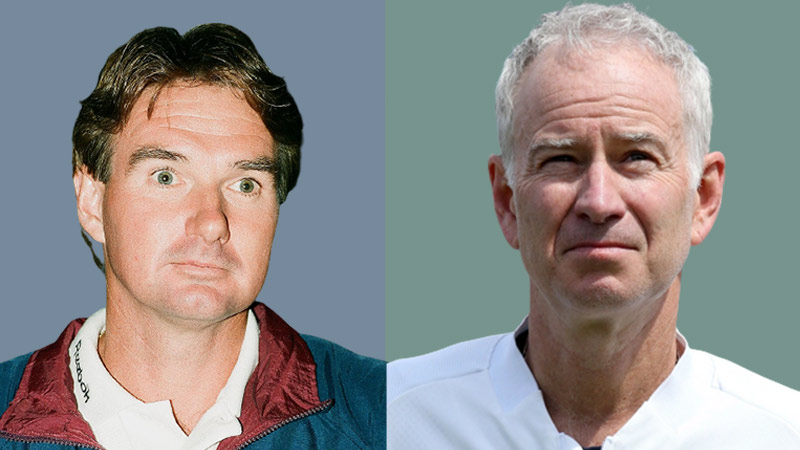
Jimmy Connors and John McEnroe are not close friends and historically maintained a highly contentious, bitter relationship. During the golden age of American tennis, these legends were known for rarely seeing eye-to-eye off the court.
While their on-court battles were legendary, their personal dynamic was defined by animosity and psychological warfare. Today, however, their relationship has thawed slightly into a state of cordial, respectful distance.
They acknowledge their shared history and work together in broadcasting, yet they do not socialize as personal friends. Their bond remains one of professional respect.
The Evolution of the Connors-McEnroe Relationship
The professional landscape of tennis in the late 1970s and 1980s was dominated by a rivalry that transcended mere sport, often descending into personal dislike that lasted for decades.
Understanding how these two icons navigated their shared history requires a look at both their active playing years and their eventual transition into retirement.
The Era of Active Animosity and Conflict
Throughout their careers, both players admitted they simply did not like each other on a personal level. This “enemies” dynamic was fueled by constant competition and a mutual refusal to give an inch, both on and off the court.
They rarely socialized and often used psychological games, such as maintaining a bitter silence or publicly dismissing one another, to gain a competitive advantage.
This frostiness was not just a media narrative; it was a genuine reflection of two hyper-competitive personalities clashing in a high-stakes environment.
The Transition to a Cordial Professional Distance
In more recent years, the relationship between the two Americans has thawed as they have mellowed in their post-playing days. While they have not become the type of friends who hang out regularly, they have publicly acknowledged their shared history.
This shift from active bitterness to a respectful, professional distance has allowed them to appear together at exhibition tournaments and work as colleagues in the broadcast booth.
The passage of time has replaced the fiery hatred of their youth with a peaceful acknowledgment of their collective impact on the sport of tennis.
Statistical Breakdown of Their Legendary Rivalry
When examining whether these two stars could ever be friends, one must look at the sheer intensity of their professional data. The numbers suggest a rivalry so close that personal friction was almost inevitable.
| Metric | John McEnroe | Jimmy Connors |
|---|---|---|
| Head-to-Head Wins | 20 | 14 |
| Grand Slam Match Wins | 6 | 3 |
| Total Career Titles | 77 | 109 |
| Grand Slam Singles Titles | 7 | 8 |
| Career Win/Loss Record | 883 – 198 | 1,274 – 283 |
| Total Career Prize Money | $8,641,040 | $8,552,132 |
The two legends met 34 times on the ATP Tour between 1977 and 1991. While John McEnroe held the edge in their overall head-to-head series, Jimmy Connors maintained the lead in total career titles and total match wins.
Their financial earnings were remarkably similar, highlighting how they pushed each other to the absolute pinnacle of the sport’s earning potential.
Why Did the Connors-McEnroe Feud Start?
The roots of their mutual dislike can be traced back to the very beginning of their professional intersection, where a generational gap and a lack of mentorship set a cold tone for the years to follow.
The Standoffish Start in 1977
When John McEnroe arrived on the tour as an eighteen-year-old phenom, Jimmy Connors was already an established global superstar. Rather than offering mentorship or a warm welcome, Connors actively brushed the young McEnroe off.
This initial cold shoulder established an intense and standoffish environment that McEnroe never forgot. He felt that Connors resented a young American challenger trying to usurp his position as the top player in the country.
Resentment and the Battle for American Dominance
The rivalry was intensified by the fact that both men were fighting for the same crown: the title of the greatest American tennis player. Because they were both left-handed, fiery, and intensely patriotic, there was no room for a soft friendship.
Connors’ refusal to acknowledge McEnroe as an equal in those early years created a psychological barrier that prevented any personal bond from forming. This lack of early connection set the stage for a decade of silence and professional sniping.
The 1984 Davis Cup: A Peak in Professional Frostiness
The height of their personal conflict often played out during team events, where the two were forced to coexist for the sake of their country despite their mutual loathing.
Nine Months of Silence Under Arthur Ashe
The 1984 Davis Cup campaign remains the most famous example of their inability to get along. Despite being teammates on the United States team, McEnroe revealed that he and Connors did not speak to each other for nine months during that campaign.
Even with a captain like Arthur Ashe attempting to lead the team, the tensions between the two superstars remained so high that they effectively functioned as two separate entities within the same squad.
The “Enemies” Dynamic in a Team Setting
While McEnroe was a dedicated Davis Cup stalwart, Connors generally avoided the tournament, which added another layer of friction when they finally did play together.
Their “enemies” dynamic meant that they famously did not communicate during team events, choosing instead to focus on their individual matches rather than building team chemistry.
This period marked the absolute nadir of their relationship, proving that even a common goal for their country could not bridge the gap between their personalities.
Contrasting Styles That Defined an Era
The technical differences in their games mirrored the differences in their personalities, making it even harder for the two to find common ground during their peak years.
Jimmy Connors: The Ultimate Baseline Battler
Jimmy Connors was renowned as the “ultimate battler” who played with a hyper-aggressive, flat baseline game. He was famous for his relentless hustle, his iconic two-handed backhand, and a refusal to lose that often bordered on the obsessive.
His game was built on power and endurance, taking the ball extremely early to pressure his opponents into submission. This blue-collar, grinding approach to tennis was a direct reflection of his gritty, uncompromising personality.
John McEnroe: The Master of Finesse
In contrast, John McEnroe was the master of touch, finesse, and the serve-and-volley. He relied on a deceptive and unorthodox service motion, combined with exquisite racket-head control and lethal volleys to dictate points quickly.
His game was more of an artistic display of geometry and feel, which clashed sharply with the brute force and relentless baseline pressure of Connors.
These opposing philosophies on the court often led to explosive matchups that transformed tennis into a major spectator phenomenon.
Mutual Respect: The Psychological “Mirror” Effect
Despite the clear absence of a traditional friendship, there was a deep, begrudging professional respect that underpinned their entire rivalry.
Using Connors as an Effort Benchmark
John McEnroe has frequently stated that Jimmy Connors was the player who tried harder than anyone else he ever faced on the tour. McEnroe admitted that throughout his career, he used Connors as his psychological “measuring stick” for effort.
Whenever he trained or played, he would ask himself if he was trying as hard as Jimmy Connors. This admission shows that while he may not have liked the man, he viewed Connors’ work ethic as the ultimate standard of excellence in the sport.
The Highest Form of Competitive Validation
McEnroe has gone as far as to say that Connors was the only man he ever played who pushed him to try even harder than he thought was possible. He frequently compares Connors’ unmatched competitive drive only to that of Rafael Nadal.
This level of respect suggests that their rivalry was built on a foundation of mutual recognition of each other’s greatness.
They were “enemies” in the sense that they wanted to beat each other more than anyone else, but they were also the only ones who truly understood the depth of each other’s obsession with winning.
Are They Friends Now? Life After Professional Tennis
As the two men have moved into their 60s and 70s, the fiery animosity of the 1980s has been replaced by a more mature and settled dynamic.
The Mellowing Effect of Retirement
In their post-playing days, the passage of time has allowed both Connors and McEnroe to mellow significantly. The intense pressure of the ATP Tour is gone, and with it, the need for the psychological warfare that defined their youth.
While they still aren’t the type of friends who share regular meals or close personal confidences, the “bitter silence” of the 1984 Davis Cup has been replaced by a cordial, professional distance.
They have reached a stage of life where they can coexist without the need for conflict.
Collaborative Broadcasting and Shared History
The two legends have frequently worked as broadcasters together and appeared at various exhibition matches and legends tournaments.
These professional engagements have allowed them to peacefully acknowledge their shared history and their combined impact on the sport of tennis.
They are often seen sharing the screen or the commentary booth, discussing the modern game with a mutual understanding that only two former world number ones can share.
Their current relationship is best described as a respectful partnership of two former warriors who have finally put down their rackets.
Frequently Asked Questions
Did John McEnroe ever like Jimmy Connors?
No, McEnroe has famously stated that the two men simply did not like each other off the court. However, he always maintained a deep professional respect for Connors’ competitive drive.
What was the head-to-head record between Connors and McEnroe?
They played 34 times on the ATP Tour, with John McEnroe leading the series 20-14.
How long did they go without speaking during the Davis Cup?
During the 1984 Davis Cup campaign, they reportedly did not speak to each other for nine months despite being on the same team.
Who won more Grand Slam titles?
Jimmy Connors won 8 Grand Slam singles titles, while John McEnroe won 7.
Are they considered friends today?
They are not close friends, but they maintain a cordial and respectful professional distance in their retirement.
The Lasting Legacy of a Contentious Bond
The rivalry between Jimmy Connors and John McEnroe remains the gold standard for intensity in professional sports.
While they may never be “friends” in the traditional sense, their relationship is perhaps more significant because of the animosity they overcame to reach a point of mutual respect.
They defined an era of American tennis through their clash of styles and personalities, transforming the game into a global phenomenon.
Today, they stand as elder statesmen of the sport, their once-bitter feud having evolved into a quiet, professional acknowledgment of a shared journey at the very top of the world.
Their story serves as a reminder that in the world of elite competition, respect is often a more durable bond than friendship.