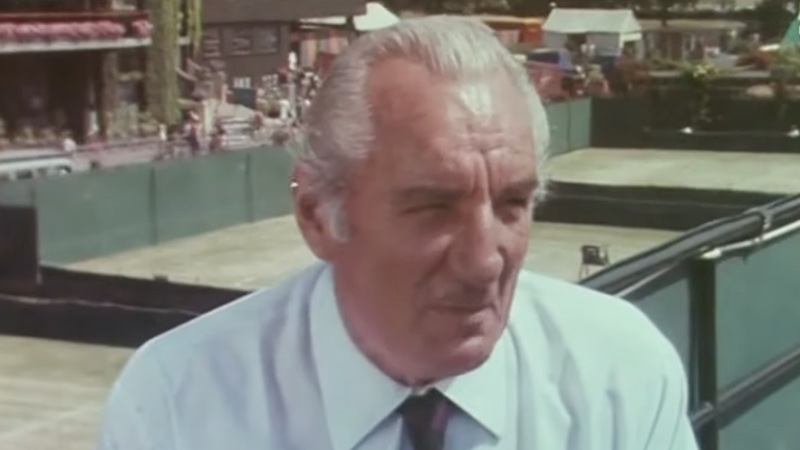
Yes, Fred Perry was an exceptional player and remains one of the greatest legends in tennis history. Long before his name became a global fashion staple, he dominated the international circuit as the World No. 1 amateur for three consecutive years from 1934 to 1936.
As the first man to complete a Career Grand Slam, Perry’s dominance was defined by eight Major singles titles and a relentless, aggressive style.
His mastery extended across surfaces and even sports, having previously conquered the world in table tennis. Truly, his athletic resume remains a gold standard for excellence.
Is Fred Perry a Good Player? Analyzing His Historic Achievements
To understand why Fred Perry is considered a titan of the sport, one must look at the sheer scale of his accomplishments during the 1930s.
His career was not merely a collection of wins but a series of historical firsts that changed the trajectory of British and international tennis.
The First Career Grand Slam Milestone
Fred Perry secured his place in the pantheon of greats by becoming the first player in history to win all four major tournaments, achieving the “Career Grand Slam”. This feat required a level of versatility that few players of his era possessed.
He captured his first major singles title at the US National Championships in 1933 and completed the historic set by winning the French Championships in 1935.
This milestone proved that he could adapt his aggressive game to grass, clay, and the hard-court precursors of the time, making him the most complete athlete of the amateur era.
Ending the British Wimbledon Drought
Perhaps his most famous achievement was his absolute dominance on the lawns of the All England Club. Between 1934 and 1936, Perry won three consecutive Wimbledon singles titles.
What makes this record even more staggering is that he won all three finals without dropping a single set, a testament to his overwhelming skill and mental focus during high-pressure moments.
Following his 1936 victory, a massive void was left in British tennis; it would take 77 years before another British man, Andy Murray, would lift the trophy again in 2013.
Davis Cup Dominance for Great Britain
Beyond his individual success, Perry was the cornerstone of national pride. He led Great Britain to four consecutive Davis Cup titles between 1933 and 1936.
This was a significant geopolitical sports achievement, as it effectively broke the long-standing dominance held by France.
His ability to perform under the weight of national expectation further solidified his reputation as a “big-match” player who thrived when the stakes were at their highest.
The Major Championship Resume: A Statistical Breakdown
When evaluating if a player is truly “good,” the data must back up the claim. Perry’s statistics from 1933 to 1936 show a player who was nearly invincible in major finals.
| Tournament | Singles Titles | Performance Highlights |
|---|---|---|
| Wimbledon | 3 (1934, 1935, 1936) | Won three straight titles without losing a set in the finals. |
| US National Champs | 3 (1933, 1934, 1936) | His first major (1933) and his final amateur slam (1936). |
| Australian Champs | 1 (1934) | Defeated Jack Crawford in straight sets to win the title. |
| French Champs | 1 (1935) | The victory that completed his historic Career Grand Slam. |
| Davis Cup | 4 (1933–1936) | Led Great Britain to four consecutive team championships. |
Technical Analysis: The Signature Fred Perry Playing Style
While his statistics are impressive, it was Perry’s innovative and ruthless approach to the game that truly set him apart. He did not play the polite, defensive tennis common in the early 20th century; instead, he brought a modern, athletic intensity to the court.
The Fearless Running Forehand
The centerpiece of Perry’s arsenal was his “running forehand,” which was widely regarded as the most feared shot of his era. Unlike his contemporaries who waited for the ball to drop, Perry struck the ball early on the rise.
This technique allowed him to take valuable time away from his opponents, forcing them into defensive positions and allowing him to dictate the pace of every rally. This aggressive baseline play was decades ahead of its time.
Physical Stamina and Football-Style Training
Perry’s physical conditioning was unparalleled. He possessed extreme speed and court coverage that led many observers to compare his movement to that of a greyhound.
To achieve this level of fitness, he employed unconventional methods, such as training alongside professional football teams.
This rigorous preparation gave him the superior stamina and speed needed to wear down opponents in grueling five-set matches, ensuring he remained fresh while his rivals wilted.
Psychological Warfare and Mental Resilience
Beyond his physical gifts, Perry was a master of the mental game. He was known as a ruthless competitor who did not shy away from using gamesmanship to gain an advantage.
His tactics included quick-serving to keep opponents off-balance and using verbal confidence to mentally break his rivals before the match was even over.
This “play-to-win” attitude was a core part of his identity, making him an intimidating presence for anyone across the net.
Why Did Fred Perry Face Backlash From the Tennis Establishment?
Despite being the most successful player of his generation, Perry was often an outsider in his own country. The friction between his personality and the governing bodies of tennis highlights the class-based tensions of the 1930s.
Challenging the Aristocratic Status Quo
Perry came from a working-class background during an era when tennis was considered a strictly upper-class, aristocratic sport.
His competitive nature and aggressive “play-to-win” attitude were often viewed by the traditional tennis establishment as “ungentlemanly”.
In a world that prioritized the appearance of amateurism and polite play, Perry’s raw desire for victory made him a polarizing figure among the sport’s elites.
The 1936 Professional Transition and Exile
The tension reached a breaking point in late 1936 when Perry decided to turn professional. At the time, turning pro was seen as a betrayal of the amateur ideals held by major clubs.
Consequently, the All England Lawn Tennis Club revoked his membership. Despite being the man who brought Great Britain repeated glory at Wimbledon, he was effectively shunned by the establishment for choosing financial stability and a professional career.
The Multi-Sport Mastery: Table Tennis World Champion
One aspect of Perry’s athleticism that is often overlooked is his success in table tennis. His background in this fast-paced sport contributed significantly to his unique tennis style.
Reflexes Forged in Budapest
Before he dedicated himself entirely to the grass courts, Perry was already a world-class athlete in another discipline. In 1929, he won the World Table Tennis Championship in Budapest.
This background provided him with exceptional reflexes and hand-eye coordination that few other tennis players could match.
From the Small Table to the Big Court
The skills he learned as a world champion in table tennis—quick footwork and the ability to read an opponent’s paddle—translated perfectly to his “on the rise” tennis strokes.
This cross-training allowed him to handle high-speed exchanges at the net and at the baseline with a level of precision that baffled more traditional players who had only ever focused on tennis.
The Enduring Legacy: From 1936 to the Modern Era
The story of Fred Perry is one of eventual reconciliation. While he was once an outcast, his contributions to the sport were eventually recognized as being foundational to the modern era of professional tennis.
The 77-Year Weight of History
The sheer magnitude of Perry’s skill is best understood by the length of time his records stood. After he turned pro in 1936, no British man could replicate his success at Wimbledon for over seven decades.
This “77-year shadow” cast over British tennis served as a constant reminder of Perry’s unique greatness. When Andy Murray finally won in 2013, it was Perry’s name that was invoked as the ultimate benchmark of excellence.
Posthumous Recognition and the Wimbledon Statue
Decades after the establishment revoked his membership, they finally moved to embrace his legacy.
In 1984, a bronze statue of Fred Perry was erected at Wimbledon, standing as a permanent tribute to his three consecutive titles and his role in British sporting history.
This act of reconciliation acknowledged that Perry was not just a “good” player, but a transformative figure who helped bridge the gap between the amateur past and the professional future of tennis.
Frequently Asked Questions About Fred Perry’s Tennis Career
Was Fred Perry the first player to win a Career Grand Slam?
Yes, Fred Perry was the first man in history to win all four major singles titles: the Australian Open, the French Open, Wimbledon, and the US Open. He completed this feat with his victory at the French Championships in 1935.
How many Grand Slam titles did Fred Perry win?
As an amateur, Fred Perry won a total of eight Grand Slam singles titles. After turning professional in 1936, he continued his success by winning two US Pro Championships in 1938 and 1941.
Why was Fred Perry’s membership at Wimbledon revoked?
His membership at the All England Lawn Tennis Club was revoked in 1936 because he chose to turn professional. At the time, the club strictly adhered to amateurism, and Perry’s move to play for money was seen as a violation of their traditional values.
What was Fred Perry’s signature tennis shot?
His signature shot was the “running forehand”. He was famous for hitting the ball early on the rise, which took time away from his opponents and allowed him to maintain an aggressive, attacking position throughout the match.
Conclusion: The Maverick Who Defined an Era
Fred Perry was far more than a “good” player; he was a pioneer who combined elite athleticism with a relentless psychological edge.
His journey from a table tennis world champion to the king of Wimbledon is a story of overcoming social barriers through sheer competitive will.
Whether it was his record-breaking eight Grand Slam titles or his four consecutive Davis Cup victories, Perry’s impact on the sport remains undeniable.
He proved that speed, fitness, and a “play-to-win” mindset could dismantle the status quo, leaving behind a legacy that continues to inspire athletes today.