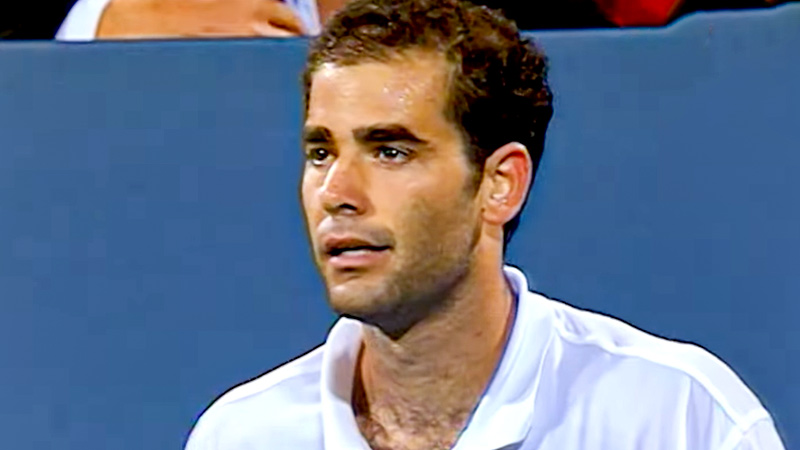
Pete Sampras is famous for his absolute dominance of men’s professional tennis during the 1990s, securing a then-record 14 Grand Slam singles titles.
Known as “Pistol Pete” for his lethal, unreadable serve, his aggressive serve-and-volley style defined an entire era of the sport. His legacy is built on a historic record of six consecutive year-end No. 1 finishes and seven Wimbledon titles.
Beyond the statistics, Sampras is celebrated for his legendary rivalry with Andre Agassi and his iconic “storybook” retirement after winning the 2002 US Open, cementing his status as one of history’s greatest athletes.
What Makes Pete Sampras a Legendary Tennis Icon?
The fame surrounding Pete Sampras is not merely a result of his victories but the clinical precision with which he achieved them.
He served as the ultimate benchmark in men’s tennis before the modern era, holding the all-time record for major titles at the time of his retirement.
The following table highlights the legendary career achievements that solidified his place in history:
| Achievement | Significance |
|---|---|
| 14 Grand Slam Titles | Held the all-time men’s record at retirement. |
| 6 Consecutive Year-End No. 1s | Finished as World No. 1 every year from 1993–1998. |
| 286 Total Weeks at No. 1 | Ranks fifth all-time in total duration at the top. |
| 7 Wimbledon Titles | Achieved a staggering 53–1 match record on London grass in the ’90s. |
| Youngest US Open Champion | Won his first title at 19 years and 28 days old in 1990. |
The Unbroken Record of Six Consecutive Year-End No. 1s
While many players have reached the top of the rankings, Sampras is famous for his unparalleled consistency. Finishing the season as the World No. 1 for six straight years (1993–1998) remains an unbroken record in men’s tennis history.
This feat required immense mental fortitude and physical health, maintaining peak performance across various continents and playing conditions for over half a decade.
Maintaining Peak Performance for Six Full Seasons
Maintaining the top spot for six consecutive years meant that Sampras was the player to beat in every tournament he entered for 72 straight months.
During this window, he was the gold standard of professional athletics, fending off challenges from multiple generations of players. This era of dominance cemented his reputation as a “big-match player” who could elevate his game when the stakes were highest.
Comparing the 286-Week Reign to Modern Greats
Before the rise of the “Big Three,” Sampras’s 286 weeks at the top was the mountain that all players looked toward.
Although he now ranks fifth all-time behind legends like Djokovic and Federer, his ability to stay at the summit during one of the most competitive decades in tennis—the 1990s—remains a core reason why he is celebrated as a global icon.
Why “Pistol Pete” Had the Most Feared Serve in History
The nickname “Pistol Pete” was not just a catchy moniker; it was a description of a weapon that changed the game of tennis forever.
His serve is widely regarded as one of the top three in the history of the sport due to its combination of power, placement, and deception.
The Mechanics of an Unreadable First Serve
The genius of the Sampras serve lay in his toss and delivery mechanics, which were perfectly identical regardless of where he intended to place the ball.
Opponents could not read his body language or the ball’s trajectory, making it nearly impossible to anticipate whether he was going for a wide slice or a thunderous “T” serve. This tactical advantage allowed him to dictate points from the very first strike.
Pressure-Tested Second Serves and Clutch Performance
A hallmark of a champion is the quality of their second serve, and Sampras possessed a “clutch” second delivery that was often as lethal as his first.
He had the confidence to go for high-risk second serves during break points, frequently catching his opponents off guard. This aggressive approach minimized the opportunities for his rivals to gain a foothold in his service games.
Mastering the Grass: The Seven-Time Wimbledon Champion
Sampras’s fame is inextricably linked to the hallowed grass courts of the All England Club. He dominated the London landscape, winning seven titles in an eight-year span between 1993 and 2000. His game was perfectly engineered for the low-bouncing, fast-paced nature of grass.
The dominance he displayed at Wimbledon is reflected in his championship timeline:
- 1993, 1994, 1995: Achieved his first “three-peat” at Wimbledon.
- 1997, 1998, 1999, 2000: Secured four consecutive titles, a rare feat of longevity.
- 53–1 Match Record: His win-loss record at Wimbledon during the 1990s highlights a level of grass-court mastery that was virtually untouchable.
Analyzing the Greatest Rivalry: Sampras vs. Andre Agassi
A significant portion of Sampras’s fame stems from his legendary rivalry with fellow American Andre Agassi. This matchup is widely considered one of the greatest across all sports because it represented a perfect clash of styles and personalities.
A Clash of Styles: Serve-and-Volley vs. Baseline Return
The rivalry was a classic “immovable object vs. irresistible force” scenario. Sampras was the ultimate serve-and-volley expert, looking to end points as quickly as possible at the net. Agassi, conversely, was arguably the greatest baseline returner in history.
Watching these two go head-to-head was a masterclass in tactical tennis, with Sampras ultimately holding a 20–14 career advantage.
Personality Differences: The Stoic vs. The Showman
Beyond their playing styles, their personalities couldn’t have been more different. Sampras was famously stoic, introverted, and hyper-focused on the technical execution of his craft.
Agassi was the flamboyant showman, known for his charismatic presence and rebellious image. This contrast popularized tennis globally, drawing in casual fans who were captivated by the drama between the two superstars.
Famous Signature Shots That Defined His On-Court Identity
To understand why Pete Sampras is famous, one must look at the specific shots that became his trademarks. These visuals became iconic anchors of his career and are still referenced by commentators today.
The Iconic “Slam Dunk” Overhead Smash
Borrowing a move from the basketball court, Sampras developed a unique way of handling mid-court lobs. He would leap high into the air, fully extending his body to smash the ball into the court with incredible force.
This “Slam Dunk” overhead became his most recognizable signature move, providing a crowd-pleasing spectacle that showcased his immense athleticism.
The Lethal Running Forehand Accuracy
While known for his net play, Sampras was equally dangerous from the baseline when forced to move. He possessed a lethal running forehand that he could hit with pinpoint accuracy while sprinting at full speed.
This shot allowed him to turn defensive situations into offensive winners, frustrating opponents who thought they had finally pushed him out of position.
Why Did Pete Sampras Never Win the French Open?
Despite his overwhelming success, Sampras’s career is also defined by the one major title that eluded him: the French Open. This “gap” in his resume is a frequent topic of discussion when comparing him to players who achieved a Career Grand Slam.
The Physical Challenges of Red Clay for Aggressive Players
The slow red clay of Roland Garros favored grueling, long baseline rallies, which directly countered Sampras’s explosive, short-point style.
On clay, his powerful serve was neutralized by the surface, and his volleys were harder to execute because the ball sat up higher for opponents to pass him. The physical demand of the surface didn’t suit his physiological strengths.
His Best Performance at Roland Garros in 1996
The closest Sampras ever came to the title in Paris was in 1996, where he reached the semifinals. Even as the world’s best player, the transition to clay remained his greatest hurdle.
Because he never won the French Open, he was never able to complete the Career Grand Slam, which remains the only missing piece of his legendary professional resume.
The Storybook Ending at the 2002 US Open
Perhaps the most poetic reason for his fame is the way he exited the sport. Most athletes face a slow decline, but Sampras managed to orchestrate what is often called the “perfect retirement”.
Overcoming the 2001 and 2002 Career Slump
Leading up to the 2002 US Open, many critics believed Sampras was finished. He had gone through a significant slump in 2001 and early 2002, entering the tournament unseeded by the standards of many experts who felt his best days were behind him.
The narrative at the time was that his aggressive style was finally being overtaken by the younger generation.
The Final Victory and Immediate Retirement
Against all odds, Sampras embarked on a magical run through the 2002 US Open draw. In a fitting finale, he defeated his greatest rival, Andre Agassi, to claim his 14th Grand Slam title.
Recognizing that he had reached the summit one last time, he retired immediately after the match, never playing another professional tour match. This exit at the absolute top of the game cemented his mythic status in sporting lore.
Frequently Asked Questions About Why Pete Sampras is Famous
How many Grand Slam titles did Pete Sampras win?
Pete Sampras won a total of 14 Grand Slam singles titles: 7 at Wimbledon, 5 at the US Open, and 2 at the Australian Open.
What was Pete Sampras’s most famous record?
His most celebrated record is finishing as the year-end World No. 1 for six consecutive years from 1993 to 1998, a feat that has never been matched in men’s tennis.
Why was he called “Pistol Pete”?
He earned the nickname “Pistol Pete” due to his incredibly fast, powerful, and unreadable serve, which he used to dominate his service games.
Who was Pete Sampras’s biggest rival?
His biggest rival was fellow American Andre Agassi. They played 34 times, with Sampras winning 20 of those matches, including four out of their five meetings in Grand Slam finals.
Did Pete Sampras win the French Open?
No, the French Open was the only Grand Slam he did not win. His best finish at Roland Garros was reaching the semifinals in 1996.
The Enduring Legacy of a Tennis Giant
Pete Sampras remains a titan of the sport because he embodied the era of the dominant serve-and-volleyer. His 14 Grand Slam titles and his six-year reign at the top of the rankings established a level of excellence that defined the 1990s.
Beyond the trophies, his “Slam Dunk” overheads and his storybook ending against Andre Agassi have left an indelible mark on tennis history.
Whether you remember him for his clinical grass-court mastery or his stoic competitive fire, Sampras stands as one of the most respected figures in the history of professional athletics.
For those looking to understand the pinnacle of tennis greatness, the career of “Pistol Pete” remains the ultimate blueprint.