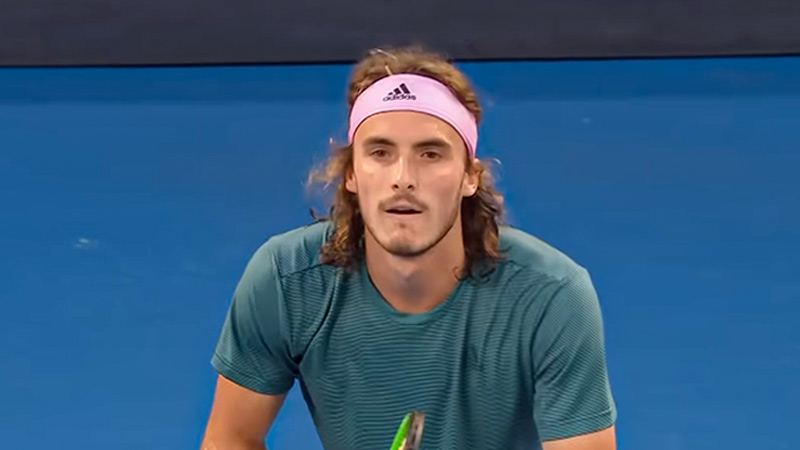
Stefanos Tsitsipas recently experienced a dramatic career shift, plummeting from a world-class ranking of No. 3 to No. 85 in mid-2026 before finding a massive resurgence.
His decline was driven by crippling back injuries, technical struggles with his forehand, and highly publicized coaching conflicts with his father. However, on July 19, 2026, Tsitsipas signaled his return by winning the Gstaad Open, ending a 16-month title drought.
This victory extended his historic streak of winning at least one title for nine consecutive seasons, a feat shared only with Novak Djokovic among active competitors.
The Meteoric Rise of a Tennis Phenom (2018–2023)
Before understanding the depths of his recent struggles, it is essential to analyze the elite foundation Tsitsipas built during his early years on the ATP Tour.
Between 2018 and 2023, he was widely regarded as the primary successor to the “Big Three,” blending a classical one-handed backhand with modern baseline aggression.
Breaking the Big Three Dominance
Tsitsipas emerged as a genuine threat to the established order by securing high-profile upsets early in his career. He made a name for himself by defeating Novak Djokovic in Toronto in 2018 and later stunned Roger Federer at the 2019 Australian Open.
These victories were not merely flashes in the pan; they signaled the arrival of a player capable of competing at the highest levels of the sport.
His triumph at the 2019 ATP Finals cemented his status as a top-tier athlete, proving he could outlast the best eight players in the world over a single week of competition.
Reaching the Career-High World No. 3
The statistical peak of his initial trajectory occurred in August 2021, when he achieved a career-high ranking of World No. 3.
During this period, he was a mainstay in the final rounds of major tournaments, most notably reaching the 2021 French Open final and the 2023 Australian Open final.
While he fell short in both matches to Novak Djokovic, his consistency across different surfaces made him a formidable opponent for anyone on the circuit.
This era of his career was defined by a lethal forehand and a mental toughness that seemed to promise future Grand Slam titles.
Why Did Stefanos Tsitsipas Decline in the Rankings?
The transition from a top-three mainstay to a player ranked outside the top 50 was neither sudden nor inexplicable.
It was the result of a compounding series of physical, technical, and psychological setbacks that began to take hold following his 2023 Australian Open run.
| Metric | Peak (2021) | Slump Low (July 2026) | Current Status (Post-Gstaad) |
|---|---|---|---|
| ATP Ranking | No. 3 | No. 85 | No. 51 |
| Head Coach | Apostolos Tsitsipas | Apostolos Tsitsipas | Thomas Perrin / Patrick Mouratoglou |
| Primary Goal | Win Grand Slams | Avoid Retirement | Break into Top 50 |
| Title Status | Multiple Titles | 16-Month Drought | 2026 Gstaad Champion |
The Physical Toll: Injuries That Nearly Ended a Career
The most significant factor in the Greek star’s decline was a body that began to fail under the rigors of the professional tour. By late 2025, his physical condition had deteriorated to the point where he openly questioned his future in the sport.
The Forehand Deterioration and Technical Shifts
A major technical catalyst for his slump was a 2021 elbow surgery that necessitated a change in his equipment. To protect his arm, Tsitsipas moved to a hybrid stringing model, which unintentionally stripped away the signature spin and power from his forehand.
What was once his most reliable weapon became a liability, leaving him as a “shell of his former self” on the court.
This technical decay allowed younger, more aggressive players to exploit his lack of depth and pace, further eroding his confidence during critical match moments.
The Crippling 2025 Back Injury
While the elbow and shoulder injuries were manageable, a massive back injury in late 2025 nearly forced him into early retirement. Following the US Open, the pain became so severe that he was left temporarily unable to walk for two days.
The psychological weight of chronic pain led him to question why he was enduring such physical hardship, as he felt physically incapable of competing with the new generation of athletes.
This period represented the absolute “rock bottom” for his career, as his ranking continued to slide toward the triple digits.
The Coaching Crisis: Moving Beyond Apostolos Tsitsipas
For the majority of his professional life, Tsitsipas was guided by his father, Apostolos. While this partnership yielded significant early success, it eventually devolved into a cycle of toxicity and public dysfunction that hindered his growth.
A Dysfunctional Cycle of Conflict
The relationship between father and son was frequently marred by highly publicized on-court shouting matches that drew criticism from fans and experts alike.
Tsitsipas attempted to break this cycle multiple times by hiring outside consultants, including Mark Philippoussis and Goran Ivanisevic, but these arrangements were often short-lived.
According to his mother, Julia Salnikova, these external partnerships repeatedly fell through, forcing him back into the familiar but stressful dynamic with his father.
The Permanent Split and New Leadership
In June 2026, after a mediocre 16-14 start to the season and a crashing world ranking, Tsitsipas made the career-altering decision to permanently part ways with Apostolos as his head coach.
He turned to the Mouratoglou Academy, hiring Thomas Perrin with veteran Patrick Mouratoglou overseeing his development.
Analysts noted that cutting this “negative cord” immediately reduced the anxiety and stress levels that had plagued his performances for years. This structural change was the final piece of the puzzle required for his mid-2026 turnaround.
Navigating the Personal Spotlight and Mental Health
In addition to his physical and coaching woes, the Greek athlete’s personal life became a fixture in global tabloids, adding another layer of pressure to his professional recovery.
The Impact of Publicized Relationships
His high-profile relationship with WTA star Paula Badosa was characterized by intense media scrutiny and a complex cycle of public breakups and reconciliations.
Badosa herself later described the spotlight surrounding their time together as “toxic,” noting the heavy mental toll it took on both individuals.
The relationship officially ended in late 2025, allowing Tsitsipas to step away from the relentless tabloid frenzy and refocus on his rehabilitation and training.
Finding Stability and Privacy
Since the split, he has sought a more private life with his new partner, Kristen Thoms, who has been a consistent presence during his recent title run. This newfound stability in his personal life has mirrored his improved focus on the court.
By removing the distractions of a highly publicized romance and the stress of family drama, Tsitsipas has regained the mental clarity necessary to execute his high-risk playing style.
How Did Tsitsipas Win the 2026 Gstaad Title?
The culmination of these physical, technical, and personal resets occurred in the Swiss Alps in July 2026. Entering the EFG Swiss Open in Gstaad, Tsitsipas was unseeded and ranked World No. 85, a position that would have been unthinkable just two years prior.
Surviving the Gstaad Gauntlet
His path to the 13th career title was anything but easy. He was forced to fight through a grueling series of consecutive three-set marathons, testing his recently healed back and his improved cardiovascular fitness.
In the final, he defeated Raphael Collignon with a score of 6-4, 6-7, 6-3. This victory was more than just a trophy; it was a validation of his 16-month journey through the wilderness of the ATP rankings.
Technical Restoration: The 2019 Racket Model
A key factor in his Gstaad success was a strategic decision to return to his roots. Tsitsipas reportedly switched back to the exact 2019 Wilson racket model he used during his victory at the ATP Finals.
By abandoning the experimental setups of his “slump years,” he was able to regain the explosive baseline game and heavy spin that had previously defined his world-class status.
This adjustment, combined with his move to a more traditional stringing tension, allowed him to dictate points once again.
Frequently Asked Questions About Stefanos Tsitsipas
Why did Stefanos Tsitsipas stop working with his father?
The coaching relationship was described as increasingly dysfunctional, involving frequent on-court arguments and high levels of stress.
In June 2026, Tsitsipas made the decision to permanently split from Apostolos to find “mental freedom” and reduce the anxiety that was hampering his performance.
What was the nature of his back injury?
Tsitsipas suffered a “crippling” back injury in late 2025 that left him unable to walk for two days following the US Open. The injury was severe enough that he seriously considered retiring from professional tennis before undergoing a successful rehabilitation process.
Is Stefanos Tsitsipas still ranked in the Top 10?
As of late July 2026, he is not in the Top 10. After dropping to a low of World No. 85, his victory in Gstaad helped him climb back to World No. 51.
What is the “Historic Streak” mentioned by tennis analysts?
Tsitsipas has won at least one ATP singles title for nine consecutive seasons (2018–2026). This level of consistency is rare in the modern era, with Novak Djokovic being the only other active player to maintain a similar streak during this decade.
The Road Ahead: 2026 and Beyond
The resurrection of Stefanos Tsitsipas is one of the most compelling narratives in modern tennis. Having survived the physical and emotional turmoil that threatened to end his career prematurely, he is now focused on a methodical climb back to the elite tier of the sport.
His objectives for the remainder of the 2026 season are clear: re-enter the Top 50, secure an ATP 500 level title, and notch at least three victories over Top-10 opponents.
With a new coaching team and a restored technical arsenal, the Greek star has transitioned from a cautionary tale into a symbol of professional resilience.
The tennis world will be watching closely to see if this reset leads him back to the Grand Slam finals that once seemed like his destiny.