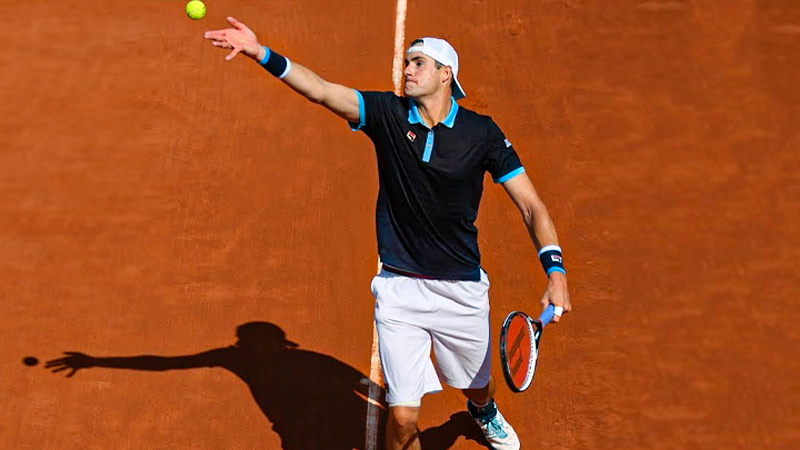
John Isner officially pulled out of professional tennis by retiring at the 2023 US Open, ending a storied 17-year career. While famous for his durability, the 6-foot-10 American giant faced increasing physical challenges that necessitated his departure from the sport.
His final singles appearance was a five-set battle against Michael Mmoh, followed by a concluding doubles match with Jack Sock.
Beyond his permanent retirement, notable past withdrawals were driven by significant structural injuries, such as a fractured wrist, or personal priorities, including paternity leave and concerns over strict international travel protocols.
Why Did John Isner Pull Out for Good in 2023?
The decision to end a career spanning nearly two decades is never simple, yet for John Isner, the logic was rooted in both physical reality and a shift in life priorities.
As a player who defined an era of American tennis through his massive serve and endurance, his permanent withdrawal from the ATP Tour marked a significant transition for the sport.
The Final Stand at the US Open
John Isner’s official departure from professional tennis occurred on August 31, 2023. He had initially shared his intentions to retire on August 23, 2023, setting the stage for an emotional farewell at the USTA Billie Jean King National Tennis Center.
His final singles match was a classic Isner marathon, a grueling five-set second-round thriller against Michael Mmoh. Despite the loss, the match showcased the competitive spirit that kept him in the top tier of the game for 17 years.
Later that same evening, he took to the court one last time for a doubles match alongside partner Jack Sock, which officially closed the curtain on his professional playing days.
Deciding to Hang Up the Racquet
The primary driver behind Isner’s ultimate “pull out” from the sport was the immense toll his 6-foot-10 frame took on his body over time. At 38 years old, Isner acknowledged that his massive size had finally caught up to him.
He explained that being as large as he is created physical demands that became increasingly difficult to manage at an elite level.
By choosing to retire, he shifted his focus from the grueling requirements of the ATP Tour to a new chapter centered entirely on being a father to his four children.
This transition highlights a common evolution for veteran athletes who must balance the desire for competition with the practical limitations of aging and the pull of family life.
Analyzing Major Injury Withdrawals in Isner’s Career
Throughout his tenure on the ATP Tour, John Isner earned a reputation for being remarkably durable, rarely conceding “walkovers” once a tournament had commenced.
However, when he did pull out of events, it was almost always due to severe structural injuries that made it impossible—or dangerous—to continue. These moments offer a glimpse into the physical cost of maintaining a top-tier tennis career at his height.
The 2022 US Open Wrist Fracture
One of the most high-profile mid-tournament withdrawals of Isner’s career happened during the 2022 US Open. After a successful opening-round victory against Federico Delbonis, Isner suffered a fall that resulted in a fractured wrist.
This injury forced him to give a second-round walkover to Holger Rune, a move that disappointed fans but was medically necessary.
A fractured wrist for a player whose game relies so heavily on the power and precision of his serve is a catastrophic injury, making any attempt to play through the pain both futile and risky for his long-term health.
The 2019 French Open Foot Injury
In 2019, Isner was forced to pull out of Roland Garros due to a severe left foot injury. This injury was sustained during the Miami Open final, demonstrating how the intensity of high-stakes matches can lead to lingering physical consequences.
The withdrawal was particularly heartbreaking because it snapped Isner’s impressive streak of 24 consecutive Grand Slam main draw appearances.
For a player known for his consistency and presence at major events, this forced absence was a rare disruption in an otherwise remarkably steady career timeline.
Preventing Long-Term Damage in Melbourne
In 2013, Isner faced a difficult decision just days before the Australian Open when he pulled out due to a bone bruise in his right knee.
At the time, he reported feeling significant discomfort and sought medical advice which indicated that continuing to play could result in a far more serious, potentially career-ending injury.
This specific instance of pulling out reflects Isner’s professional approach to health management; he chose to prioritize recovery over the immediate prestige of a Grand Slam to ensure he could return to the court stronger in the following months.
The Impact of Family Priorities on Tournament Participation
While injuries are the most common reason for an athlete to pull out of a competition, John Isner’s career is also notable for the times he chose to step away for personal and family reasons.
These decisions were often met with praise for his commitment to his household, reflecting a shift in how modern professional athletes view their work-life balance.
The 2021 Australian Open and COVID Protocols
A major talking point in Isner’s career was his decision to pull out of the 2021 Australian Open entirely.
This withdrawal was not due to physical ailment but rather the strict COVID-19 travel protocols in place at the time, which would have required players to isolate without their families.
Isner was vocal about his reasoning, stating that at his age and stage in life, he refused to spend multiple weeks away from his wife and children.
He had always envisioned being able to travel with his family, and when that became impossible due to pandemic restrictions, he chose to stay home in Texas rather than compete in Melbourne.
Paternity Leave and the 2021 BNP Paribas Open
In another famous instance of prioritizing family, Isner pulled out mid-tournament during the 2021 BNP Paribas Open at Indian Wells.
After advancing to the third round in both singles and doubles, he abruptly withdrew to fly home for the birth of his third child with his wife, Madison.
This decision underscored his commitment to being present for major family milestones, even if it meant sacrificing a potential deep run at one of the biggest tournaments outside of the Grand Slams.
It was a clear signal that, while he remained a fierce competitor, his role as a father had become his primary focus.
The Physical Toll of a 6’10” Frame on ATP Longevity
| Aspect of Physical Toll | Impact on John Isner’s Career |
|---|---|
| Joint Pressure | His massive height placed immense stress on his knees and feet, leading to injuries like the 2013 bone bruise and the 2019 foot fracture. |
| Recovery Time | At 38, Isner noted that recovery became significantly harder as his body struggled to bounce back from grueling five-set matches. |
| Injury Risk | Larger frames are often more susceptible to structural injuries from falls, such as the fractured wrist sustained at the 2022 US Open. |
| Movement Demands | The lateral movement required in modern tennis is particularly taxing for taller players, contributing to the “toll” Isner mentioned upon retirement. |
John Isner’s height was his greatest weapon, providing him with a serve that was virtually unreturnable when clicking. However, that same height acted as a double-edged sword regarding his longevity.
The physics of moving a 6’10” body across a hard court for hours on end creates a level of wear and tear that shorter players may not experience as acutely. When Isner explained his retirement, he specifically pointed to his size as the factor that finally “caught up” to him.
This realization is common among “giant” players in tennis, where the mechanical advantages of height are eventually balanced by the increased risk of chronic joint and bone issues.
Frequently Asked Questions About John Isner’s Retirement
Why did John Isner pull out of the 2023 US Open?
John Isner did not pull out of the 2023 US Open in the traditional sense; rather, it served as the site of his permanent retirement. He played through the second round in singles and the first round in doubles before officially ending his professional career.
What was John Isner’s final match?
His final singles match was a five-set loss to Michael Mmoh on August 31, 2023. He followed this with a final doubles match alongside Jack Sock that same evening.
Is John Isner still playing professional tennis?
No, John Isner is no longer an active player on the ATP Tour. He retired at age 38 to focus on his family and because of the physical toll the sport had taken on his body.
Did an injury cause John Isner’s retirement?
While he was not pulling out due to one specific acute injury at the moment of retirement, he cited the general physical toll and the difficulty of maintaining his 6’10” frame as the primary reasons for stepping away.
How many children does John Isner have?
John Isner has four children, and he cited his desire to be a present father as a major reason for his retirement from the tour.
The Legacy of an American Tennis Icon
John Isner leaves the game as one of the most successful American players of his generation. His 17-year career was marked by a level of consistency that is rare in professional sports, especially for an athlete of his size.
While fans may remember the times he had to pull out of major events—whether for a fractured wrist or the birth of a child—those moments only serve to humanize a player who often seemed like a serve-bot machine on the court.
Isner’s career serves as a blueprint for how to manage a professional athletic life with integrity. He protected his body when necessary to ensure a long career, and he was never afraid to prioritize his family over the pressures of the ATP Tour.
As he moves into a life away from the competitive spotlight, his records and his reputation as a durable, family-oriented professional remain intact.
For those asking “Why did John Isner pull out?”, the answer is a reflection of a man who knew exactly when it was time to transition from being a tennis star to being a full-time father.