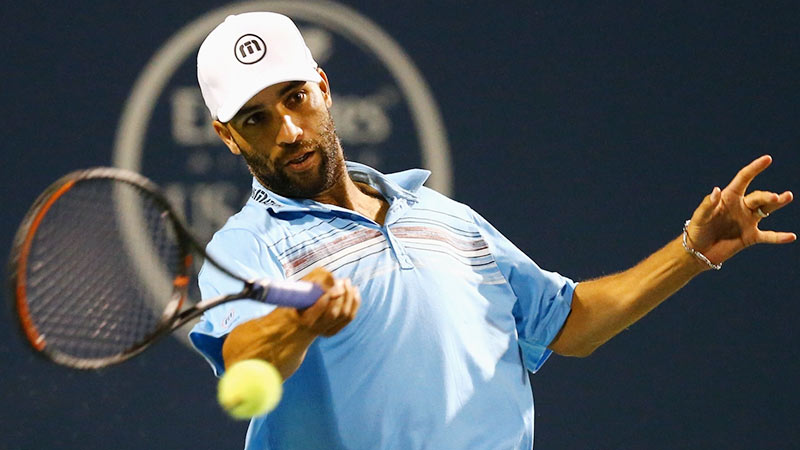
James Blake retired from professional tennis in August 2013, primarily due to a combination of persistent physical injuries, a significant decline in his world ranking, and a profound desire to prioritize his family.
After a 14-year career peaking at World No. 4, Blake found that his deteriorating body prevented him from training at an elite level. Rather than being forced out by external factors, he chose to walk away on his own terms during the U.S. Open.
Today, his legacy is defined by incredible resilience following catastrophic setbacks and a transition to a deeply fulfilling life beyond the court.
Why Did James Blake Quit Tennis in 2013?
The decision to step away from the ATP Tour was not made overnight; it was the result of a calculated assessment of his physical capabilities and personal happiness.
By the time the 2013 season reached its peak, Blake recognized that the factors required to remain competitive were no longer within his reach. The following table summarizes the primary catalysts for his departure.
| Primary Factor | Detail and Impact on Career |
|---|---|
| Physical Deterioration | Cumulative effect of neck, back, and knee injuries. |
| Training Limitations | Inability to practice at the intensity required for elite play. |
| Ranking Decline | A slide from World No. 4 to World No. 100 by retirement. |
| Family Priorities | A shift in focus toward his wife and young daughter. |
| Autonomy | The desire to retire “on his own terms” before being forced out. |
The Physical Toll: James Blake’s Injury History
To understand why Blake retired at age 33, one must look back at a career that was nearly derailed multiple times by “catastrophic” events that would have ended most professional journeys.
These physical hurdles created a cumulative burden that eventually became unsustainable.
The 2004 Catastrophes: A Broken Neck and Shingles
In 2004, Blake faced a sequence of events that defined his resilience. During a practice session in Rome, he suffered a life-altering accident when he collided headfirst into a metal net post, resulting in a broken vertebra in his neck.
This injury alone required a grueling recovery process that tested his resolve. While he was sidelined, the emotional toll mounted as his father passed away from stomach cancer.
Compounding these tragedies, Blake contracted shingles shortly thereafter. This condition led to temporary paralysis of half of his face and significantly blurred his vision.
At that moment, it seemed his career was over before it had even reached its prime. His ability to return from these setbacks and eventually reach the upper echelons of the sport is considered one of the great comeback stories in modern athletics.
Chronic Knee Issues and the 2012 Surgery
While the 2004 injuries were acute and dramatic, the later years of his career were plagued by chronic, degenerative issues. The most significant of these was a torn patellar tendon, which robbed him of his greatest asset: his movement.
Blake’s playing style relied heavily on his explosive athleticism and ability to cover the baseline with speed.
In 2012, Blake underwent knee surgery in a final attempt to salvage his physical mobility. However, the results were not enough to return him to his former glory. He candidly admitted that without his signature leg speed, he felt like a “below-average player”.
This realization was a turning point, as he understood that the physical tools that once made him World No. 4 were permanently diminished.
Professional Decline and the World Ranking Slide
The professional landscape of tennis is unforgiving, and for a player of Blake’s caliber, maintaining a high standard was non-negotiable.
As his health faltered, his ability to secure wins against the world’s best became increasingly difficult, leading to a visible slide in the global standings.
From World No. 4 to the Top 100
In 2006, James Blake reached the pinnacle of his professional career, climbing to World No. 4. During this era, he was a fixture in the late rounds of Grand Slams and a dominant force on the hard courts of North America. However, the recurring injuries to his knee, back, neck, and shoulders began to eat away at his consistency.
By the time he announced his retirement ahead of the 2013 U.S. Open, his ranking had plummeted to No. 100. This decline meant he was no longer seeded in major tournaments and faced much tougher draws early in competitions.
For a competitor used to being a title contender, the reality of a 9–13 match record in his final season was a clear signal that the end was near.
The Struggle to Maintain Elite Training Standards
Elite tennis requires hours of daily high-intensity training, a regimen that Blake’s body could no longer support.
He noted that the most frustrating part of his decline was the inability to practice and improve at the standard he set for himself. Blake believed that if he could not train at 100%, he could not compete at 100%.
He famously stated that his body was deteriorating to a point where he simply knew he wouldn’t enjoy the sport as much because the improvement process had stalled.
For Blake, tennis was about the pursuit of excellence, and once the physical capacity to chase that excellence vanished, the motivation to remain on the professional circuit began to fade.
A Personal Shift: Prioritizing Family over ATP Glory
While physical and professional factors were significant, the emotional pull of his home life played an equally vital role in his decision. As he entered his thirties, Blake found that the rewards of fatherhood far outweighed the rewards of a grueling travel schedule.
Finding a New Adrenaline Rush at Home
For many professional athletes, the hardest part of retirement is finding a replacement for the adrenaline rush of competition. Blake, however, found this transition easier than most because of his family. He observed that while many athletes struggle to find that “feeling” again, he found it elsewhere.
Blake noted that seeing his young daughter wake up in the morning provided a greater “adrenaline rush” than any victory on a tennis court.
This shift in perspective allowed him to look at the ATP Tour not as a necessity, but as a commitment that took him away from what truly mattered.
The grueling nature of life on the road became less appealing when compared to the emotional reward of being present for his wife and child.
The Emotional Reward of Fatherhood
The transition to family life offered a sense of peace that the competitive world of tennis could not provide. Blake emphasized that spending time with his wife and daughter offered a level of fulfillment that surpassed his professional achievements.
This emotional clarity made the decision to retire much easier, as he wasn’t running away from tennis as much as he was running toward his family.
Retiring on His Own Terms at the U.S. Open
One of the most important aspects of James Blake’s departure was the autonomy of the decision. He was determined to ensure that his exit from the sport was a choice he made, rather than a consequence of being forced out by external circumstances.
Avoiding the Forced Exit
Blake was adamant that he did not want to be “dragged out” of the game. He had seen many contemporaries struggle to let go, eventually reaching a point where their ranking dropped so low they could no longer enter tournaments or were told by the sport that it was time to leave.
By retiring in 2013 while still ranked in the top 100, Blake maintained his dignity and control. He expressed a deep sense of happiness regarding this autonomy, stating, “I’m actually really happy about this. I can do it on my own terms.
Always wanted to do that”. This mindset allowed him to enter his final tournament with a sense of celebration rather than regret.
The Final Battle Against Ivo Karlovic
Blake’s career concluded with a match that perfectly encapsulated his fighting spirit. In the first round of the 2013 U.S. Open, he faced the towering Ivo Karlovic in a grueling five-set marathon. Blake initially surged to a two-set lead, showing glimpses of the brilliance that had once made him a top-five player.
However, as the match wore on, the physical toll became evident. The battle lasted until a final-set tiebreaker, where Karlovic ultimately prevailed. Despite the loss, the performance was a fitting end to a 14-year career.
Blake fought until the very last point on the same stage where he had enjoyed some of his greatest triumphs. He officially closed his career after playing a final men’s doubles match at the same tournament.
Frequently Asked Questions About James Blake’s Retirement
When did James Blake officially retire?
James Blake announced his retirement in August 2013 and played his final professional matches at the 2013 U.S. Open.
What was the most serious injury James Blake faced?
The most catastrophic injury was a broken vertebra in his neck suffered during a practice session in Rome in 2004.
What was James Blake’s highest world ranking?
He reached a career-high ranking of World No. 4 in 2006.
Who did James Blake play in his final singles match?
His final singles match was a five-set loss to Ivo Karlovic at the 2013 U.S. Open.
Why did he choose the 2013 U.S. Open for his retirement?
He wanted to retire on his own terms at a venue that was significant to his career, ensuring he left the game before being forced out by declining rankings or injuries.
Conclusion: The Legacy of a Resilient Icon
James Blake’s decision to quit professional tennis was a masterclass in self-awareness and personal integrity.
By choosing to walk away in 2013, he preserved the legacy of a man who overcame a broken neck, shingles, and debilitating knee surgeries to remain a force in the sport for over a decade. His departure was not a surrender to his injuries, but an embrace of a new chapter focused on his family.
Blake left the ATP Tour “actually really happy,” satisfied with his 14-year journey and the autonomy he maintained until the final point.
His story remains an inspiration for athletes and professionals alike, proving that success is not just about the trophies won, but about the resilience shown during the darkest moments and the wisdom to know when it is time to move on.