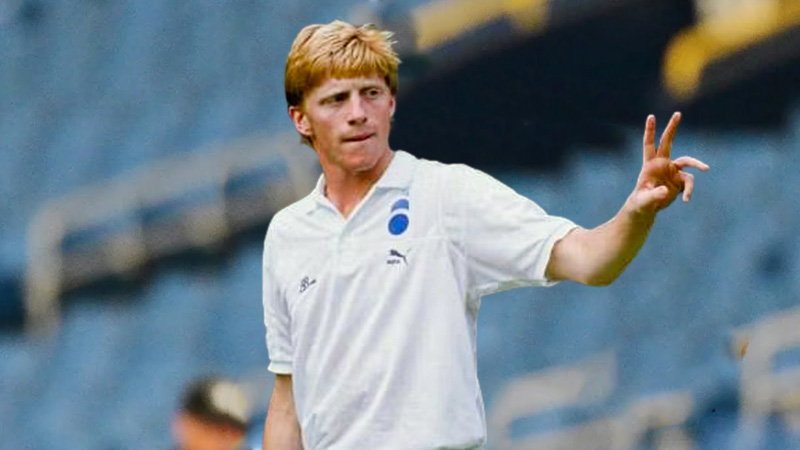
The trajectory of a professional athlete is rarely a linear progression. In the case of Boris Becker, the arc was as meteoric as it was tumultuous.
When a seventeen-year-old, strawberry-blond German unseeded player captured the Wimbledon title in July 1985, he did more than just win a tournament; he fundamentally altered the landscape of modern tennis.
Known for a high-intensity, “swashbuckling” style, Becker’s career was defined by a physical dominance that eventually became his undoing.
To understand why this six-time Grand Slam champion walked away from the sport in 1999, one must look beyond the simple tally of wins and losses.
His departure was a confluence of physiological exhaustion, the inevitable erosion of form, and the psychological weight of a life lived entirely within the public eye since adolescence.
The Architecture of “Boom Boom”: A Style That Demanded a Toll
Boris Becker did not just play tennis; he attacked the game. His nickname, “Boom Boom,” was a testament to a domineering serve and an aggressive approach that saw him frequently diving across the grass of Centre Court to retrieve volleys.
While this style captivated global audiences and turned him into a celebrity at seventeen, it placed an immense strain on his physical frame.
1. Chronic Injuries and the Aging Body
By the late 1990s, the physical cost of his signature style had become unsustainable. Professional documentation of his career indicates that Becker officially retired in 1999 primarily due to chronic injuries.
The “Boom Boom” serve and the constant diving volleys—movements that made him the youngest ever men’s champion at Wimbledon—eventually led to a decline in his ability to maintain peak performance.
2. Physical Exhaustion
The intensity of the professional circuit, combined with his high-impact playing style, resulted in profound physical exhaustion. For a player whose game relied on explosive power and athletic agility, the natural aging process is particularly unforgiving.
By 1999, his body could no longer support the rigors required to compete at the world-class level that had brought him thirteen Masters Series titles and an Olympic doubles gold medal.
3. Decline in Form
As his physical capabilities waned, a corresponding decline in form followed. In the highly competitive environment of late-90s tennis, even a slight erosion of speed or serve consistency could mean the difference between a Grand Slam title and an early-round exit.
Becker recognized that he was unable to sustain the peak level of performance that defined his “heyday”.
The Psychological Threshold: Identity Beyond the Baseline
The transition out of professional sports is often cited as a moment of profound personal crisis for elite athletes. For Becker, this was exacerbated by the fact that his rise to fame occurred so early in his development.
He had originally intended to go to university and prepare for a traditional career, but his 1985 victory “stunned” even him, thrusting him into a professional life for which he was perhaps not fully prepared.
The Professional Identity Crisis
Upon his retirement in 1999, Becker admitted to struggling with his sense of self. He famously remarked on the difficulty of defining his profession after the racket was put away, questioning if he was merely an “Ex-tennis player”.
This lack of a clear post-career role impacted his confidence and self-belief, creating a vacuum that he attempted to fill with various high-profile ventures.
The Weight of Early Celebrity
The impact of being a global superstar from the age of seventeen cannot be overstated. Analysts have noted that living with that level of stature for his entire adult life had a “significant impact” on his personal development.
The fame that was once a byproduct of his talent became a “double-edged sword” that followed him into his post-playing years.
Life After the Court: Transitions and Turbulence
While Becker successfully transitioned into media punditry and high-level coaching—most notably guiding Novak Djokovic to six Grand Slam titles—his life after 1999 was increasingly characterized by “chaotic” personal and financial circumstances.
1. Success in Coaching and Broadcasting
Despite his personal struggles, Becker’s “aura and presence” allowed him to remain a popular figure in the tennis world. He became a respected commentator for the BBC and served as the head of men’s tennis at the German Tennis Association.
His tenure with Djokovic proved that his deep understanding of the game remained sharp, even if his body could no longer execute the plays himself.
2. The Financial Downfall
The most protracted part of his post-retirement life has been his legal and financial difficulties. Becker earned a “vast amount” during his active career, but his income was dramatically reduced after 1999. His financial collapse was attributed to a combination of:
- Lavish lifestyle choices.
- Divorce settlements and child maintenance costs.
- Tax evasion, for which he received a suspended sentence in 2002.
In 2017, he was declared bankrupt in London, owing creditors nearly £50 million. This legal entanglement culminated in 2022, when he was jailed for two and a half years for hiding millions of pounds in assets and failing to disclose his estate in breach of the Insolvency Act 1986.
Analyzing the Legacy: A Tale of Two Beckers
When evaluating why Boris Becker stopped playing tennis, it is essential to view the 1999 retirement as the end of a physical era and the beginning of a complex, often tragic, secondary act.
As a player, he was “Britain’s favourite German,” a charismatic force who captivated spectators with his “booming serve”.
His tennis historian, Chris Bowers, suggests that Becker often felt that “Somehow, I’ll be OK,” an attitude that served him well on the court but eventually “caught up with him” in his financial life.
His fall has been described as a “public humiliation” and a “tragedy,” yet many believe his sporting achievements will ultimately overshadow his legal disgrace in the long term.
Enhanced FAQ: Understanding the Becker Retirement and Its Aftermath
Q: In what year did Boris Becker officially stop playing professional tennis?
A: Boris Becker officially retired from the professional circuit in 1999.
Q: What were the primary physical reasons for his retirement?
A: His departure was driven by chronic injuries, an aging body that could no longer maintain peak performance, and general physical exhaustion.
Q: Did Boris Becker continue to work in tennis after he stopped playing?
A: Yes. He transitioned into a successful career as a media personality and commentator. Most notably, he coached Novak Djokovic to multiple Grand Slam victories and served as the head of men’s tennis at the German Tennis Association.
Q: How did his retirement affect his financial situation?
A: Becker stated during his legal proceedings that while he earned a significant amount during his playing days, his income “reduced dramatically” after he retired in 1999.
This, combined with a high-expenditure lifestyle and legal settlements, contributed to his eventual bankruptcy in 2017.
Q: What were the specific legal issues that followed his playing career?
A: Becker was found guilty of four charges under the UK’s Insolvency Act 1986, including failing to disclose assets, concealing debt, and removing property from his bankruptcy estate. He was sentenced to two and a half years in prison in April 2022.
Strategic Insights: Lessons from a High-Profile Career
The story of Boris Becker serves as a poignant reminder of the volatility of professional success. For organizations and individuals alike, the transition from one phase of a career to the next requires not just talent but a robust framework for financial and personal management.
- The Sustainability of Performance: Becker’s aggressive style brought immediate results but shortened his professional longevity. In any high-stakes environment, the balance between short-term dominance and long-term sustainability is critical.
- The Necessity of Identity Planning: The struggle Becker faced in defining himself post-1999 highlights the importance of “career-after-career” planning.
- Financial Literacy and Compliance: As noted by insolvency experts, Becker’s case is a “cautionary tale” regarding the legal obligations that follow financial distress. His lack of sophistication in financial matters, as described by his own advocates, ultimately led to his most public downfall.
While the “Boom Boom” serve has long since been silenced on the courts of Wimbledon, the lessons from Becker’s ascent and subsequent challenges continue to resonate across the worlds of sport, business, and law.
Conclusion and Further Exploration
Boris Becker’s decision to stop playing tennis was a calculated response to a body that could no longer meet the demands of his own legendary standards. It marked the end of one of the most charismatic eras in the sport’s history.
For those interested in the complexities of professional sports management, asset protection, and the psychological transitions of elite athletes, the life of Boris Becker remains one of the most significant case studies of the modern age.