The landscape of professional tennis in 2026 has been defined by a grueling calendar, high-velocity gameplay, and the relentless physical demands placed on the world’s elite.
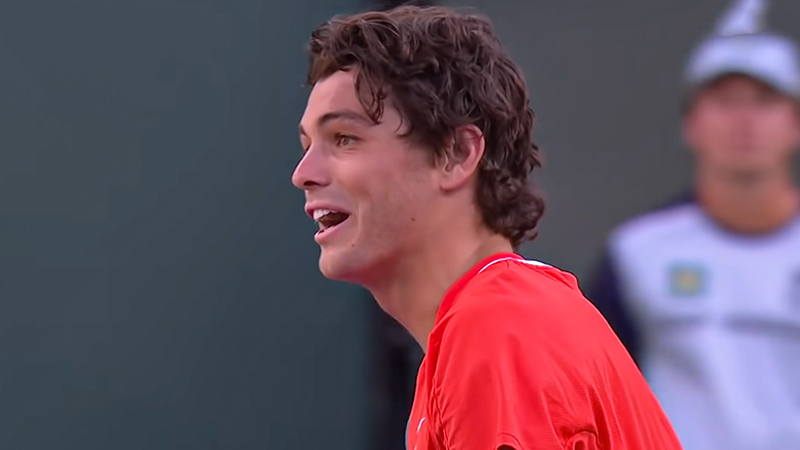
At the center of this narrative is Taylor Fritz, the top-ranked American whose season has become a case study in high-performance management under physical duress.
For stakeholders, fans, and analysts, the question “Is Taylor Fritz injured?” requires a nuanced answer that distinguishes between acute setbacks and the chronic realities of a modern ATP career.
As we evaluate the 2026 campaign, it becomes clear that while Fritz has faced significant hurdles, his ability to maintain a top-tier ranking while navigating chronic knee tendinitis speaks to a sophisticated approach to sports medicine and tactical adaptation.
The Anatomy of the Challenge: Understanding Chronic Tendinitis
To understand Fritz’s 2026 season, one must first understand the nature of his primary physical obstacle.
Reports throughout the year have confirmed that Fritz has been managing chronic knee tendinitis, a condition characterized by persistent inflammation of the tendons connecting the kneecap to the shinbone.
Unlike an acute tear or a fracture, tendinitis is an overuse injury. For a player of Fritz’s stature—standing 6’5” and relying on an explosive serve and heavy baseline movement—the hard courts of the ATP Tour act as a catalyst for this inflammation.
Earlier in the 2026 season, the severity of this condition reached a threshold that necessitated a complete withdrawal from competition, forcing him to miss several weeks of the tour to focus on rehabilitation and inflammation control.
The “chronic” designation is critical. It implies that the injury is not something that will simply disappear with a week of rest; rather, it is a condition that must be managed daily through load monitoring, physiotherapy, and occasionally, strategic tournament withdrawals.
Mid-Season Resilience: The Mubadala DC Open Turning Point
The summer hard-court swing provided the most telling evidence of Fritz’s physical resilience. During the Mubadala DC Open in late July, alarm bells rang throughout the tennis community when Fritz appeared to suffer a “tweak” to his left knee during match play.
In the immediate aftermath, speculation suggested that the American might be forced into an extended sabbatical.
However, the subsequent events offered a masterclass in professional grit. Fritz not only downplayed the severity of the tweak in post-match press conferences but proceeded to navigate the draw with clinical efficiency.
By capturing the title in Washington, D.C., Fritz sent a clear signal to the tour: he is capable of winning at the highest level even when his physical state is less than 100%.
This victory was not just a testament to his skill, but to his ability to adapt his game—perhaps shortening points or relying more heavily on his primary delivery—to protect his knee during high-stakes moments.
The US Open Narrative: Fact-Checking the “Injury” Exit
The most significant point of confusion regarding Fritz’s health occurred during the 2026 US Open.
As the tournament progressed, various reports and social media speculation suggested that Fritz’s eventual exit was the result of a physical breakdown or a mid-match retirement.
The data, however, tells a different story. Fritz’s departure from Flushing Meadows came in the third round following a grueling, high-intensity five-set defeat to Francisco Cerúndolo.
Analyzing this match provides several insights:
- Endurance Capacity: Playing five sets at the US Open is perhaps the ultimate stress test for a knee joint. The fact that Fritz was able to compete for several hours against a baseline grinder like Cerúndolo indicates that his tendinitis, while present, was not debilitating to the point of structural failure.
- Outcome vs. Health: His exit was driven by the scoreboard, not a medical withdrawal. In the high-stakes environment of a Grand Slam, the margins are razor-thin. While his movement might have been marginally impacted by the cumulative fatigue of the season, he remained a competitive force until the final point.
- Post-Match Status: Unlike players who leave a tournament and immediately announce surgery, Fritz’s exit was framed as a competitive disappointment rather than a medical emergency.
The Strategy of Load Management in Modern Tennis
Fritz’s 2026 season reflects a broader trend in the ATP: the rise of the “managed athlete.” With the season spanning nearly 11 months, players in the top 10 must make difficult decisions regarding their schedules.
For Fritz, the “weeks missed” earlier in the year were not a sign of weakness, but a calculated strategic move to ensure he could peak during the North American summer.
By prioritizing recovery during the European clay-court swing or early grass season, he preserved the structural integrity of his knee for the surface where he is most dangerous: the hard courts.
This approach requires a sophisticated support team, including:
- Physiotherapists: Focusing on patellar tracking and eccentric strengthening.
- Coaching Staff: Optimizing practice sessions to reduce unnecessary “miles” on the joints.
- Data Analysts: Tracking movement efficiency to identify when fatigue starts to compromise form.
Expert Analysis: Tactical Shifts to Compensate for Knee Load
Observing Fritz’s tactical evolution in 2026, there are subtle indicators of how he has adjusted to his knee condition.
At his peak health, Fritz is known for his ability to defend out of the corners. In 2026, there has been a noticeable shift toward a more aggressive, “first-strike” mentality.
By increasing the velocity of his first serve and looking to dictate with his forehand earlier in the rally, Fritz effectively reduces the number of lateral sprints required per game.
This “short-point” strategy is a common adaptation for players managing lower-extremity inflammation, as it minimizes the eccentric loading caused by sudden stops and changes of direction.
The Road Ahead: Longevity and the 2027 Outlook
As we look toward the final stages of the 2026 season and the beginning of 2027, the focus for Taylor Fritz will remain on sustainability.
The chronic nature of tendinitis means that the “injury” conversation will likely follow him for the remainder of his career. However, if 2026 has proven anything, it is that Fritz’s competitive ceiling remains incredibly high despite these physical constraints.
His victory in Washington and his five-set battle in New York demonstrate a player who has mastered the art of “winning ugly” and “winning hurt.”
In the world of professional sports, where no athlete is ever truly at zero pain, Fritz’s ability to navigate these waters is what defines his status as a world-class competitor.
Strategic Summary
For those tracking Fritz’s trajectory, the key performance indicators (KPIs) should not be the absence of pain, but the consistency of his results.
- Risk Level: Moderate (Chronic conditions require constant vigilance).
- Performance Impact: Low to Moderate (Tactical adjustments have mitigated movement limitations).
- Long-term Outlook: Positive (Successful management of the 2026 season suggests a viable path forward without major surgery).
Taylor Fritz remains a formidable force on the ATP Tour. While the “injury” headlines may persist, the reality is a story of a professional athlete operating at the limit of human performance, managing the inevitable wear and tear that comes with being the best in the business.