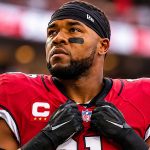
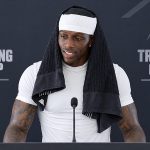
How Did the Pirates Get Bryan Reynolds? Inside the Trade That Built a Cornerstone
The Pittsburgh Pirates got Bryan Reynolds from the San Francisco Giants on January 15, 2018, as part of the trade that sent Andrew McCutchen to San Francisco.
For most of the years since, Reynolds has been one of the most dependable bats in the Pirates lineup: a switch-hitter who hits for average, drives the ball into the gaps, and takes the field almost every day.
Yet Reynolds was never drafted by Pittsburgh, and he never played a game in the Pirates system before the club traded for him. His arrival traces back to one of the most emotional days in recent franchise history.
Here is the full story of the deal, why it happened, and how it became one of the best trades Pittsburgh has made in years.
Reynolds Came Over in the Andrew McCutchen Trade
On January 15, 2018, the Pirates traded five-time All-Star and 2013 National League MVP Andrew McCutchen to the San Francisco Giants.
In return, Pittsburgh received three assets: right-handed pitcher Kyle Crick, minor league outfielder Bryan Reynolds, and $500,000 in international signing bonus pool space.
The Pirates also sent the Giants $2.5 million in cash to cover part of McCutchen’s $14.75 million salary for 2018.
At the time, nearly all of the attention went to McCutchen. Pirates fans were saying goodbye to the face of their franchise, and most headlines focused on what San Francisco was gaining.
Outside of prospect circles, few people were talking about the young switch-hitting outfielder heading east. That would not last long.
Why the Pirates Traded Andrew McCutchen
The Pirates traded McCutchen because he had one year left on his contract and the team did not expect to re-sign him.
He was set to hit free agency after the 2018 season, and the front office, led by general manager Neal Huntington, did not believe it could match his market price and still build a competitive roster around him.
The team was already changing direction. Just two days earlier, Pittsburgh had traded ace Gerrit Cole to the Houston Astros.
Moving McCutchen was the second major step in less than a week, and it made clear that the Pirates were prioritizing young, controllable talent over one last run with their veteran stars.
It was not an easy call. Team chairman Bob Nutting publicly described it as one of the most painful decisions of his tenure.
McCutchen had led the Pirates to three straight postseason appearances from 2013 to 2015 after two decades of losing seasons, and he was deeply loved in Pittsburgh.
Still, the front office believed that getting real value for him before he could leave in free agency was the responsible move.
Who Was Bryan Reynolds Before the Trade?
Before the trade, Reynolds was a fast-rising Giants prospect with an advanced bat. Born in Baltimore, he built his reputation at Vanderbilt University, one of the top college baseball programs in the country. The Giants selected him in the second round of the 2016 MLB Draft with the 59th overall pick.
He hit right away as a professional. In 2017, his first full minor league season, Reynolds batted .312 with 26 doubles, nine triples, 10 home runs, and 63 RBIs for Class A Advanced San Jose.
Across his first two pro seasons in the Giants system, he hit .312 with 16 homers and 101 RBIs in 177 games.
Scouts liked his patient approach, his ability to hit from both sides of the plate, and his knack for consistent hard contact. He was not viewed as a can’t-miss superstar, but he was seen as a polished college bat with a high floor.
For a Pirates front office that wanted players who could help soon and stay under team control for years, he fit the profile perfectly.
What Else Came to Pittsburgh in the Deal
Reynolds was not the only piece the Pirates received. Kyle Crick, a former first-round pick who had battled control problems as a starter, found a new role in the bullpen and gave Pittsburgh a strong 2018 season as a setup reliever.
Injuries and inconsistency limited him after that, and his run with the club was relatively short.
The $500,000 in international bonus pool space gave the Pirates extra room to sign young players from Latin America and other international markets. Both pieces had value, but as the years went by, it became obvious that Reynolds was the true prize of the trade.
From Prospect to Big League Star
Reynolds reached the majors just 15 months after the trade and was an impact hitter from day one. He spent 2018 at Double-A Altoona, then debuted with the Pirates in April 2019.
His rookie season was a breakout: he hit .314 with 37 doubles and 16 home runs and finished fourth in National League Rookie of the Year voting.
The shortened 2020 season was a rough patch, as he batted just .189, but Reynolds answered any doubts in 2021.
That year he hit .302 with 24 home runs, 90 RBIs, and eight triples, earning his first All-Star selection and posting roughly 6 wins above replacement. It was the season that confirmed he was a true core player.
From there, Reynolds settled in as the steady center of the lineup. He hit 27 home runs in 2022, followed by 24 homers in both 2023 and 2024, and made his second All-Star team in 2024. Through several losing seasons in Pittsburgh, he was the one hitter fans could count on.
The Contract That Kept Reynolds in Pittsburgh
In April 2023, Reynolds signed an eight-year, $106.75 million extension that locked him in as a long-term Pirate. The road there was not smooth.
After the 2022 season, with extension talks going nowhere, he requested a trade, and many fans feared Pittsburgh would lose another star just as it had lost McCutchen and Cole.
Instead, the two sides found common ground. The deal runs through 2030 and includes a team option for 2031. It was the richest contract in franchise history at the time, and it came with no-trade protection, something the Pirates had not offered a player in 17 years.
For a small-market club often criticized for letting talent walk, the extension was a clear statement that Reynolds was part of the long-term plan.
How the Trade Looks Today
Nearly nine years later, the trade looks lopsided in Pittsburgh’s favor. McCutchen played only part of one season in San Francisco before the Giants traded him to the New York Yankees in August 2018.
He later signed with the Philadelphia Phillies and, in a fitting twist, returned to the Pirates in 2023, where he became Reynolds’ teammate.
Reynolds, meanwhile, has given the Pirates eight seasons and counting. His 2025 campaign was the toughest full year of his career, with a .245 average and a spike in strikeouts.
He answered in 2026 with a strong rebound, sharply raising his walk rate and getting back to the all-around production that made him a star.
By late July 2026, he was hitting .275 with a .391 on-base percentage, 14 home runs, and 59 RBIs. Along the way he passed 150 career home runs, every one of them in a Pirates uniform.
Final Thoughts
So, how did the Pirates get Bryan Reynolds? They acquired him from the San Francisco Giants on January 15, 2018, in the trade that sent Andrew McCutchen west, alongside pitcher Kyle Crick and $500,000 in international bonus pool money.
It was a painful goodbye to a franchise icon, but it brought back the player who would become the next face of the team.
For Pirates fans, the Reynolds story is a reminder that the most important part of a blockbuster trade is not always the biggest name. Sometimes it is the quiet prospect at the bottom of the headline who ends up shaping the next decade of the franchise.