The transition from a collegiate standout to a professional cornerstone is rarely a linear progression.
For athletes entering the professional ranks as a first overall selection, the pressure of expectations can often overshadow the incremental growth required to succeed at the highest level.
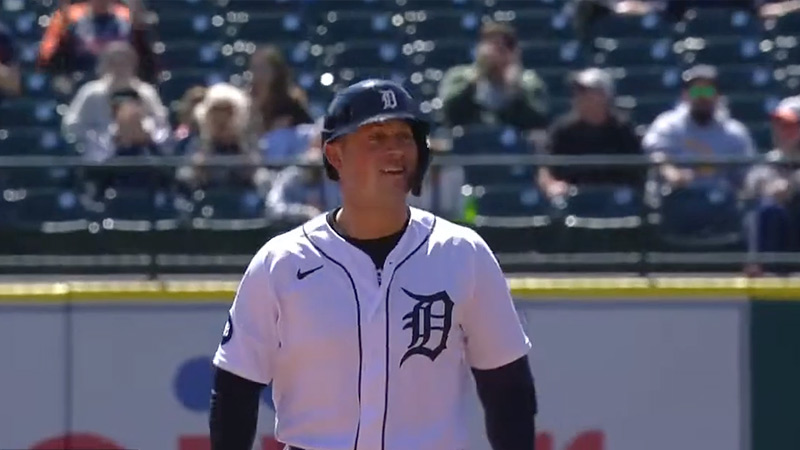
Spencer Torkelson, the first overall pick for the Detroit Tigers in the 2020 draft, serves as a primary example of this developmental complexity. Since his debut, his career has been defined by a series of adjustments, flashes of elite production, and challenging periods of inconsistency.
To answer the fundamental question—is he going to be “good”—one must first define the parameters of success for a modern first baseman.
If the expectation is a perennial superstar who anchors the lineup with both average and power, the results remain inconclusive.
However, if the goal is to secure a valuable hitter capable of punishing mistakes and providing significant home run totals, the data suggests he has already reached that threshold.
The Statistical Journey: A Longitudinal Performance Analysis
A comprehensive review of the performance metrics from 2022 through late 2026 reveals a player caught in a cycle of “all-or-nothing” outcomes. His trajectory highlights the struggle to lock in everyday consistency at the major league level.
| Season | Games Played | Batting Average | Home Runs | RBIs | OPS |
|---|---|---|---|---|---|
| 2022 (Rookie) | 131 | .208 | 8 | 29 | .604 |
| 2023 | 159 | .233 | 31 | 94 | .758 |
| 2024 | 92 | .219 | 10 | 37 | .700 |
| 2025 | 145 | .240 | 31 | 78 | .740 |
| 2026 (thru Sept) | 134 | .230 | 25 | 74 | .753 |
The 2023 Breakthrough vs. the 2024 Regression
The 2023 season offered the most compelling evidence of his potential ceiling, where he appeared in nearly every game and produced a career-high 31 home runs and 94 RBIs. This performance solidified the belief that his power was not only real but capable of carrying an offense.
However, the following year saw a significant reduction in both games played and production, with his home run total dropping to just 10, illustrating the volatile nature of his offensive profile.
The Power Profile: A Proven Ability to Punish Mistakes
The most significant asset in the evaluation of this athlete is his raw power. Reaching the milestone of 100 career home runs is a testament to his ability to capitalize on pitcher errors.
Despite fluctuations in batting average, the capacity to reach the 30-home-run plateau twice in four years is a rare commodity.
- Elite Power Indicators: He has demonstrated an ability to maintain high home run totals even during seasons where his overall contact rate suffers.
- Milestone Achievements: Surpassing 100 career home runs establishes him as a legitimate threat in the middle of any professional lineup.
- Situational Hitting: His 94-RBI campaign in 2023 shows he can be a primary run producer when the surrounding lineup provides opportunities.
The Mechanical and Defensive Challenges
While the power is undeniable, several factors continue to suppress his overall value and prevent him from reaching superstar status. These weaknesses create a lower floor that can make him a liability during extended slumps.
1. The “All-or-Nothing” Approach
His offensive philosophy often results in high strikeout percentages, which limits his ability to contribute when the ball isn’t leaving the park. This high-variance approach is a significant contributor to the “rollercoaster” nature of his career.
2. Defensive Deficiencies at First Base
Modern roster construction places a premium on defensive versatility and efficiency, even at first base. Unfortunately, he has struggled with negative defensive runs saved, indicating that his glove does not currently add value to the team’s run prevention efforts.
3. Prolonged Cold Snaps
Consistency remains the most elusive trait. His career has been marked by lengthy slumps that have forced tactical changes from the coaching staff.
Manager AJ Hinch has occasionally found it necessary to cycle him out of the starting lineup to mitigate the impact of these downturns.
Redefining Success: Hitter with Power vs. Perennial Superstar
The debate surrounding his future often centers on the mismatch between his draft pedigree and his actual production.
As a former No. 1 overall pick, there is an inherent expectation of dominance. However, a more realistic assessment suggests he is shaping up to be a valuable “hitter with power”.
- The Value of a Power Hitter: In the current professional landscape, a player who can consistently hit 25–30 home runs provides immense value, even with a lower batting average.
- Roster Fit: For a team like the Detroit Tigers, having a reliable power threat in the middle of the order is essential for competitive play, regardless of whether that player hits for a high average.
- Developmental Patience: His 2025 and 2026 seasons show a stabilization of power, suggesting that while he may never be a perennial MVP candidate, he can be a productive major league regular.
Strategic Adjustments and Future Outlook
For this athlete to elevate his game to the next level, several adjustments are likely necessary. The focus must shift from pure power to improved contact rates and defensive reliability.
- Refining the Approach: Reducing strikeout rates would allow for more “productive outs” and higher on-base percentages, raising his overall OPS.
- Defensive Investment: Improving footwork and range at first base could move him from a defensive liability to a neutral or positive contributor, significantly increasing his Wins Above Replacement (WAR).
- Mental Fortitude: Navigating the “rollercoaster” of a long season requires a level of mental consistency that allows him to shorten his slumps and maximize his hot streaks.
Final Verdict: The Long-Term Forecast
Determining whether Spencer Torkelson is “going to be good” requires a nuanced understanding of modern baseball value. He is a player of extremes—elite power offset by significant mechanical and defensive flaws.
The data from 2022 to 2026 indicates that he has successfully established himself as a legitimate major league power threat.
While he may not fulfill the “perennial superstar” expectations often placed on No. 1 overall picks, his ability to consistently drive the ball and produce high home run totals makes him an essential piece of the Detroit Tigers’ offensive strategy.
The “rollercoaster” will likely continue, but for a team in need of power, the ride is well worth the investment.
As he continues to mature, the focus will remain on whether he can find the “everyday consistency” that separates the valuable starters from the true icons of the sport.