In the competitive landscape of professional athletics, the word “good” is often used loosely, yet for a professional baseball player, it represents a standard of consistency, resilience, and high-level production that few humans ever achieve.
Gio Urshela, whose career concluded in May 2026, serves as a masterclass in what it means to be a “solid, highly productive” major league infielder
. To understand if Urshela was truly “good,” one must look beyond the back of a baseball card and evaluate the trajectory of a 10-year career that spanned eight different franchises and reached its zenith in the most pressurized environment in sports: New York City.
The Standard of Longevity: A Decade on the Diamond
The average career of a major league baseball player is significantly shorter than a decade. By reaching the 10-year milestone, Urshela placed himself in an elite category of athletes who possess the adaptability to survive the constant evolution of professional pitching and defensive shifts.
His journey was not a linear path of stardom, but rather a narrative of a “dependable defender” who found his rhythm and became a “universally well-regarded” figure in the sport.
Over 852 games, Urshela proved that he could maintain a high level of performance despite changing cities and team cultures on eight separate occasions.
This movement—spanning from Cleveland to Oakland—suggests a player who was perpetually in demand, a “glue guy” whom managers trusted to stabilize an infield.
Statistical Performance Overview
To quantify whether a player is “good,” we must first establish the baseline of their offensive and defensive output. Urshela’s career totals reflect a player who was an asset to the lineup, particularly during his prime years.
| Metric | Career Total / Average | Contextual Significance |
|---|---|---|
| Batting Average | .270 | Reflects a consistent ability to put the ball in play in a high-strikeout era. |
| On-Base Percentage | .314 | Indicates a disciplined approach and the ability to reach base safely. |
| Slugging Percentage | .407 | Shows moderate power, capable of extra-base hits and driving in runs. |
| Home Runs | 73 | Demonstrates “clutch hitting” capabilities, particularly during peak seasons. |
| Runs Batted In (RBI) | 352 | Highlights his effectiveness in run-scoring opportunities. |
| Games Played | 852 | A testament to his durability and value to multiple organizations. |
The New York Renaissance: A Peak Performance Case Study
If one is searching for the definitive proof of Urshela’s “goodness,” they need look no further than his three-year tenure with the New York Yankees from 2019 to 2021. It was during this window that Urshela transformed from a journeyman into a “fan favorite” and a legitimate offensive threat.
- The 2019 Breakout: This season remains the gold standard for Urshela’s career. He posted a remarkable .314 batting average, coupled with 21 home runs and 74 RBIs. In a city where expectations are immense, Urshela didn’t just meet the bar; he became an “everyday” fixture in the lineup.
- Clutch Hitting: Beyond the raw numbers, the “clutch” nature of his performance in the Bronx solidified his reputation. He became known for delivering in high-leverage situations, a trait that defines “good” players in the postseason hunt.
- The Transition: Before this stint, many viewed him primarily as a defensive specialist. The 2019 season proved he possessed an “above-average bat,” capable of anchoring the middle of a championship-caliber order.
Defensive Excellence at the “Hot Corner”
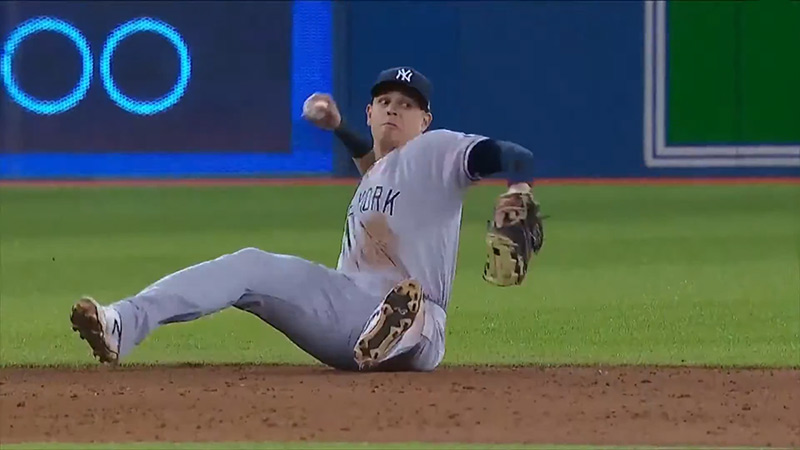
While his bat earned him the headlines in 2019, his glove was the foundation of his 10-year career. Playing third base—often referred to as the “hot corner” due to the velocity of the balls hit toward it—requires elite reflexes and arm strength.
- Highlight-Reel Plays: Urshela was synonymous with “exceptional defense”. His ability to make “highlight-reel plays” was not merely for entertainment; it saved countless runs for his pitching staffs across eight franchises.
- Reliability: Even as he aged, he remained a “dependable defender”. This defensive floor ensured that even when his offensive production fluctuated, he remained a net positive on the field.
- Versatility: His identity as a “productive major league infielder” implies an ability to handle the rigors of the position with a level of grace and consistency that coaches value over raw, inconsistent talent.
The Reality of Athletic Attrition: Injuries and Later Career
A critical aspect of evaluating any professional athlete is how they handle the inevitable decline brought on by physical toll. For Urshela, the “later career” was defined by a battle against his own body.
- The 2023 Pelvic Fracture: This was a “severe” injury that fundamentally altered the trajectory of his final years in the league. A pelvic fracture for an infielder affects the rotational power of the swing and the lateral quickness required for elite defense.
- Hamstring Issues: Recurring soft-tissue injuries further “slowed his production” and “derailed his peak form”. It is a testament to his mental toughness that he continued to contribute to major league rosters until his retirement at age 34.
- Professionalism in Decline: Even as his stats dipped below his 2019 highs, he maintained his status as a “universally well-regarded clubhouse presence”. In professional baseball, a player who can mentor younger teammates while dealing with personal physical setbacks is considered an invaluable asset.
The Global Journey: A Multi-Franchise Impact
Urshela’s career is unique because of the breadth of organizations he influenced. Wearing the jerseys of eight different franchises is a rare feat that speaks to a player’s broad appeal and professional reputation.
The Eight Franchises of Gio Urshela:
- Cleveland
- Toronto
- New York Yankees
- Minnesota
- Los Angeles Angels
- Detroit
- Atlanta
- Oakland
This list represents a wide cross-section of the league, from perennial contenders to teams in various stages of rebuilding. Each stop required Urshela to learn new systems, bond with new teammates, and perform under different sets of expectations.
The fact that he remained “highly productive” through these transitions is a significant indicator of his professional quality.
The Intangibles: Clubhouse Presence and Fan Connection
In the modern era of data-driven decisions, it is easy to overlook the human element of the game. However, the sources emphasize that Urshela was more than just a collection of stats; he was a “fan favorite” and a “respected” peer.
- Peer Respect: Being “universally well-regarded” in a clubhouse means a player contributes to a winning culture. This involves showing up early, assisting younger players with defensive positioning, and maintaining a positive attitude through the grueling 162-game schedule.
- Fan Engagement: In New York, fans are notoriously difficult to please. Urshela’s ability to win them over suggests a player who played the game with a visible passion and a “clutch” gene that resonated with the bleacher creatures and casual viewers alike.
Final Verdict: Was Gio Urshela “Good”?
When assessing a 10-year career that concluded at the age of 34, the answer is a definitive yes. While he may not be a Hall of Fame candidate, he occupied the essential tier of “solid, highly productive” players who form the backbone of the Major Leagues.
Key Takeaways from the Urshela Legacy:
- Peak Excellence: He reached a ceiling in 2019 that few players ever touch, proving he could be a premier offensive threat in the league’s biggest market.
- Defensive Consistency: He provided a decade of “exceptional defense” and “highlight-reel plays” at one of the most demanding positions on the field.
- Professionalism: He navigated eight different cities and severe injuries with a level of grace that made him a “universally well-regarded” figure until his final day in uniform.
- Resilience: He overcame a “severe pelvic fracture” to finish his career on his own terms in May 2026.
Gio Urshela’s career reminds us that being “good” in the Major Leagues is about more than a single season or a single stat.
It is about the ability to show up, year after year, and provide “steady numbers” and “dependable” play while serving as a leader for the next generation.
As he moves into retirement, his 10-year journey stands as a blueprint for professional longevity and excellence in the modern era of baseball.