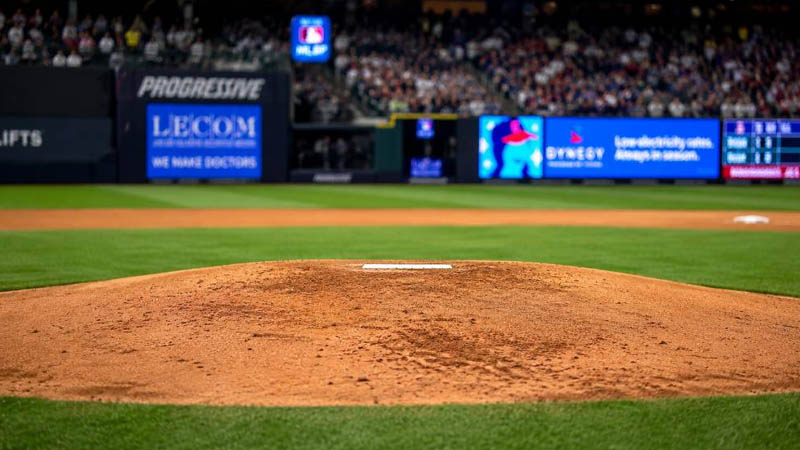
When fans watch a Major League Baseball game, they rarely think about the exact geometry beneath the pitcher’s cleats.
Yet, the small patch of elevated dirt where the duel between pitcher and batter takes place is one of the most precisely regulated elements in all of sports.
If you have ever wondered how high a pitching mound is, the standard answer for professional and collegiate play is 10 inches.
However, that single measurement is only the beginning of a complex engineering standard designed to balance the physics of pitching, player safety, and the historical evolution of America’s pastime.
From the exact distance to home plate to the graduated slopes required for youth leagues, understanding the architecture of the pitching mound reveals why this dirt circle dictates the entire strategy of the game.
The Official Regulation Pitching Mound Dimensions
For professional leagues—including Major League Baseball (MLB), Minor League Baseball (MiLB), and the NCAA—the specifications for the pitching mound are exact.
Governing bodies leave no room for guesswork, ensuring uniformity whether a game is played in a historic stadium or a modern multi-billion-dollar ballpark.
Key Professional Measurements
- Height: Exactly 10 inches above the level of home plate.
- Distance to Home Plate: 60 feet, 6 inches, measured from the front edge of the pitching rubber (the pitcher’s plate) to the rear point of home plate.
- Diameter: 18 feet across, forming a wide, circular platform centered halfway between home plate and the second base bag (though mathematically, the distance is measured from the back of home plate to the front of the rubber).
- The Slope: The mound slopes downward at a rate of 1 inch for every 1 foot closer to home plate, beginning 6 inches in front of the pitching rubber.
The Anatomy of the Pitcher’s Plate (The Rubber)
The pitching rubber itself is a white rectangular slab made of rubber, measuring 24 inches long and 6 inches wide. It is sunk flush into the top of the mound, anchored into the clay.
The front edge of this rubber marks the official starting point for both the pitcher’s stride and the official measurement to home plate.
Why 10 Inches? The Physics and History of Mound Height
The 10-inch height standard is not arbitrary. It represents a carefully calibrated compromise between pitching dominance and batting offense, refined through decades of rule changes.
The Physics of the Pitch
Gravity is a pitcher’s best ally. By elevating the pitcher 10 inches above home plate, the mound allows the thrower to harness downward plane.
- Arm Angle and Leverage: A higher release point creates a steeper downward trajectory toward the strike zone. This makes it more difficult for hitters to square up the ball, as pitches appear to dive downward as they cross the plate.
- Kinetic Energy: The downward slope assists the pitcher in transferring momentum forward during the kinetic chain of the delivery, converting leg drive into velocity.
A Brief History: When the Mound Was Taller
The mound has not always stood at 10 inches. For much of the mid-20th century, the mound was significantly higher—often reaching 15 inches or more.
During the 1960s, particularly in 1968 (famously known as the “Year of the Pitcher”), dominant hurlers like Bob Gibson and Sandy Koufax completely suppressed league batting averages.
Gibson posted a microscopic 1.12 ERA in 1968, and the overall offensive output dropped so drastically that MLB took action.
Before the 1969 season, MLB lowered the mound from 15 inches to 10 inches and shrunk the strike zone. This immediate adjustment restored balance to the game, boosting offense and creating the dynamic game we recognize today.
Youth and Little League Pitching Mound Heights
While 10 inches is the golden rule for adults, forcing a pre-teen player to pitch from a 10-inch elevation would wreak havoc on their developing joints. Youth baseball organizations enforce graduated mound heights to protect growing arms and promote proper biomechanics.
Age-Based Height Standards
Ages 5–8 (Beginners / Coach Pitch): Flat ground or a minimal 4-inch elevation. At this stage, the focus is entirely on basic throwing mechanics without placing stress on the elbow and shoulder.
Ages 7–12 (Little League / Bronco): 6 inches. This introduces a slight slope, preparing players for regulation mechanics while keeping physical strain manageable.
Ages 11–14 (Pony / Intermediate / Junior High): 8 inches. As players grow taller and transition to larger field dimensions (such as the 50/70 diamond or full 60-foot-6-inch distance), the mound rises to bridge the gap between youth and high school play.
Ages 14+ (High School, Collegiate, and Pro): 10 inches. At this level, players have reached skeletal maturity and compete on full-size professional specifications.
Why Graduated Heights Matter
Pediatric sports medicine and coaching associations emphasize that young pitchers should never throw from adult-height mounds.
An improper slope forces the pitcher to overcompensate with their shoulder and elbow rather than driving with their legs, significantly increasing the risk of overuse injuries like Little League elbow or shoulder inflammation.
How Groundskeepers Maintain the Mound
To the casual observer, a pitching mound is simply a pile of dirt. In reality, maintaining a regulation mound is a masterclass in groundskeeping science.
The Materials
Professional groundskeepers do not use standard topsoil. Instead, they rely on specialized infield clay mixtures—often composed of a precise blend of high-density clay, silt, and sand. Clay packs tightly, resisting the explosive force of a pitcher’s landing foot.
High-Wear Zones
The two areas that require the most maintenance during a game are:
- The Landing Footprint: Where the pitcher’s stride foot impacts the slope after release, often carving out deep craters.
- The Power Pockets: Just in front of the rubber where the back foot digs in during the push-off.
Groundskeepers pack these holes with moist clay and tampers between innings and completely rebuild the slope during the off-season to ensure the 10-inch standard remains exact.
Frequently Asked Questions
Is the pitching mound distance measured from the back or front of home plate?
The distance of 60 feet, 6 inches is measured from the front edge of the pitching rubber to the rear point (back tip) of home plate.
Do softball fields use a pitching mound?
No. Fastpitch softball is played on a completely flat field. The pitcher’s plate is embedded flush into the dirt at ground level, located 43 feet away from home plate at the collegiate and international levels.
Why is the distance 60 feet and 6 inches instead of an even 60 feet?
According to baseball lore, the strange addition of the extra 6 inches was a clerical error during the codification of the rules in 1893.
When the league decided to move the pitcher back from 50 feet to combat high offense, the committee intended to set the distance at 60 feet.
However, due to a transcription misunderstanding, it was written down as 60 feet, 6 inches—and the measurement has remained sacred ever since.
Conclusion
The 10-inch pitching mound is far more than a simple hill of dirt. It is a finely tuned athletic platform born from decades of baseball history, biomechanical research, and competitive balance.
Whether examining Little League safety standards or the exact geometry of a Major League diamond, every inch of the mound plays a vital role in shaping the timeless duel between the person on the rubber and the batter at the plate.