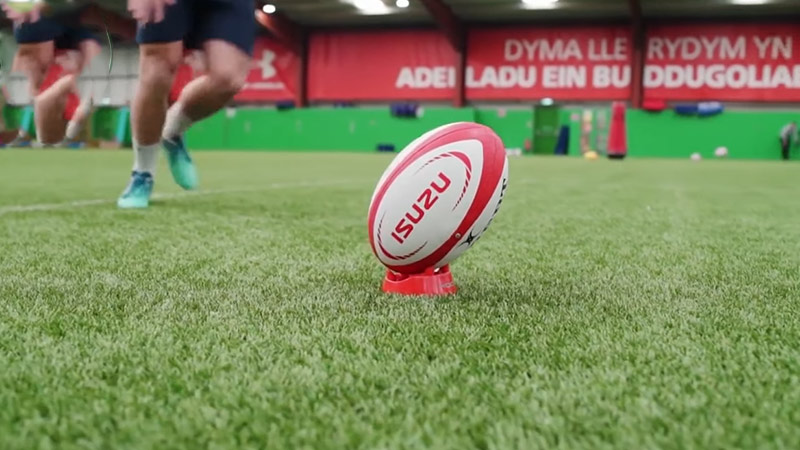
The crossover appeal of kicking sports has sparked an analytical debate among global sports fans: how is kicking distance actually calculated in rugby, and how does it compare to the highly standardized metrics of American gridiron football?
For fans transitioning to viewing rugby after watching American football, the lack of an official, database-tracked “field goal distance” metric in rugby box scores can be confusing.
While gridiron fans are accustomed to instant, highly precise yardage numbers flashed on screen for every field goal attempt, rugby approaches the post-kick metric with a completely different architectural and structural methodology.
This comprehensive analysis breaks down the physical, architectural, and mathematical differences between rugby goal kicking and gridiron field goals, analyzing why the numbers on the scoreboard represent two fundamentally different tests of athletic distance.
The Core Architectural Differences: Field Layouts Compared
The primary reason kicking distances are calculated differently between the two sports lies in stadium architecture and pitch design. To understand the math, we must first analyze the physical lines and structures of the playing surfaces.
In American football, the playing field is highly segmented, defined by yard markers running from goal line to goal line. In contrast, a rugby pitch is measured in meters, designed for fluid movement with fewer structural markers.
The most critical difference is the location of the goalposts.
- In American Football: The goalposts sit at the very back of the end zone, completely removed from the active field of play.
- In Rugby: The H-shaped goalposts sit directly on the goal line (also known as the try line).
This basic structural difference completely alters how distance is measured, tracked, and perceived.
Field Dimensions and Goalpost Placement at a Glance
| Feature | American Gridiron Football | Rugby (Union & League) |
|---|---|---|
| Measurement Unit | Yards | Meters |
| Goalpost Location | Back of the End Zone (10 yards behind the goal line) | Directly on the Goal Line (Try Line) |
| Standard Official Tracking | Yes, officially recorded in all box scores and historical databases | No, official statistics do not calculate or track “field goal distance” |
| Calculation Formula | Distance from Line of Scrimmage + Holder Depth (7-8 yards) + End Zone Depth (10 yards) | Direct linear ground distance from the kick spot to the goal line/H-posts |
| Primary Measurement Method | Mathematical addition based on field line markings | Direct linear measurement by broadcasters, analysts, or custom tracking |
Deciphering the Gridiron Field Goal Formula
To fully appreciate rugby’s direct ground distance measurement, we must first understand how American football calculates its field goal distances.
Many sports enthusiasts assume that a field goal’s distance is simply the distance from the line of scrimmage to the goal line. In reality, the calculation requires a three-step mathematical formula.
The Three-Part Gridiron Formula
When an American football team aligns for a field goal, three distinct variables dictate the official distance of the attempt:
- The Line of Scrimmage: This is the spot where the ball is snapped to start the play.
- The Holder’s Depth (Snap Distance): To allow the kicker enough space to clear the rushing defensive line, the ball is snapped backward to a holder who places it on the ground. This snap distance typically covers 7 to 8 yards behind the line of scrimmage. However, this is not a rigid rule; teams can adjust the holder further back to clear a heavy rush or move closer to decrease total distance at the risk of a block.
- The End Zone Depth: Because the goalposts sit at the very back of the end zone, a flat 10 yards must always be added to the calculation, as the end zone is exactly 10 yards deep.
The Standard Calculation in Action
If an offense is stopped at the opponent’s 35-yard line, the field goal distance is not 35 yards. The official calculation operates as follows:
Line of Scrimmage (35 yards) + Holder Depth (7 or 8 yards) + End Zone Depth (10 yards)= 52 or 53-Yard Field Goal
Thus, a standard kick from the 35-yard line is recorded as a 53-yard field goal. The actual distance of the field goal is defined precisely by where the ball is held and kicked relative to the goalposts at the back of the end zone.
The Rugby Approach: Pure Ground Distance
Rugby rejects the multi-variable formula of gridiron football in favor of pure ground distance. Because the H-posts sit directly on the try line, there is no end zone buffer to calculate, and there is no snap or holder depth to account for.
In rugby, the distance of a kick at goal is measured simply as the physical distance in meters from the spot where the ball is kicked to the goal line and H-posts.
The Direct Measurement Method
Since official rugby statistics do not track this metric, there is no automated database or official league record for kicking distances. Instead, tracking is driven primarily by media and live broadcast coverage.
- Broadcaster and Analyst Metrics: During live matches, television broadcasters or sports analysts calculate the linear distance in meters from the exact spot of the kick to the center of the crossbar.
- No Artificial Additions: Because there is no snap, a rugby kicker takes the kick directly from the designated spot on the field without an artificial 17-to-18-yard addition.
- The Pitch Reality: A 40-meter kick in rugby is a true 40-meter flight of the ball to the goal line, whereas a 40-yard field goal in gridiron football is kicked from only 22 yards away from the goal line.
The Mechanics of the Three Rugby Kicking Scenarios
Rugby features three distinct situations where a player may kick for goal: Penalty Kicks, Drop Goals, and Conversions. Each scenario has its own rules for determining the physical spot of the kick, which in turn dictates the ground distance to the posts.
                RUGBY PITCH GOAL LINE & H-POSTS
================================================================= (Goal Line / Try Line)
      |                                                   |
      |                      H-POSTS                      |
      |                                                   |
=================================================================
      ^                        ^                          ^
      |                        |                          |
      | [Direct Line]          | [Straight Back]          | [Angled Line]
      |                        |                          |
(Penalty Spot)           (Conversion Spot)          (Drop Goal Spot)
[Infringement point       [In line with try          [Dropped & kicked in
 or chosen mark]          grounding, depth           active open play]
                          customized by kicker]
1. Penalty Kicks: Driven by the Infringement Spot
When an opposing team commits a major rules infraction, the non-offending team can elect to kick for goal to secure three points.
- Determining the Spot: The kick must be taken from the exact spot where the penalty infringement occurred, or from any point directly behind that spot, parallel to the touchlines.
- Measuring the Distance: The ground distance is measured in a straight line from this exact mark to the goal line. If a penalty is conceded 40 meters out from the try line, the kicker must attempt the shot from exactly 40 meters out, facing both the distance and whatever angle the lateral position on the pitch presents.
2. Drop Goals: Calculated in Open Play
A drop goal is a highly tactical play where a player kicks the ball through the posts during active, open play to score three points.
- Determining the Spot: Unlike penalty kicks or conversions, there is no stoppage of play to set up a tee. The kicker must drop the ball to the turf and kick it immediately as it rebounds.
- Measuring the Distance: The distance is calculated from the exact spot where the kicker’s foot makes contact with the ground to the try line. Because the game is moving rapidly around the kicker, these measurements are usually estimated by broadcasters using pitch markings (such as the 22-meter line or 10-meter line) as reference points.
3. Conversions: The Kicker’s Choice of Depth
After a team scores a try (worth 5 points), they earn the opportunity to kick a conversion (worth 2 points). This scenario offers a highly unique tactical choice regarding distance and angle.
- Determining the Spot: The conversion attempt must be taken straight out from the try line in line with the exact point where the try was grounded. If the ball was touched down near the corner flag, the conversion must be taken from a spot very close to the sideline, creating an incredibly sharp, difficult angle.
- The Depth Choice: To improve their angle of kick, the kicker is allowed to pace straight back any distance they prefer to find a comfortable angle.
- The Distance Math: Pacing further back increases the distance the ball must travel but significantly widens the target angle between the posts. The kicker must mathematically balance the trade-off between a longer-distance kick and a wider, more manageable shooting angle.
The Statistical Void: Why Rugby Skips the Metric
To many modern sports fans, the lack of an official database tracking goal kick distances seems like a missed opportunity for player analysis. However, rugby’s statistical landscape values different performance metrics over raw kicking yardage.
Why Is There No Official Database?
Rugby organizations prioritize success percentages over distance statistics due to several key factors:
- Angle Over Distance: In rugby, the lateral angle of a kick is often a far greater challenge than the distance. A 22-meter kick from the extreme sideline is vastly more difficult than a 40-meter kick from directly in front of the posts. Because raw distance does not capture the difficulty of the angle, tracking distance alone is considered an incomplete metric.
- Tee Customization: Rugby players use kicking tees of varying heights or build mounds of sand to position the ball according to their personal kicking mechanics.
- Environmental Variables: Wind, rain, and pitch conditions play a massive role in rugby, as matches are played in almost all weather conditions on natural grass surfaces that can degrade throughout eighty minutes of play.
How Broadcasters Fill the Gap
While official league databases do not store these numbers, television networks and media analysts use on-screen graphics to measure and display linear distance during matches.
Using high-definition camera angles, pitch-side markings, and stadium telemetry, broadcasters can instantly inform viewers of the exact meter distance of a penalty kick or conversion. This real-time analysis enhances the viewing experience, allowing fans to appreciate the immense leg power required to slot a 50-meter penalty kick.
Direct Comparison: A 45-Yard Field Goal vs. a 45-Meter Rugby Kick
To illustrate how these rules affect what viewers see on television, let us compare two kicks of roughly similar numerical distances: an NFL 45-yard field goal and a rugby 45-meter penalty kick.
NFL 45-YARD FIELD GOAL
[Goal Line]                      [Line of Scrimmage]     [Holder Spot]
    | <------- 10 yards -------> | <---- 27 yards ----> | (Kick Spot)
    |====== End Zone ========== |                      |
    H-Posts                                             X
    Total Kick Distance = 45 Yards (41.1 Meters)
    Physical Ground Distance to Goal Line = 27 Yards (24.7 Meters)

RUGBY 45-METER PENALTY KICK
[Goal Line / H-Posts]                                    [Infringement Spot]
    | <---------------------- 45 meters ----------------------> | (Kick Spot)
    H-Posts                                                     X
    Total Kick Distance = 45 Meters (49.2 Yards)
    Physical Ground Distance to Goal Line = 45 Meters (49.2 Yards)
As the diagram illustrates, the physical demands of these two kicks are vastly different:
- In the NFL: For a 45-yard field goal, the ball is snapped from the opponent’s 27-yard line. The holder sets the ball down 8 yards behind that line (at the 35-yard line). The goalposts are 10 yards deep in the end zone. While the ball travels 45 yards in total distance, the kicker is standing only 27 yards (24.7 meters) away from the actual field of play’s goal line.
- In Rugby: For a 45-meter penalty kick, the kicker stands exactly 45 meters (49.2 yards) away from the goal line. The ball must travel the entire 45 meters over active playing territory to clear the crossbar.
This comparison reveals that a rugby kick of the same numerical distance requires significantly more physical power and flight distance than its American football counterpart, as rugby kickers receive no yardage “bonuses” from snap depth or end-zone padding.
Key Takeaways for Sports Analytics Fans
- Direct Ground Metric: Rugby goal kicks are measured as the direct, linear ground distance in meters from the kick spot to the goal line.
- No End-Zone Padding: Unlike American football, which adds 10 yards for the end zone and 7-8 yards for the snap depth, rugby has no artificial additions because its posts sit directly on the try line.
- Scenario-Based Spots: The physical spot of a rugby kick is dictated by the specific play—the spot of the rules infraction for a penalty kick, the point of foot contact for a drop goal, or a customized depth in line with the touchdown spot for a conversion.
- Unofficial Status: Kicking distance is not an officially tracked statistic in rugby databases, meaning fans must rely on real-time estimates provided by broadcasters and match analysts.
By understanding these structural and mathematical differences, fans can better appreciate the unique challenges of goal kicking in rugby, where every meter on the broadcast represents a genuine, unbuffered distance the ball must travel to clear the crossbar.