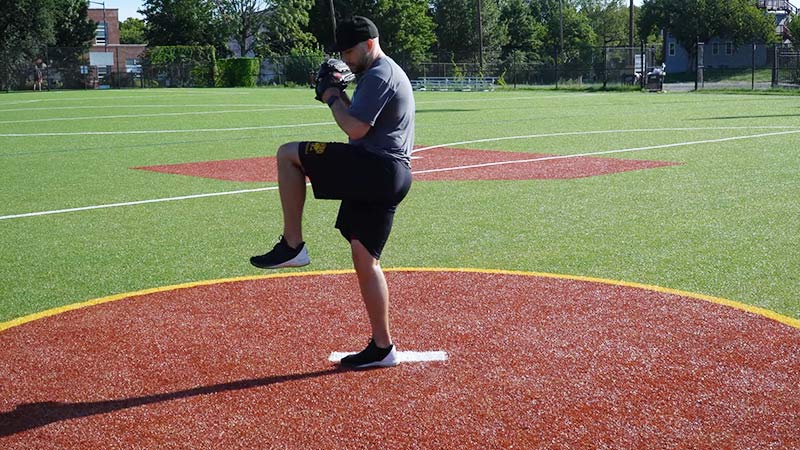
The battle between the windup and the stretch defines the rhythmic heartbeat of baseball pitching. For over a century, pitchers have utilized these two core delivery methods to navigate the complex chess match between the pitcher’s mound and home plate.
While the windup is traditionally viewed as the majestic, sweeping motion designed to build uninterrupted momentum with the bases empty, the stretch acts as a compact, high-efficiency mechanism engineered to control baserunners and quicken delivery to the plate.
Understanding the structural, mechanical, and strategic differences between these two deliveries is essential for athletes, coaches, and analysts aiming to optimize performance.
Modern data analytics and biomechanical studies reveal that the choice between the windup and the stretch involves much more than traditional habit—it directly influences timing, defensive control, and mental rhythm.
Defining the Core Mechanics: Windup vs. Stretch
At a glance, the physical postures required to initiate a windup versus a stretch look entirely different. These initial movements dictate how a pitcher gathers energy before driving toward home plate.
The Windup Mechanics
The windup is characterized by a larger, facing-forward motion meant to build fluid rhythm and momentum.
- Starting Stance: The pitcher stands with their body facing home plate, feet wider than shoulder-width, with the pivot foot (right foot for a right-handed thrower) either touching or near the pitching rubber.
- Initial Movement: The sequence typically begins with a backward or lateral step (the rocker step), shifting weight backward while the hands separate and the body turns into a semi-closed or closed position.
- Execution Flow: The pitcher brings the lead knee up into a high balance point before driving down the mound. This motion takes longer from initial movement to ball release, prioritizing a continuous, rhythmic flow.
The Stretch Mechanics
The stretch is designed for compactness and efficiency, stripping away non-essential movement to minimize the time window between initiation and the catcher’s mitt.
- Starting Stance: The pitcher starts sideways (perpendicular) to home plate. The back foot is parallel to and touching the rubber, while the front foot is placed comfortably toward home plate.
- The Set Position: The pitcher brings their hands together in front of their body and must come to a mandatory, complete, discernible pause—known as “coming set”—before executing the delivery.
- Execution Flow: From the set position, the pitcher lifts the front leg (often with a more compact stride) or executes a slide step, driving forward immediately.
Key Differences in Operational Context
The choice of delivery is rarely left entirely to personal aesthetic preference; game situations dictate which method must be employed.
| Feature | The Windup | The Stretch |
| Base State | Bases empty or runner on third base | Runners on base (or optional with bases empty) |
| Initial Posture | Facing home plate | Perpendicular/sideways to home plate |
| Complexity | Higher (more moving parts and temporal length) | Higher efficiency (simpler, tighter sequence) |
| Pickoff Ability | No direct pickoff (must step off the rubber first) | Can throw to bases directly from the set position |
| Execution Time | Slower time to plate | Faster, streamlined time to plate |
When and Why They Are Used
The Windup Context: Historically utilized with bases empty to allow pitchers to maximize comfort, stretch their physical range of motion, and establish an unhurried, repeatable tempo. Because the risk of an advancing baserunner is non-existent (barring rare plays on a runner stationed at third), the extra time spent in motion carries no defensive penalty.
The Stretch Context: Mandated practically by game scenarios whenever baserunners threaten to steal. By cutting out the initial backward rocker step, the stretch reduces delivery time to the plate by fractions of a second—the exact margin needed for a catcher to throw out a base-stealer. Furthermore, starting sideways allows the pitcher to monitor runners on first or second base directly over their shoulder and execute a sudden pickoff throw without stepping off.
What the Biomechanical Data Reveals
For generations, conventional baseball wisdom held that pitchers threw harder from the windup because the high leg lift and sweeping body motion generated superior momentum. However, rigorous motion-capture studies conducted by sports medicine institutes have challenged this assumption.
Velocity and Joint Stress
Biomechanical comparisons between fastballs thrown from the windup versus the stretch demonstrate striking similarities:
Velocity Parity: Data tracking professional, collegiate, and high school pitchers reveals no clinically meaningful difference in fastball velocity between the two deliveries. While minor statistical variations appear in specific subgroups, the actual difference in ball speed is typically negligible (often under 0.5 m/s).
Kinetic Load: Joint kinetics and kinematics—including shoulder external rotation torque and elbow varus/valgus stress—show no significant divergence between the two approaches. Pitching from the stretch is no more stressful to the arm than throwing from the windup.
The Transition Point: Elite pitching coaches emphasize that once a pitcher’s hips begin moving toward the target, the mechanics of the windup and the stretch should look identical. The divergence exists entirely in the setup phase, not the delivery phase.
Expert Insight: Many modern development programs advocate teaching young or transitioning pitchers to master the stretch first. Because the stretch eliminates extraneous body movements, it simplifies mechanics, accelerates repeatable consistency, and prepares athletes for high-leverage game situations where the stretch is exclusively required.
4. Rules, Constraints, and Strategic Nuances
Navigating the rulebook is just as important as executing the physical mechanics. Pitchers must remain acutely aware of legal constraints during both deliveries to avoid costly penalties.
The Balk Factor in the Stretch: Because the stretch allows direct throws to bases, rule enforcement is strict. Once a pitcher comes to the mandatory “set position” (hands together, complete stop), any flinching, stuttering, or unauthorized movement of the lower body without throwing to a base or home plate results in a balk, automatically advancing all runners.
The Windup Fluidity: In the windup, pitchers have more latitude to initiate movement, but they cannot stop or hesitate once a continuous motion toward the plate has legally begun. If a pitcher breaks rhythm or comes to a complete halt during a windup with bases empty, umpires may rule it an illegal pitch or a ball depending on runner occupancy.
The Mental Rhythm: Beyond physics, the windup offers psychological value for many starting pitchers. The larger motion acts as a mental deep-breath, helping athletes clear distractions and lock into a consistent tempo between pitches. Conversely, relying exclusively on the stretch keeps pitchers in an alert, game-ready mindset suited for high-pressure innings.
Frequently Asked Questions
Do pitchers have to use the windup when the bases are empty?
No rule forces a pitcher to use the windup when the bases are empty. Pitchers are legally permitted to pitch exclusively from the stretch throughout an entire game if they feel it maximizes their consistency and control. Many modern relief pitchers and a growing number of starting pitchers use the stretch exclusively to maintain identical mechanics in every count.
Does a slide step reduce pitching velocity?
A traditional slide step—where the front foot drags quickly across the ground instead of executing a high leg lift—can sometimes disrupt energy transfer if the pitcher fails to load their back hip properly. However, when executed with an explosive lower-half drive (“load for doe”), a pitcher can generate elite velocity entirely from a compact stretch or slide step.
Why do some pitchers use the windup with a runner on third base?
When a runner is stationed strictly on third base, the threat of an immediate stolen base is minimal compared to first base. Furthermore, a steal of home requires exceptional timing and is exceedingly rare. Consequently, pitchers who feel more mechanically comfortable or rhythmically sound in the windup will frequently use it with only a runner on third.
Conclusion
The debate between pitching from the windup and the stretch ultimately centers on the balance between tradition, comfort, and situational control.
While the windup provides a grander preamble to build rhythmic momentum, biomechanical data confirms that velocity and arm health remain consistent across both methods.
For developing athletes and elite competitors alike, mastering the simplicity of the stretch is non-negotiable.
By aligning mechanics so that both deliveries converge seamlessly at the hip-drive phase, pitchers can neutralize baserunners, protect their arm health, and execute precise, high-performance pitches regardless of the game situation