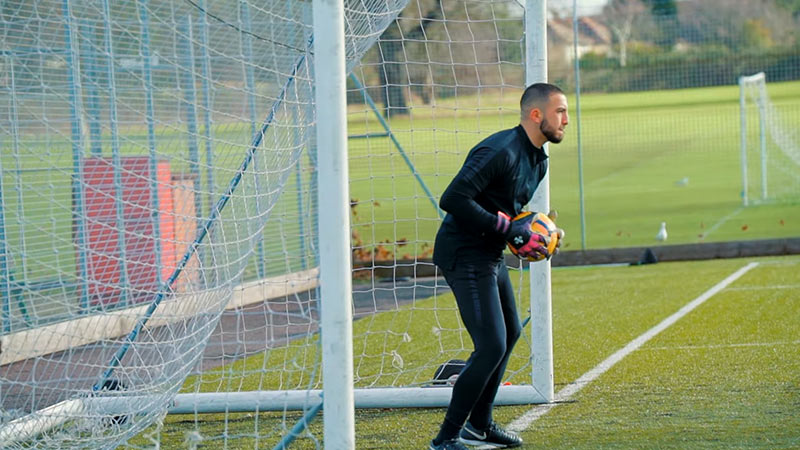
Soccer matches often reach a fever pitch in the final minutes, but nothing kills the momentum faster than tactical stalling.
For years, the “six-second rule” was a theoretical deterrent that referees rarely dared to enforce, leading to widespread frustration among trailing teams and fans alike.
To address this, the International Football Association Board (IFAB) has overhauled goalkeeper possession regulations with a new eight-second mandate.
This shift marks a significant modernization of the game, replacing vague enforcement with a transparent, visual countdown designed to eliminate time-wasting while ensuring fair play is upheld at every level of the sport.
Understanding the New Eight-Second Possession Mandate
The transition from the traditional six-second limit to a strictly monitored eight-second window is a response to the growing complexity of modern game management.
This new regulation provides a clear framework for referees, players, and spectators to understand exactly when a goalkeeper has overstayed their welcome with the ball.
The Rationale for Global Implementation
The International Football Association Board (IFAB) implemented the eight-second rule globally to replace the older, rarely enforced six-second rule.
The primary goal was the elimination of strategic time-wasting, which often occurs during high-stakes moments when a team is protecting a lead.
By extending the time slightly but making enforcement more rigorous, the rule provides a realistic window for a keeper to find a pass while removing the ambiguity that plagued the previous era.
The Mechanics of the Visual Countdown
Referees now utilize a specific two-stage counting process to ensure transparency. The referee tracks the time mentally for the first three seconds of possession.
Once those initial seconds pass, the official uses a raised hand to visually count down the final five seconds for the goalkeeper, players, and fans to see.
This visual signal serves as a clear warning, removing the “surprise” element that often led to controversy when the older six-second rule was sporadically enforced.
Defining “Full Control” and Possession Boundaries
A critical aspect of this regulation is determining exactly when the countdown begins. Referees must distinguish between a goalkeeper merely touching the ball and having “full control” as defined by the Laws of the Game.
When the Clock Starts
The eight-second clock starts the moment the goalkeeper has clear, unchallenged possession of the ball in their hands or arms.
According to official standards, a goalkeeper is considered to have control when the ball is between their hands, between their hand and any surface, or while they are holding it in an open hand.
Furthermore, control is maintained even if the keeper is bouncing the ball on the ground or tossing it into the air to themselves.
| Possession Action | Does the 8-Second Clock Run? |
|---|---|
| Holding the ball with two hands | Yes |
| Bouncing the ball on the turf | Yes |
| Tossing the ball in the air and catching it | Yes |
| Ball on the ground, controlled by feet | No |
| Pinning the ball against the ground with one hand | Yes |
Transitions and Disorientation
Referees are instructed to account for the physical reality of a save before beginning their count. When a goalkeeper makes a diving save, they may be momentarily disoriented or lying amongst competing feet.
In practice, many referees do not begin the official countdown until the keeper has regained their footing and is in a stable position to release the ball.
This prevents goalkeepers from being unfairly penalized for the time it takes to physically recover from an athletic play.
Enforcement and Penalties: What Happens at Nine Seconds?
The most significant change in the new mandate is the penalty for non-compliance. Historically, the punishment for holding the ball too long was an indirect free kick, but this was often viewed as too severe a penalty for a minor time violation.
The Shift to the Corner Kick
If a goalkeeper holds the ball past the eight-second limit, the referee now awards a corner kick to the opposing team. This corner is taken from the side of the field closest to where the infringement occurred.
This change is designed to be a more balanced deterrent; it provides the attacking team with a significant set-piece opportunity without the near-guaranteed goal scoring chance of an indirect free kick inside the penalty area.
Disciplinary Escalation and Yellow Cards
The rule is enforced with a progression of disciplinary actions to discourage repeat offenders.
- First Offense: The referee awards a corner kick to the opposition.
- Second Offense: The goalkeeper receives a formal warning or caution.
- Subsequent Offenses: A yellow card is issued for “delaying the restart of play”.
This tiered approach ensures that keepers who ignore the visual countdown are held accountable for their impact on the flow of the game.
The Legacy of the Six-Second Rule
To appreciate why the eight-second mandate was necessary, one must look at the history of goalkeeper possession rules. These laws have evolved from limiting the number of steps a keeper could take to the fixed time limits we see today.
Why the Old Regulation Failed
Referees’ forums historically suggested that the six-second rule was rarely enforced because an indirect free kick gave the opposition an “unfair advantage” they did not previously have.
Because the penalty was seen as disproportionate, many officials simply ignored violations unless they were egregious. This created a “patchy” regulatory environment where goalkeepers could routinely hold the ball for 10 to 12 seconds without fear of reprisal.
The Erin McLeod Precedent
A rare and famous example of the old rule being enforced occurred during the London 2012 Olympics semi-final. Canadian goalkeeper Erin McLeod was penalized for holding the ball for approximately 12 seconds.
The resulting indirect free kick led to a handball and a penalty for the USA, which fundamentally changed the outcome of the match.
This incident highlighted the chaos that ensued when a rarely enforced rule was suddenly applied in a high-stakes moment, further justifying the need for the modern, visual eight-second system.
Tactical Implications for Modern Goalkeepers
The modernization of possession rules forces goalkeepers to become more than just shot-stoppers; they must now be efficient distributors and tacticians.
Improving Transition Times
Goalkeepers are increasingly focusing on improving their transition times to avoid the eight-second trap. This involves turning out-of-possession moments into immediate attacking options.
By working with teammates to ensure outfield players move quickly into receiving positions, a keeper can release the ball long before the visual countdown reaches its critical final seconds.
The Role of Foot Play
Once a goalkeeper places the ball on the ground and releases it from their hands, the eight-second limit stops.
In the modern game, keepers are getting significantly better at playing with their feet, allowing them to control and dribble the ball indefinitely, provided they are not re-handling a deliberate back-pass from a teammate.
This shift has turned the goalkeeper into an eleventh outfield player during the buildup phase, effectively bypassing the possession timer.
Exceptional Scenarios and Opponent Interference
The IFAB mandate is not just a countdown for keepers; it also protects them from aggressive tactics designed to force a violation.
Attacker Interference
If an attacking player actively blocks or pressures the keeper to prevent them from releasing the ball, the referee is instructed to intervene.
In such cases, the eight-second countdown is stopped, and an indirect free kick is awarded to the goalkeeper’s team. This prevents attackers from “camping” in front of the keeper to artificially run down the clock.
Collision and Injury Protocols
Safety remains the priority on the pitch. If a goalkeeper is involved in a collision while claiming the ball, the referee will prioritize the injury assessment over the possession count.
The timer is meant to regulate intentional game management, not to penalize players who are physically unable to restart play due to the intensity of the match.
Frequently Asked Questions
Does bouncing the ball reset the eight-second count?
No. Bouncing the ball is considered maintaining control. The count continues throughout the bouncing motion.
What happens if the referee doesn’t do the visual countdown?
While the visual countdown is the standard for enforcement, the underlying law remains in effect. However, the visual signal is the primary tool to ensure the goalkeeper is aware of the remaining time.
Can a keeper hold the ball for 8 seconds, drop it, and then pick it up again?
No. Once a goalkeeper releases the ball, they cannot touch it with their hands again until it has been touched by another player or if it is a legal return play that does not violate the back-pass rule.
Is the corner kick taken from a specific side?
Yes. The corner kick is awarded from the side of the field closest to where the goalkeeper was standing when the eight-second violation occurred.
Final Thoughts on Modern Game Management
The implementation of the eight-second goalkeeper possession mandate represents a major step forward in making soccer a faster and fairer sport.
By replacing the outdated six-second rule with a transparent, visually monitored system, IFAB has provided referees with the tools necessary to curb time-wasting without imposing overly harsh penalties.
For goalkeepers, the message is clear: the era of stalling in the box is over. Success in the modern game requires rapid decision-making, elite footwork, and a constant awareness of the ticking clock.
As teams adapt to these changes, fans can look forward to more continuous action and fewer instances of the irritating delays that once plagued the final minutes of a match.
By embracing these new standards, the football community ensures that the game remains focused on skill, strategy, and the pursuit of a fair result.