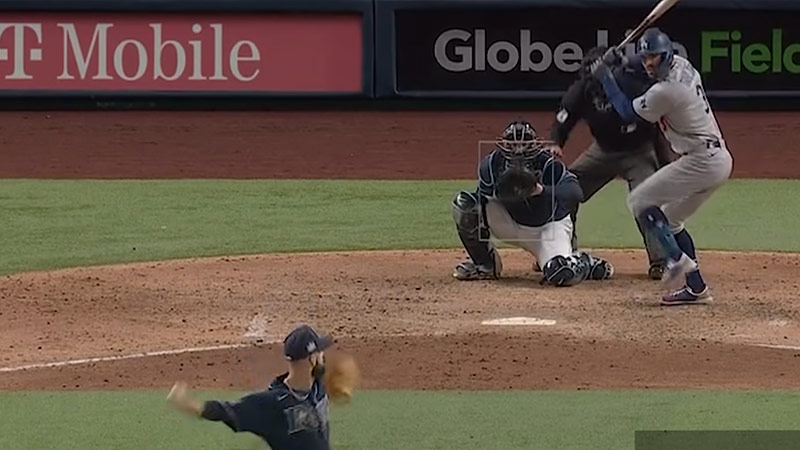
Every hitter knows the helpless feeling of watching a pitch cross the plate, realizing too late that the wicked break wasn’t a fastball, but a devastating slider darting off the corner.
You step back into the batter’s box, shaking your head, wondering how major league hitters seem to track rotation, speed, and location with fractions of a second to spare.
The reality is stark: batters have roughly four-tenths of a second to read a pitch, process the incoming data, and decide whether to pull the trigger.
In that microscopic window, pure reaction time isn’t enough. Elite hitters don’t just guess; they recognize pitches early by studying spin, speed, and trajectory out of the pitcher’s hand.
Whether you are a youth player stepping up to live pitching, a high school athlete eyeing college scouts, or a coach looking to elevate your team’s approach, mastering pitch recognition is the ultimate separator.
This comprehensive guide breaks down everything you need to know about identifying baseball pitches, reading spin, and building an unstoppable approach at the plate.
The Anatomy of Pitch Recognition: What Happens in 0.4 Seconds?
To understand how to hit better, you must first understand how the human brain processes a baseball in flight. When a pitcher releases the ball, the journey to home plate is broken down into three distinct phases:
The Release Phase (0 to 100 milliseconds): This is where the battle is won or lost. Hitters must pick up the ball directly out of the hand, identifying the release point, arm slot, and immediate spin characteristics (often referred to as the “red dot” or seam orientation).
The Flight Phase (100 to 300 milliseconds): As the ball travels through the tunnel, its trajectory becomes clear. This is where velocity and initial break are registered. Hitters recognize whether the ball is plane-parallel to the strike zone or starting to drop, cut, or tail.
The Decision Phase (300 to 400 milliseconds): The final window to commit or check the swing. By this point, the brain has matched the visual data against thousands of reps to execute a selectively aggressive swing on a pitch inside the zone.
Failing to pick up the ball early means relying purely on guesswork by the time the ball reaches the midpoint. Training your eyes to recognize pitches early lowers your swing-and-miss ratio, expands your plate discipline, and dramatically increases your hard-hit contact percentage.
Decoding the Arsenal: Common Pitch Types Breakdown
To identify a pitch, you need to know what you are looking for. Below is a detailed breakdown of the most common pitches you will face across all levels of the game, classified by movement, velocity, and visual cues.
1. The Four-Seam Fastball (“The Heater”)
Average MLB Velocity: 85–100 mph
Primary Characteristics: The fastest pitch in the game. A quality four-seam fastball features a tight, solid red-brownish tint upon release and exhibits the least amount of horizontal or vertical drop compared to other fastballs.
How to Approach It: Pitchers who throw 95+ mph use velocity up in the zone to induce lazy flyballs, while those with average velocity must establish the outside part of the plate. Because it travels on a relatively straight plane, look for it in your favorite zone early in the count.
Legendary Examples: Roger Clemens, Nolan Ryan, Aroldis Chapman.
2. The Curveball (“The Hook” / “12-6” / “The Hammer”)
Average MLB Velocity: 70–80 mph
Primary Characteristics: Distinguished by a pronounced looping arc with a true 12-to-6 drop (resembling clock hands pointing straight up and down). It features a lighter shade of spin out of the hand and creates an optical illusion often described as “popping” out of the release point before diving downward.
How to Approach It: Look for a curveball up in the zone. As the old coaching adage goes: If it starts low, it ends in the dirt; if it starts high, it ends in the strike zone. Pitchers typically lean on the curveball to keep hitters off-balance or to pick up strikes when ahead in the count.
Legendary Examples: Barry Zito, Doug Drabek, Tim Lincecum.
3. The Two-Seam Fastball (“The Sinker”)
Average MLB Velocity: 80–93 mph
Primary Characteristics: Unlike the four-seam, the two-seam features a looser, smaller horizontal spin and a lighter rotation. For a right-handed pitcher, a good two-seam fastball tails inward on a right-handed hitter and runs away from a left-handed hitter, accompanied by sharp downward movement.
How to Approach It: Expect plenty of ground balls, jammed swings, and broken bats. Because of its late running action, hitters must look to catch it slightly further out front than a four-seam fastball to avoid getting tied up on the hands.
Legendary Examples: Pedro Martinez, Marcus Stroman, Max Scherzer.
4. The Slider (“The Slide Piece”)
Average MLB Velocity: 80–90 mph
Primary Characteristics: A hard hybrid between a fastball and a breaking ball. For a right-handed pitcher, the slider breaks sharply down and away from a right-handed hitter. It features a distinct “Red Dot” visual cue around the 2 o’clock position on the rotation axis and looks identical to a fastball out of the hand.
How to Approach It: Elite pitchers throw sliders to make their fastballs more effective. Because it mimics a fastball trajectory for the first half of its flight path before cutting away, patience and recognizing the tighter wrist action at release are critical.
Legendary Examples: Randy Johnson, Dennis Eckersley.
5. The Changeup (“The Vulcan” / “The Change Piece”)
Average MLB Velocity: 70–80 mph
Primary Characteristics: The ultimate deception pitch. A well-thrown changeup from a right-handed pitcher exhibits a 1-to-7 movement profile, looking visually as though it “drops off a table.” It has the lightest, off-white spin appearance of any pitch, paired with a significant velocity discrepancy.
How to Approach It: The changeup becomes lethal only when the pitcher has successfully established the inside fastball. Hitters must maintain their timing, fight the natural urge to lunge forward early, and trust their hands to stay back.
Legendary Examples: Kyle Hendricks, Cole Hamels, Jamie Moyer.
6. The Cutter (“The Buzzsaw”)
Average MLB Velocity: 85–95 mph
Primary Characteristics: A hybrid between a slider and a fastball, moving in the opposite direction of a two-seam. A right-handed cutter sharply “cuts” away from a right-handed hitter late in its flight path.
How to Approach It: Famously known as a bat-breaker when jammed inside on a hitter. Treat it similarly to a late-breaking fastball, keeping your hands inside the ball to avoid weak contact off the label of the bat.
Legendary Examples: Mariano Rivera.
Curveball vs. Slider: Key Differences for Hitters
Batters frequently struggle to differentiate between breaking balls because both the curveball and the slider are designed to fool the eye with late movement away from the arm side. Understanding their structural differences clarifies what to look for in the box:
As former major leaguer, coach, and author Dan Blewett notes, a pitcher’s arm slot dictates which breaking pitch they favor:
Low Three-Quarters or Sidearm Slots: Pitchers cannot comfortably get on top of the ball to execute a true 12-6 curveball, making the slider their primary breaking weapon.
Traditional Three-Quarters or Over-The-Top Slots: Pitchers have the flexibility to throw either. Sliders demand a tight wrist and fast arm action, whereas curveballs suit loose wrists and a longer, windmill-style arm circle.
The Pitch Recognition Checklist: Spin, Speed & Location
Mastering recognition requires training your eyes to spot specific visual markers the instant the ball leaves the pitcher’s fingertips. Keep this checklist in mind during live batting practice and machine work:
- The Fastball Look: Tight rotation, minimal movement, consistent dark-to-light seam blur, and maximum velocity matching the pitcher’s baseline.
- The Curveball Look: Look for the signature “pop” or optical illusion out of the hand. Notice the loose wrist angle or a slightly exposed index finger on a beginner’s grip.
- The Slider Look: Look for the distinctive “Red Dot” spinning around the 2 o’clock position, accompanied by a sharper, later break toward the glove side than a curveball.
- The Changeup Look: The lightest off-white visual shade with a spin rotation operating opposite to traditional breaking balls, coupled with a noticeable delay in arrival time.
Developing Hitter’s I.Q.™ and a Powerful Swing Trigger™
Pitch recognition is not an innate talent reserved for baseball prodigies; it is a trainable cognitive skill. When you dedicate time to tracking drills, app-based pitch recognition training, and advanced video study, remarkable changes occur:
- The Game Slows Down: When you recognize spin within the first 100 milliseconds, the incoming pitch appears to travel slower because your brain has already solved the equation.
- Reduced Strikeout Rates: Eliminating chase tendencies on pitches out of the zone immediately translates to higher on-base percentages.
- Optimized Contact Quality: Knowing what is coming allows you to get your barrel into the hitting zone with maximum leverage, turning routine fly balls into hard line drives.
Take your training into the batting cages with purpose. Don’t just swing blindly at fastballs—simulate game counts, track spin rotations on every pitch, and build the visual habits that separate average hitters from elite run-producers.
Frequently Asked Questions
How can I practice pitch recognition away from the baseball field?
You can train pitch recognition using specialized apps, reaction ball drills, or batting practice with colored-seam baseballs. Having a partner throw batting practice while calling out the pitch type or throwing from behind a screen with limited visibility also forces your eyes to pick up spin cues faster.
What is the hardest pitch in baseball to recognize?
Most hitters agree that a high-velocity changeup thrown with exact arm speed matching a fastball is the toughest pitch to diagnose. Because the arm action looks identical to a fastball, the sudden drop and velocity change disrupt a hitter’s timing completely.
How does arm slot affect pitch movement?
A pitcher’s arm slot determines the tilt of the spin axis. Over-the-top pitchers create a vertical downward plane (ideal for high fastballs and traditional curveballs), while lower three-quarters and sidearm pitchers create horizontal sweep (ideal for sliders and sinkers).
Why do some pitchers have a “hitch” or “tell” in their delivery?
In amateur baseball, pitchers often unconsciously alter their glove placement, wrist position, or hand separation based on the grip they use inside the glove. Elite hitters train themselves to spot these micro-tells during the windup to gain an edge before the ball is even released.