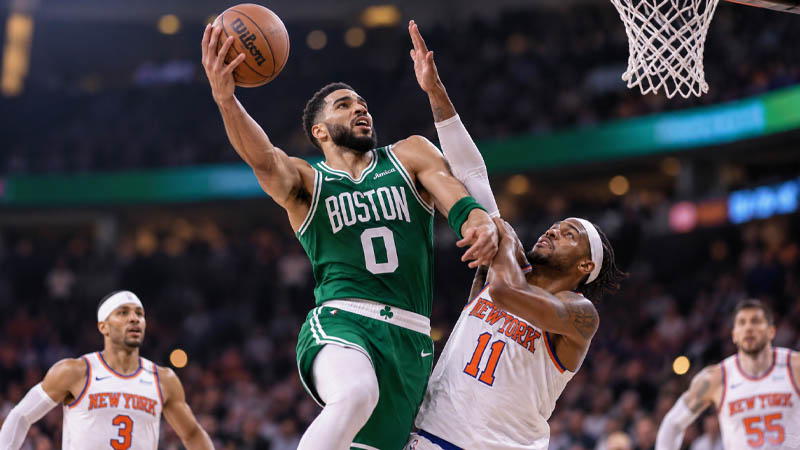
In the landscape of modern basketball, few sequences ignite a crowd or shift the momentum of a game as effectively as the “And-1.”
It is a rare moment where the offensive player triumphs twice: first by overcoming a defensive foul to score, and second by earning an additional opportunity at the free-throw line.
For players, coaches, and analysts, understanding the mechanics of this play is essential for maximizing scoring efficiency and psychological leverage on the court.
Defining the And-1: The Intersection of Rules and Results
At its most fundamental level, an “And-1” occurs when an offensive player is fouled while in the act of shooting and completes the basket despite the contact.
This sequence is a unique exception to the standard rules of fouls in basketball. Typically, when a shooter is fouled and misses, the ball becomes dead, and they are awarded two or three free throws.
However, when the ball goes in, the basket counts, and the referee grants one additional free throw.
The terminology itself is rooted in the mathematical progression of the scorebook. The player receives the points for their successful field goal and is then granted “one” more point if they can convert the subsequent free throw.
This creates a “3-point play” if the initial shot was a 2-pointer, or a rare “4-point play” if the foul occurred during a successful 3-point attempt.
The Anatomy of the Act: How it Happens
For an official to signal an And-1, several criteria must be met during live play. The timing of the foul is the most critical element.
The contact must occur while the player is in the “act of shooting”—a window that begins when the player starts their upward motion toward the basket and ends when the ball has left their hands and they have returned to the floor.
1. The Shooting Motion and Continuation
The “continuation” rule is often a point of contention in professional and collegiate play. For a basket to count during a foul, the shooter must have already initiated their scoring move before the foul occurred.
If a defender reaches in and hits the shooter’s arm before they begin their upward motion, the foul is considered “on the floor,” and the basket will not count even if the player subsequently throws the ball into the hoop.
2. Finishing Through Contact
The hallmark of an elite “And-1” player is the ability to absorb physical force without losing the integrity of their shooting form. This requires immense core strength and “touch.”
When a defender makes contact—whether it is a slap on the wrist, a bump to the hip, or a hard foul across the shoulders—the shooter’s center of gravity is often displaced.
The ability to realign the body mid-air and release a soft shot is what separates average scorers from dominant finishers.
The Psychological Dimension: “And One!”
Beyond the technical rules, the “And-1” holds a significant place in basketball culture. It is common to hear players yell the phrase “And one!” the moment they feel contact during a shot.
This vocalization is rarely about informing the referee of a foul; rather, it is an outward display of extreme confidence. By shouting the phrase before the ball even nears the rim, the player is signaling their belief that the defensive effort was insufficient to stop them.
This psychological warfare serves two purposes:
- Intimidation: It tells the defender that their physicality is ineffective.
- Momentum Building: It alerts the bench and the crowd to an impending highlight, often leading to a surge in team energy.
Scoring Dynamics: 3-Point and 4-Point Plays
The “And-1” is the ultimate tool for scoring efficiency. In a game often decided by single possessions, the ability to turn a standard layup into a three-point sequence is invaluable.
The Traditional 3-Point Play
The most common iteration is the 2-point field goal, followed by a free throw. This typically occurs in the “paint” (the area near the basket), where contact is most frequent.
Power forwards and centers often specialize in these plays, using their size to shield the ball while drawing fouls from smaller defenders.
The Rare 4-Point Play
While less common, the 4-point play is one of the most devastating sequences for a defense. This occurs when a player is fouled while making a 3-point shot.
For a defense, this is a catastrophic error; not only did they fail to stop the long-range shot, but they also handed the opponent a chance to add a fourth point on a single possession.
Great shooters often look for this by extending their legs or “landing” into a defender who has closed out too aggressively.
Technical Mastery: Training for the And-1
Professional athletes do not stumble into And-1 opportunities by accident; they train specifically to finish through contact. This involves several layers of physical and mental preparation.
Core and Stability Training
To maintain a shooting line while being bumped, a player needs a rock-solid core. Training often includes “contact drills” where coaches use pads to hit players while they are mid-layout. This desensitizes the athlete to the shock of contact, allowing them to keep their eyes on the rim.
Focus and “The Target”
The mental aspect involves a concept called “narrowing the focus.” When a foul occurs, the natural human reaction is to look at the cause of the pain or the official.
Elite scorers are trained to ignore the defender entirely and lock their vision onto the back of the rim until the ball is released.
Free Throw Consistency
An And-1 is only as valuable as the free throw that follows. Players who frequently draw fouls but struggle at the charity stripe lose the “plus-one” advantage.
Therefore, high-level training regimens always pair finishing drills with high-pressure free throw practice to ensure the “extra point” is realized.
Strategic Impact on Game Management
From a coaching perspective, the And-1 is a double-edged sword. For the offense, it is the peak of efficiency. For the defense, it is a sign of poor discipline.
- Team Foul Management: Drawing an And-1 puts the opposing defender in “foul trouble” while simultaneously adding points to the scoreboard. This may force a team to bench their best defender or play more tentatively for the remainder of the half.
- The “No Easy Baskets” Philosophy: Many coaches preach that if you are going to foul a shooter, you must foul them hard enough to ensure the ball does not go in. Allowing an And-1 is seen as the worst defensive outcome because the foul was “wasted”—it didn’t prevent the points and gave up an extra one.
Officiating Challenges
Officials face immense pressure when calling an And-1. They must simultaneously watch the floor for the foul and the rim for the basket.
- Determining the Foul: Did the contact significantly disadvantage the shooter?
- Determining the Basket: Was the ball already out of the hand, or was the shooting motion continuous?
- The “Whistle Lag”: Sometimes, a referee will wait a split second to see if the ball goes in before deciding how to signal the foul, though the foul technically occurs at the moment of contact.
Historical Context and Icons of the Play
Throughout the history of the sport, certain players have become synonymous with the “And-1.”
- The Power Finishers: Players like Shaquille O’Neal or LeBron James utilized sheer physical dominance to move defenders out of the way, making the basket even while being grabbed or hit.
- The Crafty Guards: Players like Allen Iverson or Kyrie Irving use body control and “English” (spin on the ball) to find the glass at impossible angles after being fouled in the air.
Its became so iconic that it eventually birthed a cultural movement in the late 1990s and early 2000s, including streetball tours and apparel brands that emphasized the flashy, aggressive style of play where drawing fouls and scoring were the ultimate goals.
Enhanced FAQ: Everything You Need to Know
Q: Can you get an And-1 on a dunk?
A: Yes. If a player is fouled while dunking and the ball goes through the hoop, it is treated exactly like a layup or jump shot. They receive the two points and one free throw.
Q: What happens if the player misses the free throw?
A: The basket still counts for two or three points, but the “plus-one” opportunity is lost. The ball remains live if it hits the rim and misses, meaning either team can rebound it.
Q: Does the player have to yell “And One” for the foul to be called?
A: No. Officials make calls based on physical contact, not vocalizations. In fact, some officials may be less likely to call a foul if they feel a player is trying to influence them by shouting.
Q: Is it an And-1 if the foul happens after the ball is in the hoop?
A: No. If the basket is already made and then a foul occurs, it is usually ruled a “dead ball foul” or a “loose ball foul,” depending on the situation. The And-1 requires the foul to occur during the act of shooting.
Q: Can you get a 5-point play?
A: In standard rules, no. The maximum is a 4-point play (a 3-pointer plus a free throw). However, in very rare scenarios involving technical fouls or flagrant fouls committed simultaneously, a team could potentially score more points in a single possession, but these are not classified as “And-1s.”
Conclusion: The Mark of a Dominant Competitor
The And-1 is more than just a statistical anomaly; it is a testament to a player’s physical strength and mental fortitude. It represents the refusal to be stopped by illegal defensive tactics and the ability to remain calm under pressure.
For fans, it provides some of the game’s most electric highlights. For teams, it provides the scoring margin that often separates victory from defeat.
Whether you are a casual viewer or an aspiring athlete, recognizing the mechanics of the And-1 allows for a deeper appreciation of the game’s complexity.
The next time you see a player drive to the hoop, absorb a hit, and watch the ball crawl over the rim as the whistle blows, you are witnessing one of the most difficult and rewarding feats in professional sports.