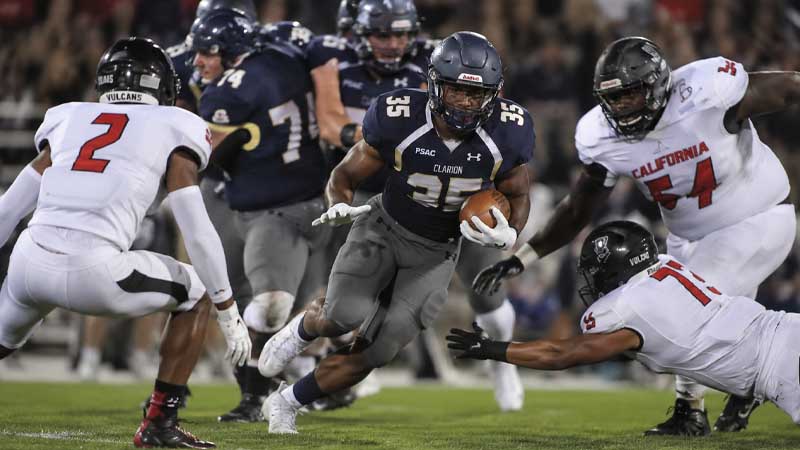
Few moments in sports match the sheer chaos and electricity of a successful lateral in American football.
When a runner, boxed in by defenders, flips the ball backward to a trailing teammate just as a tackle is imminent, the entire stadium holds its breath.
While standard forward passes dominate modern playbooks, the lateral remains football’s ultimate wild card—a high-risk, high-reward maneuver that can turn a routine play into a legendary highlight.
Whether you are a newcomer trying to decode the rules of the gridiron or a seasoned fan analyzing advanced play design, understanding the mechanics, strategy, and history of the lateral reveals a fascinating layer of the game.
What Exactly Is a Lateral?
At its core, a lateral is a backward or parallel pass. In American football terminology, any pass that does not travel closer to the opponent’s goal line is considered a lateral (or backward pass).
While the forward pass is heavily restricted—requiring the passer to be behind the line of scrimmage and throwing only once per down—the lateral operates under entirely different guidelines:
- Directional Rule: The ball must travel parallel to the sideline or backward toward the throwing team’s own end zone. If the ball travels even an inch forward through the air, it is classified as a forward pass (and an illegal one if thrown beyond the line of scrimmage or after a forward pass has already occurred).
- Frequency: Unlike the single forward pass permitted from behind the line of scrimmage, a team can execute as many laterals as they want during a single live play.
- Eligibility: Any player on the field can throw or catch a lateral. Linemen, quarterbacks, running backs, and wide receivers are all legally permitted to pitch and catch the ball.
The Core Rules Governing Laterals
To appreciate why laterals are used sparingly, you must understand how referees adjudicate them. The rulebook treats backward passes very differently from forward passes, introducing unique tactical implications for every snap.
1. The Physics of Direction
The defining factor of a lateral is the relative position of the ball when it leaves the passer’s hands compared to when it is caught. Officials look strictly at the angle of flight.
If a player running sideways flips the ball to a teammate running parallel, it is a clean lateral. If the momentum carries the release forward, it results in a penalty for an illegal forward pass.
2. Live Ball Status and Fumbles
This is where the drama peaks. When a forward pass is incomplete, the play is dead immediately, and the ball goes back to the line of scrimmage. A lateral, however, is treated as a live fumble if it hits the ground or is dropped.
- If a player misses the catch, any player from either team can scoop up the loose ball.
- If the ball goes out of bounds following a muffed lateral, the team that last touched it retains possession, but they generally suffer a significant loss of yardage.
3. Clock Management and Game Flow
Because the clock continues to run during a lateral sequence (unless the ball goes out of bounds or an official blows the whistle for another reason, such as a penalty), teams do not need to worry about stopping the clock just because a lateral occurred. This makes it the premier mechanism for frantic, last-second desperation plays.
Why and When Do Teams Use Laterals?
If laterals offer the thrill of unpredictable offense, why aren’t they utilized on every single play? The answer lies in the catastrophic risk attached to them. Let us examine the primary scenarios where coaches and players resort to this dynamic tactic.
1. Desperation Plays (The Clock Expires)
The most common time to witness multiple laterals is at the end of the second or fourth quarter. When a team trails as time expires, they must advance the ball down the field by any means necessary.
During these plays, the primary ball carrier will catch a short pass or run a standard sweep, and as soon as defenders converge, they pitch the ball backward to a teammate.
That teammate runs until stopped, pitches to another trailing player, and so on. While successful multi-lateral touchdowns are exceedingly rare, when they work, they go down in sports history as unforgettable moments.
2. Extending Plays Near the Sideline
During standard game flow, an open-field runner trapped near the sideline might pitch the ball backward to a teammate following behind.
This prevents a loss of yardage or a drive-ending tackle. While professional and collegiate players practice this carefully, it requires immense spatial awareness and trust, making it a high-level tactical choice reserved for exceptional athletes.
3. Designed Trick Plays (The “Hook and Ladder”)
Coaches occasionally draw up trick plays built around a planned lateral. The classic example is the Hook and Lateral (sometimes called the Hook and Pitch).
- The quarterback throws a short “hook” pass to a wide receiver running straight back toward the line of scrimmage.
- Just as the defense collapses on that receiver, they immediately pitch the ball backward to a running back or slot receiver sprinting past on a sweep.
- This catches aggressive defenders completely off guard, often springing a massive gain.
The Inherent Risks: Why Laterals Are Rare
Football strategy is built around risk mitigation. Every play design balances the potential reward against the likelihood of a turnover. Laterals shift that balance dramatically toward danger.
High Turnover Probability
A single misjudged distance, a sudden gust of wind, or a mistimed jump can send the ball bouncing across the turf. In the chaos of professional or collegiate spacing, a live fumble often translates directly into a defensive touchdown.
Loss of Yardage
When a player pitches backward, the team instantly loses several yards of field position before the receiving teammate even secures the ball.
If the defense swarms correctly, a lateral can turn a manageable third-and-four into a daunting third-and-fifteen.
Complex Coordination
Perfecting a lateral requires telepathic synchronization between teammates. Because players are moving at maximum velocity while processing complex defensive coverages, coordinating a backward toss under physical pressure introduces a massive margin for error.
Legendary Moments in Lateral History
To truly understand the impact of the lateral, we have to look at the moments when this mechanic transcended ordinary play and became part of cultural folklore.
The Play That Lives in Infamy
One of the most famous sequences in collegiate sports history relied entirely on a chaotic chain of laterals executed as time expired.
With multiple backward passes threaded through a retreating defensive unit, the trailing team traversed the entire length of the field, famously running through the opponent’s band in the process. It solidified the lateral’s reputation as the ultimate weapon of last resort.
Professional Gridiron Magic
While professional players are typically more conservative due to the microscopic margins for error, brilliant tactical execution occasionally shines through.
Teams trailing late in playoff games have engineered stunning multi-lateral sequences that captivated millions of viewers, proving that even the most disciplined tactical schemes can yield to pure playground creativity when the season is on the line.
Frequently Asked Questions
Can a quarterback throw a lateral forward?
No. By definition, a lateral must travel parallel to or backward from the direction of the opponent’s goal line. If a quarterback throws the ball forward, it is classified as a forward pass.
If they have already crossed the line of scrimmage or thrown a forward pass earlier in the down, doing so results in a major penalty and loss of down.
What happens if a lateral hits the ground?
Unlike an incomplete forward pass, which stops the clock and returns the ball to the original line of scrimmage, a dropped or grounded lateral is a live ball.
This means any player from either offense or defense can recover it. If the defense recovers it, it is counted as a fumble recovery and an immediate turnover.
Is a pitch from a quarterback to a running back considered a lateral?
Yes. On standard option plays or sweep plays where the quarterback hands or tosses the ball backward to a running back running parallel or away from the line of scrimmage, that action is technically a lateral pass.
Can defensive players execute a lateral?
Yes! If a defensive player intercepts a pass or recovers a fumble, they are legally permitted to lateral the ball backward to a teammate if they are about to be tackled.
While coaches generally discourage this due to the extreme risk of a turnover, heads-up defensive laterals have occasionally resulted in spectacular defensive touchdowns.
Conclusion
The lateral is much more than a quirky exception in the rulebook; it is the ultimate expression of adaptability and high-stakes bravery in American football.
By understanding how directionality rules, live-ball statuses, and risk management shape its deployment, fans can better appreciate the intricate chess match happening on every single snap.
Whether deployed as a calculated trick play in the first quarter or a desperate, clock-expiring miracle at the end of a championship game, the lateral ensures that football remains one of the most thrilling sports on earth.