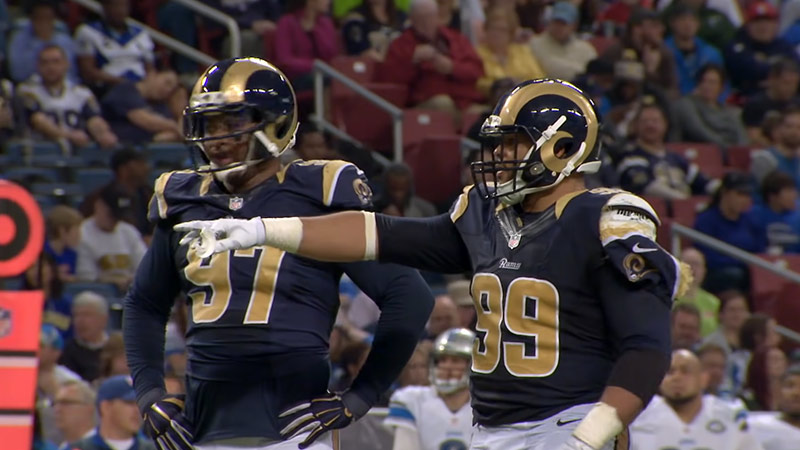
The stadium is deafening. Sixty thousand fans are screaming, the play clock is ticking down under ten seconds, and the offensive linemen are locked in three-point stances, eyes scanning the shifting defensive front.
Suddenly, the quarterback steps up to the line of scrimmage, points an aggressive finger at a defender in the middle of the field, and bellows a sharp, rhythmic call:
“54 is the Mike! 54 is the Mike!”
For the casual fan watching at home, this pre-snap declaration is one of the most recognizable and yet misunderstood sounds in professional football. Why is the quarterback pointing out a specific defender?
Why are they giving him a name? And why does this single word instantly cause five massive offensive linemen, tight ends, and running backs to shift their alignment in perfect, silent unison?
Understanding “the Mike” is the key to unlocking the true strategic chess match of American football. It bridges the gap between raw physical athleticism and the highly complex, mathematical systems that coaches use to protect their quarterbacks and open up running lanes.
To truly understand how football is played at its highest level, we must look at the dual identity of the Mike: its physical role as the anchor of the defense, and its conceptual role as the mathematical starting point for offensive pass protection.
The Defensive Anchor: The Traditional “Mike” Linebacker
To understand the offensive call, we must first look at the defensive side of the ball. In traditional defensive terminology, the “Mike” is the designated term for the middle linebacker.
Alongside the “Sam” (the strong-side linebacker) and the “Will” (the weak-side linebacker), the Mike forms the core of the defense’s second level.
These three players line up directly behind the defensive line and in front of the safeties, serving as the critical link between run defense and pass coverage.
The “Quarterback of the Defense”
The middle linebacker is universally regarded as the “quarterback of the defense”. This player serves as the primary communicator, structural pillar, and emotional leader of the entire defensive unit.
Because of their central location on the field, they have the perfect vantage point to diagnose what the offense is doing and communicate adjustments to their teammates.
In modern football, the physical Mike linebacker is tasked with an extraordinary array of responsibilities:
- Calling Plays and Setting the Front: Just as the quarterback receives the offensive play call in their helmet, the Mike linebacker is typically the defender wearing the green-dot helmet. This helmet contains an electronic headset that allows them to receive instructions directly from the defensive coordinator on the sideline. The Mike must then communicate the defensive play call, set the defensive line’s alignment, and shout out adjustments as the offense shifts.
- Diagnosing the Play: At the snap, the Mike must instantly determine whether the offense is running or passing. If it is a run, they must fill the designated gap and take down the ball carrier. If it is a pass, they must quickly drop into zone coverage or run matching routes with tight ends and running backs.
- Shedding Blocks: Unlike outside linebackers who often have more space to operate, the Mike is constantly playing in the heavy traffic of the middle of the field. They must have the physical power to take on blocks from 320-pound offensive guards while maintaining the agility to make the tackle.
For decades, legendary players like Ray Lewis, Mike Singletary, and Luke Kuechly defined this position.
They were master tacticians who could read an offensive formation and know exactly what play was coming before the ball was even snapped.
The Offensive Revolution: “Calling the Mike”
While the Mike is a physical player on defense, it takes on an entirely different, conceptual meaning when the quarterback yells it out before the snap. This is where the true strategic brilliance of football comes into play.
When a quarterback or center identifies a defender as the Mike, they are not simply identifying who the defensive middle linebacker is on the roster. Instead, they are establishing a critical pre-snap blocking anchor.
Setting the Protection Count
To keep a quarterback safe in the pocket, an offense must have a flawless system for pass protection.
If the defense decides to rush five, six, or seven players, the five offensive linemen and any staying-in blockers (like running backs and tight ends) must know exactly which defender they are responsible for blocking.
If there is even a single miscommunication, a defender will go unblocked, leading to a devastating sack or a forced turnover.
To prevent this, offenses use a protection count. This count requires a central landmark on the defense from which all blocking assignments are calculated. By default, that landmark is designated as the “Mike”.
When the quarterback points at a defender and yells “54 is the Mike,” they are telling the entire offensive unit: “Defender #54 is our zero-point. All of our blocking rules and mathematical counts start with him.”
The Conceptual Shift: Why the Mike is a Coordinate, Not a Person
The most common misconception among football fans is that the player identified as the “Mike” by the quarterback must be the actual middle linebacker listed on the defense’s depth chart.
In reality, the physical middle linebacker and the offensive “Mike” call can be completely different players.
When a quarterback makes the pre-snap call, they do not care who is officially listed as the middle linebacker, and they do not care who is wearing the play-calling headset on defense. They are using the word “Mike” as a schematic variable.
Why Offenses Must Declare a Conceptual Mike
Modern defensive coordinators are masters of disguise. They rarely stand still in a balanced, predictable formation.
Instead, they will walk safeties down into the box, line up multiple pass rushers on one side of the field, or drop their middle linebacker deep into pass coverage while blitzing a cornerback from the edge.
If an offense used static rules—such as “the left guard always blocks the defensive tackle, and the center always blocks the middle linebacker”—a defensive coordinator could easily manipulate those rules to create unblocked rushers.
By declaring a conceptual Mike, the quarterback can dynamically adjust the offense’s blocking math to match whatever bizarre front the defense presents. For example:
- If the defense aligns in an asymmetric front with an extra defender on the right, the quarterback might declare an outside linebacker or even a safety as the “Mike” for that play.
- This instantly shifts the entire offensive line’s blocking focus toward that side of the field, ensuring the extra threat is accounted for.
- The actual, roster-designated middle linebacker might go unblocked by the offensive line, but the system ensures that a running back or tight end is positioned to pick him up if he blitzes.
By defining the Mike as a flexible coordinate rather than a physical person, the offense can scale, rotate, and mirror its pass protection to counter any look the defense throws at them.
The Pre-Snap Algorithm: The Math of Sam, Mike, and Will
Once the quarterback declares the Mike, a mathematical chain reaction occurs across the entire offense. Every eligible blocker immediately calculates their assignment based on where that declared Mike is standing.
To understand how this pre-snap algorithm works, we must define how the offense identifies the other key defensive positions—the Sam and the Will—relative to the declared Mike.
Defining the Variables
Offenses do not look at the defense as individual names; they look at them as positions relative to the central anchor:
- The Mike (The Centerpoint): The defender declared by the quarterback as the starting point of the protection count.
- The Will (The Back-Side Defender): The first linebacker-type or second-level defender located to the back-side of the play direction, relative to the declared Mike.
- The Sam (The Play-Side Defender): The first linebacker-type or second-level defender located to the play-side of the declared Mike.
A Live Walkthrough of a Protection Play
Let’s look at a concrete scenario to see exactly how this works in practice during a standard passing play:
- The Setup: The offense is running a pass play where the protection scheme and play direction are set to the right. This means the “play-side” is the right side of the formation, and the “back-side” is the left side of the formation.
- The Call: The quarterback scans the defense, spots defender #54 lining up near the center of the formation, and yells, “54 is the Mike!”
- The Math:
- The Mike: Defender #54 is now established as the central coordinate.
- Finding the Will: Because the play direction is to the right, the “back-side” is to the left. The offensive line looks to the left of defender #54 to find the first linebacker-type player. That player is designated as the Will.
- Finding the Sam: The “play-side” is to the right. The offense looks to the right of defender #54 to find the first linebacker-type player. That player is designated as the Sam.
- Assigning the Blocks:
- The Offensive Line’s Rule: In this protection scheme, the five offensive linemen are responsible for blocking the defensive line and the designated Will linebacker (the first linebacker-type to the left of #54).
- The Running Back’s Rule: The running back is assigned to block the designated Mike (defender #54).
- The “Hot” Read: The quarterback, offensive line, and running back all know that the designated Sam (the first linebacker-type to the right of #54) is left unblocked by the primary protection scheme. He is designated as “hot.”
The Strategic Outcome
Because of this pre-snap mathematical coordination, everyone on the offense knows exactly what to do when the ball is snapped:
- If the Will linebacker blitzes from the left, the offensive line shifts their protection to the left and picks him up cleanly.
- If #54 (the Mike) blitzes, the running back steps up into the gap and blocks him.
- If the Sam linebacker blitzes from the right, the quarterback knows instantly that he is unblocked. The quarterback does not panic; instead, they immediately throw a quick pass to a receiver running a route in the area vacated by the blitzing Sam (known as a “hot read”).
If the quarterback had not declared the Mike, or if the center and the running back had identified different players as the Mike, the blocking assignments would have clashed. The running back might have run left to block the Will, leaving defender #54 with a direct, unblocked path to the quarterback.
The Advanced Chess Match: Disguises, Bluffs, and Adjustments
At the NFL level, this system is not a static set of rules; it is a highly fluid, intellectual chess match played at breakneck speed. Defensive coordinators spend all week studying an opponent’s blocking rules to find ways to break the offense’s pass protection.
How Defenses Exploit the Call
A clever defensive coordinator will try to trick the quarterback into declaring the wrong defender as the Mike.
For example, the defense might walk a strong safety down to the line of scrimmage, making it look like he is going to blitz. This baits the quarterback into declaring that safety as the Mike to shift the protection toward him.
At the snap, however, the safety will suddenly drop back into deep pass coverage, while a cornerback from the opposite side of the field blitzes off the edge.
Because the offensive line shifted their protection toward the safety, they are now out of position to block the blitzing cornerback.
How Offenses Counter
To combat these defensive disguises, elite quarterbacks and centers work in tandem to make late adjustments.
If the defense shifts their alignment late in the play clock, the quarterback will quickly call an audible to change the designated Mike.
You will often hear a quarterback yell a completely new number just two seconds before the snap, resetting the mathematical count and ensuring the offensive line is aligned to protect against the real threat.
What is the Difference Between “Mike,” “Sam,” and “Will”?
These three terms are part of the phonetic alphabet used by coaches to easily identify the defensive linebackers:
- Mike stands for Middle linebacker.
- Sam stands for Strong-side linebacker (the side of the defensive formation that aligns against the offense’s tight end or has more offensive players).
- Will stands for Weak-side linebacker (the side of the formation with fewer offensive players).
What happens if the quarterback calls the wrong Mike?
If the quarterback misidentifies the defensive alignment, it can lead to a “protection bust.” This occurs when two offensive blockers end up targeting the same defender, leaving another pass rusher completely unblocked. In the NFL, a protection bust almost always results in an immediate sack, a forced throw, or a tackle for loss in the run game.
Watching the Game with New Eyes
The next time you settle in to watch an American football game, pay close attention to the moments right before the ball is snapped. Instead of looking at the ball, focus your eyes on the quarterback and the center.
Listen to the pre-snap calls echoing through the stadium microphones. Watch the quarterback point to a specific defender, and then immediately look at how the offensive linemen shift their weight, tap each other on the shoulders, and adjust their stances.
Try to find the declared Mike yourself. Once you hear the number called, look to the play-side to locate the Sam, and look to the back-side to locate the Will.
By doing so, you will begin to see the game not as a series of chaotic physical collisions, but as a beautiful, high-stakes game of math and strategy played out in real-time.