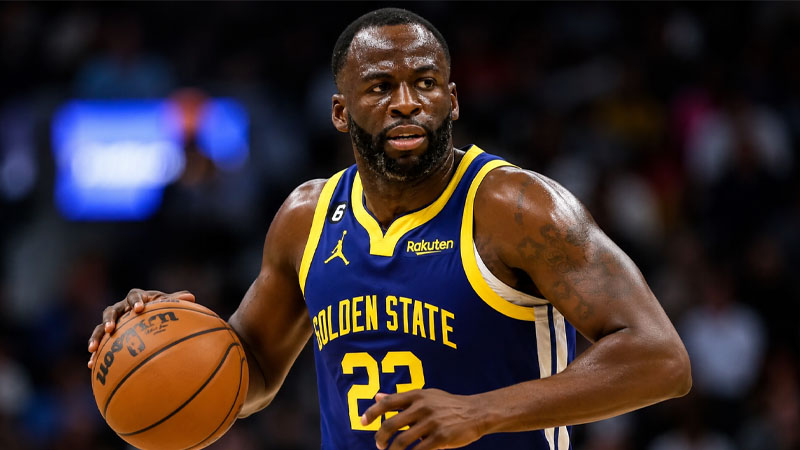
In the high-stakes world of professional basketball, off-court incidents often carry as much weight as on-court performance. One of the most searched queries regarding Golden State Warriors forward Draymond Green is whether he was ever arrested.
The answer is yes, following an incident in East Lansing, Michigan, during the summer of 2016. This event, occurring just after a high-pressure NBA Finals run, sparked significant media attention and raised questions about his legal standing and Olympic eligibility.
By examining the specific details of the arrest, the legal resolution, and the long-term impact on his career, we provide a definitive account.
The Circumstances of the 2016 East Lansing Arrest
The legal incident involving Draymond Green began in the early morning hours of Sunday, July 10, 2016. While the public narrative often simplifies high-profile arrests, the specifics of this case reveal a complex interaction between a professional athlete and local law enforcement during the off-season.
The Altercation at Conrad’s Grill
Draymond Green was arrested at a local establishment in East Lansing known as Conrad’s Grill. Law enforcement officials described the event as a physical altercation between two men.
Unlike many high-profile incidents that require a formal 911 call, patrol officers were already in the vicinity as part of their standard neighborhood monitoring. These officers witnessed the physical confrontation firsthand, which led to Green being taken into custody immediately.
The police department later clarified that the contact witnessed was not a mere shove, although they could not initially confirm if the strike was a punch or a slap.
Booking Procedures and Initial Detention
Following the confrontation, Green was transported to the East Lansing City Jail for processing. Official records indicate that at the time of his booking, Green registered a 0.10 blood-alcohol level.
He was held at the facility until he could be released on a $200 bond later that same Sunday morning. The arrest resulted in an initial charge of misdemeanor assault and battery, a legal classification that carries significant weight in the Michigan judicial system.
Despite the charges, the police confirmed that there were no injuries reported following the scuffle at the restaurant.
Identifying the Involved Parties and Prior Conflict
To understand the 2016 arrest, it is necessary to look beyond the momentary physical strike and examine the relationship between the individuals involved and the timeline leading up to the event.
The Victim and Collegiate Ties
The individual involved in the altercation with Green was identified as Jermaine Edmondson. At the time of the incident, Edmondson was a football player for Michigan State University.
This connection is particularly noteworthy because Draymond Green is one of the most prominent alumni of Michigan State’s basketball program, having played four seasons there under head coach Tom Izzo.
The shared collegiate background of both athletes added a layer of local interest and media scrutiny to what might otherwise have been a routine misdemeanor case.
A Pattern of Escalation
Analytical reviews of the police reports suggest that the physical confrontation on July 10 was the culmination of a multi-day dispute. The tension between Green and Edmondson reportedly began two nights prior to the arrest at a local bar.
This verbal dispute escalated over the course of the weekend, eventually leading to the final confrontation outside Conrad’s Grill.
This timeline indicates that the arrest was not the result of a random or spontaneous encounter, but rather the result of a simmering interpersonal conflict that transitioned from verbal sparring to physical contact in a public setting witnessed by law enforcement.
Legal Trajectory and the Path to Resolution
The transition from a criminal misdemeanor charge to a final legal resolution is a critical aspect of Green’s legal history. This process determined his ability to continue his professional duties without the burden of a criminal record.
Potential Penalties and Arraignment
Following his arrest and release on bond, Green was scheduled for a formal arraignment on July 20, 2016. The stakes for this legal proceeding were exceptionally high.
In Michigan, a conviction for misdemeanor assault and battery can result in a maximum sentence of 93 days in jail and a $500 fine.
For an athlete like Green, who was 26 years old at the time and at the peak of his physical career, even a short period of incarceration would have had devastating effects on his reputation and his availability for the upcoming NBA season.
The Strategic Plea Agreement
Before the case reached a trial phase, Green’s legal representatives worked with Michigan prosecutors to reach a plea deal. This agreement was finalized later in July 2016 and significantly altered the legal standing of the case.
The original criminal misdemeanor charge was reduced to a civil violation, which is a less severe legal classification that does not carry the same long-term implications as a criminal conviction.
This reduction was a pivotal moment in the case, as it allowed Green to resolve the matter through financial penalties rather than jail time.
| Legal Detail | Original Charge Specifications | Final Settlement Outcome |
|---|---|---|
| Charge Classification | Misdemeanor Assault and Battery | Civil Violation |
| Maximum Jail Time | 93 Days | 0 Days |
| Primary Fine | $500 | $500 |
| Additional Costs | Court Costs | $60 Restitution Fee |
| Record Impact | Potential Criminal Record | Record Cleared Upon Completion |
The final court order required Green to pay a $500 fine along with a $60 restitution fee. By fulfilling these financial obligations and meeting the terms of the settlement, Green was able to have the incident removed from his permanent record, effectively ending the legal saga.
Professional Repercussions and Career Continuity
While the legal battle was fought in Michigan courts, the professional consequences were managed by the Golden State Warriors and USA Basketball. The timing of the arrest added an extra layer of pressure to these organizations.
Organizational Response from the Warriors
The Golden State Warriors were forced to address the arrest during an already turbulent off-season. Just weeks prior, the team had lost the NBA Finals to the Cleveland Cavaliers in seven games, a series in which Green famously missed Game 5 due to an accumulation of flagrant fouls.
In a formal statement, the Warriors organization noted they were “collecting information” and would refrain from further comment until they had a full understanding of the situation.
This cautious approach allowed the team to distance itself from the immediate controversy while the legal details were being clarified.
Olympic Eligibility and Team USA
Perhaps the most immediate concern for Green was his status with Team USA for the 2016 Rio Summer Olympics. He was scheduled to join the team in August, just weeks after the arrest.
USA Basketball managing director Jerry Colangelo initially adopted a “wait and see” posture, awaiting further details before making a determination on Green’s roster spot.
Because the legal case was resolved quickly via a plea deal for a civil violation, Green remained eligible to compete. He ultimately traveled to Rio de Janeiro and helped lead Team USA to a gold medal, a feat that served to pivot his public narrative back toward athletic success rather than legal trouble.
Frequently Asked Questions Regarding the 2016 Incident
Who was the victim in the Draymond Green arrest?
The victim was Jermaine Edmondson, a football player at Michigan State University at the time.
What was the specific physical act?
Patrol officers witnessed Green slap Edmondson during the scuffle.
Did Green serve any jail time?
No, Green only spent a few hours in the East Lansing City Jail for booking before being released on a $200 bond. The final plea deal ensured no further incarceration was required.
How much did Draymond Green have to pay?
The final resolution involved a $500 fine and a $60 restitution fee.
How did the arrest impact his status in the NBA?
While it caused a temporary PR challenge, the reduction of charges meant he faced no legal barriers to continuing his career with the Golden State Warriors.
Analysis of On-Court Identity and Off-Court Conduct
The 2016 arrest became a focal point for analysts who viewed Green’s intensity as a double-edged sword. At the time of the arrest, Green was coming off a season where he averaged 14 points and 9.5 rebounds per game, serving as the defensive anchor for a historic Warriors squad.
However, his tendency toward high-emotion play—evidenced by his suspension in the 2016 NBA Finals—made the off-court news in East Lansing feel like part of a broader pattern to some observers.
The resolution of the case demonstrated the importance of a swift legal defense for high-profile athletes. By moving the case from the criminal to the civil realm, Green avoided the “assault” label that could have hampered endorsement deals and international travel.
The fact that the arrest occurred in East Lansing, a city where he is otherwise celebrated for his contributions to Michigan State, added a layer of irony to the proceedings.
Ultimately, the event remains a singular footnote in a career defined more by championships and defensive awards than by this brief encounter with the Michigan legal system.
Final Summary of the 2016 Case
The arrest of Draymond Green on July 10, 2016, was a verified event involving a physical altercation with Jermaine Edmondson outside Conrad’s Grill.
While he initially faced 93 days in jail for a misdemeanor charge, a plea deal reduced the matter to a civil violation with a total financial penalty of $560. This strategic legal outcome allowed Green to maintain his career trajectory, participate in the Rio Olympics, and clear his record.
For researchers and fans, the case serves as a definitive example of how professional athletes navigate the intersection of personal conduct and legal accountability.