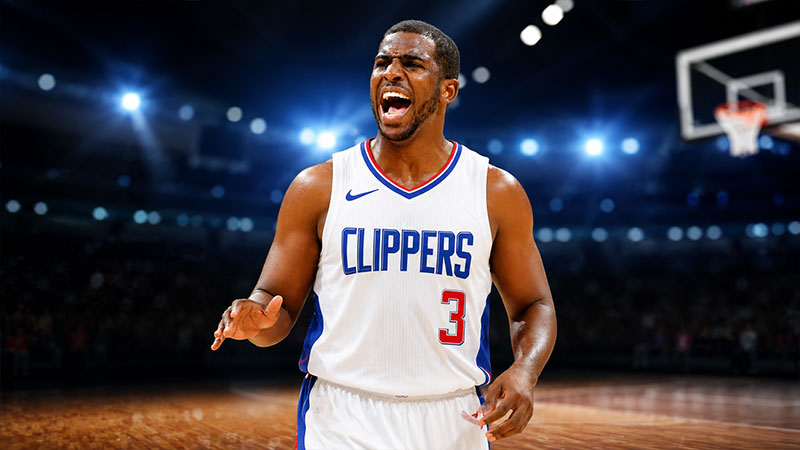
The “Lob City” era of the Los Angeles Clippers remains one of the most intriguing “what-if” stories in modern NBA history.
Between 2011 and 2017, the trio of Chris Paul, Blake Griffin, and DeAndre Jordan transformed a perennial basement-dweller into a global brand defined by high-flying dunks and elite point-guard play. However, the internal combustion of this roster was as spectacular as its highlights.
While basketball fans often point to injuries or late-game collapses, the true erosion began within the locker room, specifically centering on a toxic dynamic between Chris Paul and the Rivers family—Doc and Austin.
The Structural Collapse of the Los Angeles Clippers
The dissolution of one of the NBA’s most talented rosters did not happen overnight; it was the result of systemic friction that began the moment leadership boundaries were blurred.
To understand the tension, one must look at the organizational structure that Doc Rivers commanded during the mid-2010s.
The Conflict of Interest in Management
During this period, Doc Rivers held a dual role that has since become a rarity in the league: he was both the Head Coach and the President of Basketball Operations.
This meant he was the man responsible for coaching the players and the executive responsible for their contracts and trades. This concentration of power became a primary point of contention when the team acquired Austin Rivers, Doc’s son.
Reports suggest that Chris Paul’s relationship with Doc began to deteriorate rapidly following this acquisition, as the inherent conflict of interest became impossible for veteran players to ignore.
A Locker Room Divided by Perception
When Austin Rivers joined the roster, he was tasked with serving as the backup to Chris Paul. However, the integration was anything but seamless.
Several members of the “Lob City” core felt that Austin acted with a sense of entitlement, largely because his father controlled both the rotation and the payroll.
Unlike other young players who might defer to established veterans, Austin reportedly made little effort to “fit in” with the existing team culture.
When veteran leaders attempted to address these behavioral issues with him, the response was not what the team core expected, leading to a deep-seated resentment that eventually manifested during live game action.
Analyzing the Cultural Divide and Favoritism
The core of the “hatred”—or professional disdain—felt by Chris Paul was rooted in the perceived double standards that governed the team’s daily operations.
In a high-stakes environment like the NBA, consistency in leadership is the bedrock of trust. When that consistency vanished, so did the team’s cohesion.
Disparate Disciplinary Standards
One of Chris Paul’s most significant grievances involved the way Doc Rivers handled accountability on the court and in the film room. Paul and other veterans observed a distinct lack of parity in how mistakes were addressed.
- Accountability for Veterans: Doc Rivers was known to be vocal and demanding with his veteran core, frequently yelling at players for tactical errors or lack of effort.
- The “Austin Rule”: Conversely, players noted that Austin was rarely subjected to the same level of public or private criticism for similar transgressions.
- The Impact: This perceived favoritism created a “father-son” dynamic that superseded the “coach-player” relationship, making it impossible for Chris Paul to respect the hierarchy.
The Backup Guard Performance Gap
At the time of these tensions, Austin Rivers was viewed by many as an average player evolving from a previously poor developmental start. Because the Clippers were a veteran-heavy team, the bench production was vital.
When Austin struggled on the court, the veterans felt his presence on the roster was more about his family ties than his actual value as an NBA asset.
This gap between Austin’s self-perception and his actual on-court production was a constant source of friction for a perfectionist like Chris Paul.
The $35 Million Financial Friction Point
In the NBA, the salary cap is the ultimate indicator of an organization’s priorities. For Chris Paul, the financial decisions made by Doc Rivers in his capacity as President of Basketball Operations were the final proof that the franchise’s goals were no longer aligned with winning a championship.
The Extension That Shook the Locker Room
In 2016, Doc Rivers signed Austin to a three-year, $35 million contract extension. Within the context of the locker room, this deal was viewed as a massive overpay.
Chris Paul and other veterans reportedly saw the contract as highly inflated and unearned based on Austin’s actual production as a backup guard.
| Feature | Impact on Team Chemistry |
|---|---|
| Contract Value | $35 Million over 3 years |
| Locker Room View | Unearned and inflated |
| Strategic Cost | Reduced flexibility to sign other veteran depth |
| Result | Deepened the “nepotism” narrative among starters |
This financial commitment signaled to the team that Austin was a foundational piece of the future—a notion that the veteran core, who were in their prime and “win-now” mode, found insulting.
The Carmelo Anthony Trade: A Case Study in Vetoed Trust
If the contract extension was the smoke, the vetoed Carmelo Anthony trade was the fire that burned down the “Lob City” era. This specific event is cited by multiple reports as the moment Chris Paul lost all faith in Doc Rivers as a leader.
The Proposed Deal
During the 2016-2017 season, a potential blockbuster trade with the New York Knicks was on the table. The deal would have brought superstar Carmelo Anthony to Los Angeles in exchange for a package that included Jamal Crawford, Paul Pierce, and Austin Rivers.
For a team desperate for a scoring wing to complement Paul and Griffin, this was seen as a championship-level upgrade.
The Refusal and the Fallout
Despite the obvious basketball benefits, Doc Rivers ultimately rejected the trade. The consensus among league executives and the Clippers’ own players was that Doc refused the deal because he was unwilling to include his son, Austin, in the package.
This decision enraged Chris Paul. He reportedly felt that Doc was prioritizing his son’s spot on the roster over the team’s pursuit of a ring.
One league executive famously noted that after this event, “Chris despises Doc”. This veto was the “breaking point” that led Paul to demand a trade to the Houston Rockets shortly thereafter.
Beyond the Family Ties: Personality and Leadership
While the Rivers family dynamics were the catalyst for the explosion, the friction was also exacerbated by the clashing personalities of the individuals involved.
Chris Paul’s reputation as a “demanding” leader played a significant role in how these tensions were managed—or mismanaged.
Chris Paul’s Intense Leadership Style
Austin Rivers has been candid in recent years regarding Paul’s personality, noting that the “Point God” has a leadership style that naturally rubs many teammates the wrong way.
Paul is a perfectionist who holds everyone to an elite standard. In an environment where he felt the coach was playing favorites, his intensity likely became abrasive to those he perceived as receiving unearned benefits.
Current Status: Clearing the Air?
Despite the “despise” narrative that dominated headlines in 2017, time has softened some of the edges. Both Paul and Austin Rivers have since clarified that the reports of Paul leaving solely because of Austin were exaggerated.
In fact, Paul reportedly reached out to Austin personally to clear the air regarding those specific rumors. However, the professional damage was done; the legacy of “Lob City” will forever be stained by the perception that nepotism prevented a great team from becoming a champion.
Strategic Takeaways for Sports Leadership
The Paul-Rivers saga serves as a cautionary tale for any high-performance organization. It highlights the dangers of consolidated power and the fragile nature of locker room chemistry.
- The Danger of the Dual-Role: The Doc Rivers era proved that having one person serve as both coach and GM creates unavoidable conflicts of interest, especially when family members are involved.
- Transparency is Mandatory: When a superstar like Chris Paul loses trust in the front office’s intentions, the organization’s foundation crumbles.
- Accountability Must Be Universal: For a culture of excellence to survive, the rules must apply to the stars, the backups, and even the coach’s son.
Frequently Asked Questions
Did Chris Paul actually hate Austin Rivers?
While “hate” is a strong word, reports indicate there was significant professional resentment. Paul did not necessarily hate Austin on a personal level, but he despised the preferential treatment Austin received from Doc Rivers.
What was the specific trade that Doc Rivers vetoed?
Doc Rivers reportedly turned down a trade that would have sent Austin Rivers, Jamal Crawford, and Paul Pierce to the New York Knicks in exchange for Carmelo Anthony and Sasha Vujacic.
Why was Austin Rivers’ contract such a big deal?
Austin was awarded a $35 million extension in 2016, which many veterans, including Paul, felt was unearned based on his role as a backup and his on-court performance at the time.
How did the Rivers family react to the rumors?
Austin Rivers eventually shared that Chris Paul reached out to him to clarify that he didn’t leave the Clippers specifically because of Austin, though he acknowledged that Paul’s demanding personality often caused friction with teammates.
Conclusion: The Cost of Compromised Trust
The end of the Chris Paul era in Los Angeles was a tragedy of organizational errors. While the media focused on the “feud,” the reality was a collapse of trust between a superstar and his management.
When Doc Rivers chose to prioritize his son’s role over a trade for Carmelo Anthony, he effectively signaled to Chris Paul that winning was no longer the sole priority of the Los Angeles Clippers.
Paul’s departure to Houston wasn’t just a move to a new team; it was an escape from a management style he could no longer respect.
Today, the “Lob City” Clippers serve as a reminder that even the most talented rosters cannot survive when favoritism replaces accountability.