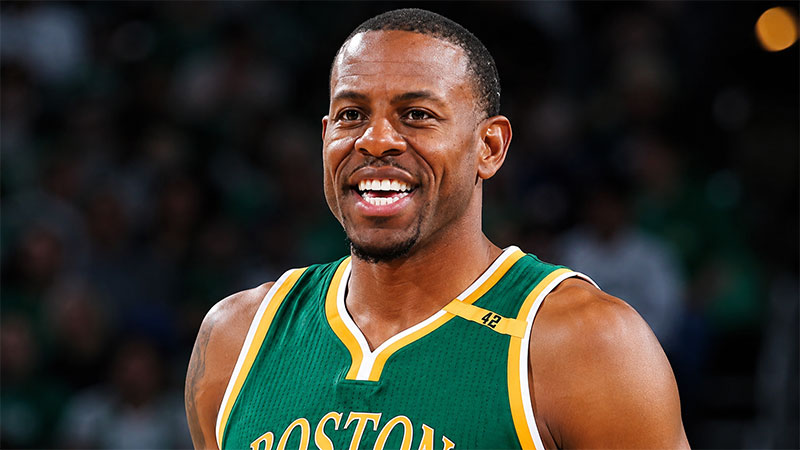
Every time Andre Iguodala steps onto the hardwood at FedExForum, the atmosphere transforms into a wall of sound. It is not the applause usually reserved for a four-time champion; it is a visceral, unrelenting chorus of boos.
This animosity didn’t stem from a missed shot or a painful playoff loss. Instead, it grew from a season where Iguodala never once wore the uniform.
To understand why Memphis hates Andre Iguodala, one must look at a complex clash between a veteran’s pursuit of a final championship legacy and a city’s unyielding pride in its rebuilding process.
The Financial Landscape of the 2019 Trade
The relationship between the veteran forward and the city of Memphis was rocky from its inception in July 2019.
At the time, the Golden State Warriors were desperate to clear salary cap space and moved Iguodala to the Grizzlies alongside a protected first-round draft pick.
For Memphis, this was a strategic move designed to weaponize their cap space to acquire future assets.
However, for a player of Iguodala’s stature, being traded to a team in the early stages of a rebuild was seen as a hurdle to his remaining years of high-level competition.
The Mechanics of a Salary Dump
The Grizzlies utilized a trade exception to facilitate the deal, essentially acting as a landing spot for a contract the Warriors no longer wanted.
From the team’s perspective, they were being paid in draft capital to house a veteran, with the hope that the draft pick would eventually become a high-value asset once the Golden State core aged.
This transaction set the stage for a conflict of interest: the team wanted an asset, while the player wanted a contender.
The Mutual Sabbatical Agreement
While many fans viewed Iguodala’s absence as a blatant refusal to work, documents and internal reports suggest a “mutual agreement” was reached early on.
The front office allowed him to sit out training camp while they worked to find a trade partner to avoid risking an injury that would tank his market value.
Despite this agreement, the public optics were disastrous. To the local fanbase, it appeared that Iguodala felt the city was “not good enough” for him to even visit while he collected a $17.2 million salary.
The Perception of Disrespect in the 901
In Memphis, the “Grit and Grind” culture is more than a marketing slogan; it is a community identity.
When a high-profile athlete is perceived to look down on a small-market franchise, it triggers a defensive response deeply rooted in the “Memphis vs. Errbody” mentality.
The tension escalated when reports surfaced that Iguodala was prepared to sit out the entire season if he wasn’t moved to a team on his specifically curated list of preferred destinations.
The Role of National Media Bias
The frustration in Tennessee was compounded by how the national media covered the saga. Many prominent analysts defended Iguodala’s right to dictate his destination, viewing it as a logical extension of player empowerment for a respected veteran.
However, local fans saw this as a double standard that favored big-market narratives over the contractual obligations of players in smaller cities. This external validation of Iguodala’s stance only deepened the local grudge.
A Conflict of Veteran Values
There is a segment of the basketball community that believes Iguodala had earned the right to finish his career on his terms. Proponents of this view argue that at his age, mentoring a young team was a secondary concern compared to winning another ring.
Conversely, critics point out that other legends have used their final years to mentor young stars, a path Iguodala explicitly avoided during his tenure with the Grizzlies.
Locker Room Turmoil: The Young Core Strikes Back
The situation reached a breaking point in February 2020. At the time, the Grizzlies were not the “bad team” many had anticipated; instead, they were a scrappy, competitive group led by rookies Ja Morant and Dillon Brooks who were actively fighting for a playoff spot.
The young players did not take kindly to a veteran essentially saying he didn’t want to be a part of what they were building.
Dillon Brooks and the Public Call-Out
The internal frustration became public when Dillon Brooks addressed the media, stating he couldn’t wait for the team to trade Iguodala so they could play against him and show him what Memphis was actually about.
This was a rare moment of a current player publicly criticizing a veteran who was technically still a teammate, signaling a total collapse of the locker room’s respect for Iguodala.
Ja Morant’s Social Media Stand
The city’s new cornerstone, Ja Morant, quickly amplified Brooks’ sentiments. Morant took to social media to support his teammates, essentially drawing a line in the sand between the current roster and the absent veteran.
For fans, seeing their young star defend the city’s honor was a pivotal moment that solidified Iguodala as a permanent antagonist in franchise history.
The Tipping Point: Trading to the Miami Heat
The “Cold War” finally ended just before the 2020 trade deadline when Memphis sent Iguodala to the Miami Heat. This move was the ultimate realization of Iguodala’s strategy, as he not only joined a contender but also secured a significant financial reward.
| Feature | Details |
|---|---|
| Trade Date | February 2020 |
| New Contract | 2-year, $30 million extension |
| 2020 Result | Reached the NBA Finals with Miami |
| Memphis Return | Acquired Justise Winslow |
Achieving the Strategic Goal
From a purely professional standpoint, Iguodala’s gamble paid off immensely. He avoided the physical toll of a regular season on a developing team and walked into a situation where he played a key role in a deep playoff run to the NBA Finals.
This success, however, served as salt in the wound for Memphis fans, who felt his “refusal” was rewarded rather than punished.
The Financial Victory
Beyond the on-court success, the $30 million extension he signed upon arriving in Miami was seen by many as a “power move”.
He managed to collect his full $17.2 million from Memphis without playing a single minute and then immediately doubled down on his career earnings.
This outcome is often cited in discussions regarding the limits of player empowerment and the leverage veterans hold over small-market teams.
Long-Term Impact on NBA Team Dynamics
The Iguodala saga remains a cautionary tale for front offices across the league. It highlighted the risks of taking on veterans in salary-dump trades without a clear plan for their integration or a guaranteed buyout agreement.
The Precedent for Small Markets
The fallout in Memphis has influenced how other small-market teams handle disgruntled veterans.
Teams are now more likely to seek firm commitments or pursue immediate buyouts to avoid the kind of public relations nightmare and locker room distraction that plagued the Grizzlies during the 2019-2020 season.
Player Empowerment vs. Professional Duty
The debate continues over whether Iguodala’s actions were a “classy” way to handle the end of a career. While some players like Kawhi Leonard or Anthony Davis have forced trades, Iguodala’s situation was unique because he never even reported to the facility.
This has led to ongoing discussions about the professional duties players owe to the franchises that hold their contracts, regardless of the team’s competitive status.
Frequently Asked Questions
Did Andre Iguodala ever play a game for the Memphis Grizzlies?
No, he never appeared in a single game, attended training camp, or even visited the city as a member of the team.
Was it actually a “refusal” to play?
The Grizzlies and Iguodala had a mutual agreement for him to sit out, but the players and fans viewed his lack of interest in joining the team as a refusal to fulfill his professional duties.
What did the Grizzlies get in return for trading him?
The Grizzlies eventually traded him to the Miami Heat in a deal that brought back Justise Winslow. More importantly, they kept the first-round pick they received from the Warriors for taking him in the first place.
Why do fans still boo him today?
The animosity remains because fans felt he disrespected the city and the “Grit and Grind” culture by acting as if the team wasn’t worth his time, even while he was being paid millions by them.
The Lasting Legacy of a Grudge
The “Memphis Grudge” against Andre Iguodala is not just about a player wanting to be traded; it is about the perceived arrogance of an elite athlete dismissing a community that prides itself on hard work and loyalty.
While Iguodala walked away with another Finals appearance and a lucrative contract, the Grizzlies used the ordeal to galvanize their young core and strengthen the bond between the players and the city.
In the end, both sides got what they wanted. Iguodala found his contender, and the Grizzlies found a renewed sense of identity. However, as evidenced by the chorus of boos that still greets him, the wound in Memphis remains unhealed.
The saga stands as a definitive moment in the modern NBA, illustrating that while players have the power to dictate their destinations, fans have the power to ensure they never forget the bridges they burned along the way.