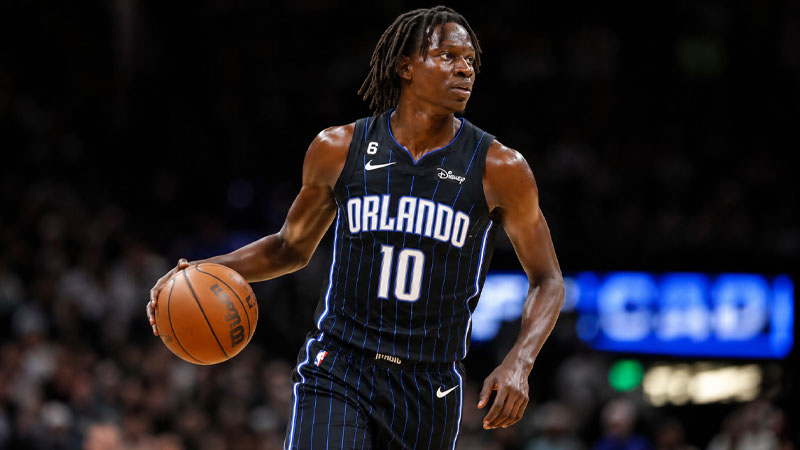
Bol Bol failed his physical in January 2022 after Detroit Pistons medical staff identified a structural abnormality in his right foot during a routine intake exam.
This clinical discovery immediately voided a finalized trade that would have sent the 7-foot-2 center from the Denver Nuggets to Detroit in exchange for Rodney McGruder and a second-round pick.
While the Nuggets expressed surprise, citing Bol’s active participation in practices without reported pain, the Pistons’ staff exercised extreme caution due to his previous collegiate stress fracture.
Validating Detroit’s findings, Bol subsequently underwent surgery, sidelining him for eight to twelve weeks before his eventual NBA resurgence.
Why Was the Bol Bol Trade to Detroit Voided?
The transaction that would have sent Bol Bol to the Motor City was officially dismantled on January 13, 2022, after medical evaluations raised significant red flags.
For a rebuilding franchise like the Pistons, acquiring a 7-foot-2 prospect with perimeter skills was viewed as a low-risk “audition” for a future role and contract.
However, the routine nature of the intake physical was interrupted when physicians identified an issue that transformed a simple trade into a major medical debate between two organizations.
This event highlights the immense power team doctors hold in determining the viability of a player’s professional movement and financial stability.
Identifying the Structural Right Foot Abnormality
During the Detroit medical staff’s assessment, a structural issue in Bol’s right foot was flagged. While he had been active in Denver, Detroit’s doctors viewed the state of his foot as a liability for high-intensity professional workloads.
The decision to void the trade was based on this clinical discovery, which the Pistons felt outweighed the potential reward of adding Bol’s unique talent to their roster.
By rescinding the deal, Detroit avoided taking on a player who, as later events confirmed, was on the verge of needing surgical intervention.
Conflicting Perspectives Between Denver and Detroit
The Nuggets’ front office and coaching staff, led by Michael Malone, were reportedly “taken aback” by the news of the failed physical.
Denver maintained that Bol had been practicing and playing without any reported discomfort or missing time due to injury since joining the team in 2019.
This disconnect illustrates the subjective nature of medical “fails” in professional sports; while Denver saw a player functionally capable of performing, Detroit saw a structural ticking clock that didn’t meet their specific threshold for long-term health.
The Role of Subjective Risk Assessment in NBA Physicals
Failed physicals often come down to an organization’s specific level of risk aversion rather than a simple “pass/fail” metric.
Some teams, like the Nuggets, have shown a willingness to manage high-risk profiles—such as Michael Porter Jr.’s back concerns—whereas other teams prefer to walk away from any uncertainty.
In Bol’s case, the Pistons’ medical staff likely felt that the risk of a repeat stress injury was too high to justify even a low-cost trade involving Rodney McGruder and a second-round pick.
The Medical Context of Bol Bol’s Durability Concerns
To understand why Detroit was so cautious, one must look at the unique biomechanical challenges presented by Bol Bol’s frame. Standing 7-foot-2 with an exceptionally slender build, Bol represents a medical profile that NBA teams traditionally scrutinize heavily.
The history of “big men” in the league is littered with talented individuals whose careers were cut short by lower-extremity injuries, particularly those involving the delicate bones of the feet.
Reliving the Oregon Collegiate Injury
The primary driver behind Detroit’s caution was Bol’s history of a severe stress fracture in his left foot during his lone season at the University of Oregon.
This specific injury was the reason his draft stock plummeted from a projected top-five pick to the 44th overall selection in 2019.
When Detroit’s doctors found an abnormality in his other foot during the 2022 physical, it suggested a systemic vulnerability rather than an isolated incident, sparking fears of chronic durability issues.
The Physical Profile of a 7-foot-2 Big Man
Medical analysts and league observers have often discussed the leverage challenges faced by players of Bol’s stature. His height, combined with a lanky frame, puts immense pressure on the navicular and metatarsal bones during high-impact movements.
Some critics at the time even joked that a “gust of wind” could pose a risk to his health, but for team doctors, the concern was grounded in the reality of stress distribution.
Detroit’s staff viewed the discovery as a sign that Bol’s body was not structurally optimized for a standard NBA schedule.
The Detroit Pistons and the Reputation for Strict Physicals
The voiding of Bol Bol’s trade was not an isolated incident for the Detroit organization. It served as a reminder of the franchise’s history of rigorous, and sometimes controversial, medical evaluations.
This pattern has led to significant friction between the team and the NBA Players Association, with athletes sometimes feeling that their reputations are being unfairly tarnished by the public nature of these medical “failures”.
The Legacy of Donatas Motiejunas
In 2016, the Pistons famously voided a trade for Donatas Motiejunas due to back concerns, despite the player insisting he was healthy. Much like Bol Bol, Motiejunas had to deal with the fallout of being publicly labeled as physically unfit for the NBA.
He eventually played in several other leagues and for different NBA teams, leading him to criticize Detroit’s doctors for being overly pessimistic and nearly ending his career prematurely.
Player Criticism and the “Destruction of Names”
Following Bol Bol’s failed physical, Motiejunas publicly questioned how many times the Players Association would allow such incidents to occur.
He alleged that Detroit doctors were “destroying young players’ names and futures” by issuing reports that stated a player would never play basketball again.
While teams have a right to protect their investment, the concern among players is that a “failed physical” acts as a permanent stain on their medical record, making it difficult to secure future contracts with other organizations.
Ownership vs. Front Office Consistency
While different general managers have overseen the Pistons—from Stan Van Gundy to Troy Weaver—the ownership under Tom Gores has remained a constant during these high-profile voided trades.
This consistency suggests that the organization’s overarching medical philosophy and risk tolerance may be ingrained at a high level, prioritizing conservative medical clearances to avoid the financial burden of long-term injuries.
Market Repercussions of a Vetoed Transaction
A failed physical is more than just a cancelled trade; it is a public devaluation of a player’s market worth. For Bol Bol, the timing could not have been worse, as he was approaching restricted free agency in the summer of 2022.
Being returned to his original team as “physically flawed” significantly hampered his leverage in any future contract negotiations.
Financial Implications for Upcoming Free Agency
When a team that knows a player intimately, like Denver, is willing to trade him for a low second-round pick, and then the acquiring team rejects him for medical reasons, it sends a negative signal to the entire league.
It suggests that the player is “damaged goods,” which can lead to lower contract offers or teams being completely unwilling to extend a long-term commitment. This was a major blow to Bol’s earning potential at a critical juncture in his career.
The Risks of Public Medical Records
Some players and agents argue that NBA teams should be more thoughtful about how medical failures are documented and publicized.
The concern is that if a doctor’s report is leaked or becomes common knowledge, other teams will rely on that assessment instead of doing their own independent research.
In a league where GMs often act with extreme caution to protect their own careers, a single negative report can effectively “blackball” a fringe player who doesn’t have the superstar status to overcome such a hurdle.
Validating Detroit’s Medical Findings with Post-Void Surgery
Interestingly, the story of Bol Bol’s failed physical did not end with a simple return to Denver. Shortly after the trade was voided, Bol and his representatives made the decision to move forward with a surgical procedure on the very foot Detroit had flagged.
This move essentially validated the clinical findings of the Pistons’ medical staff, proving that the abnormality they discovered was indeed a significant issue that required professional intervention.
The Choice for Surgical Intervention
Bol opted for surgery on his right foot to address the structural concerns identified during the Detroit intake exam.
By choosing to have the operation immediately, Bol’s camp prioritized his long-term health and career stability over trying to continue playing through a potential injury.
While this confirmed Detroit’s diagnosis, it also provided a clear path for Bol to return to the court with a cleaner bill of health.
Recovery Timelines and Subsequent Career Movement
The surgery sidelined Bol for a period of eight to twelve weeks, which effectively removed him from the Nuggets’ active rotation for the remainder of that season.
However, his talent remained high enough that he was still traded just days later to the Boston Celtics (who subsequently moved him to the Orlando Magic).
These teams were fully aware of his need for surgery and were willing to manage his rehabilitation process, showing that medical risk is often in the eye of the beholder.
| Key Event | Detail | Outcome |
|---|---|---|
| Trade Agreement | Denver to Detroit (McGruder + 2nd Rd Pick) | Initially finalized, then voided |
| Medical Flag | Abnormality in Bol’s right foot | Trade rescinded by Pistons |
| History | 2019 Oregon Left Foot Stress Fracture | Increased medical scrutiny |
| Resolution | Post-void surgery on right foot | 8-12 week recovery period |
Frequently Asked Questions About Bol Bol’s Physical
Did Bol Bol fail a drug test?
No. Bol Bol failed a medical physical due to a structural abnormality in his foot, not a substance violation.
What exactly was wrong with his foot?
While the exact clinical terminology is often kept private, reports indicated a structural abnormality that required surgery shortly after the trade was voided.
Why did Denver think he was healthy?
Bol had been practicing and playing in games for the Nuggets without missing time or reporting pain, leading them to believe his health was sufficient for trade purposes.
Has Bol Bol had foot issues since the surgery?
Bol successfully navigated his recovery and went on to have productive stints with the Orlando Magic and other teams, suggesting the surgery addressed the core issue.
Is it common for NBA trades to be voided for physicals?
It is relatively rare but happens when team doctors identify long-term risks that the front office is unwilling to insure.
Conclusion: Lessons from the Voided Deal
The story of how Bol Bol failed his physical is a case study in the intersection of sports medicine and professional business. It highlights the reality that health in the NBA is often a subjective assessment of risk.
While Denver saw a functional asset, Detroit saw a structural liability—a diagnosis that was eventually proven correct by Bol’s need for surgery.
For players, it serves as a cautionary tale about how quickly a career trajectory can change based on a single medical report. For fans, it provides a look behind the curtain at the rigorous standards teams use to protect their multi-million dollar investments.
Bol Bol eventually found success in Orlando, proving that while a failed physical can be a significant setback, it does not have to be the end of an NBA journey.