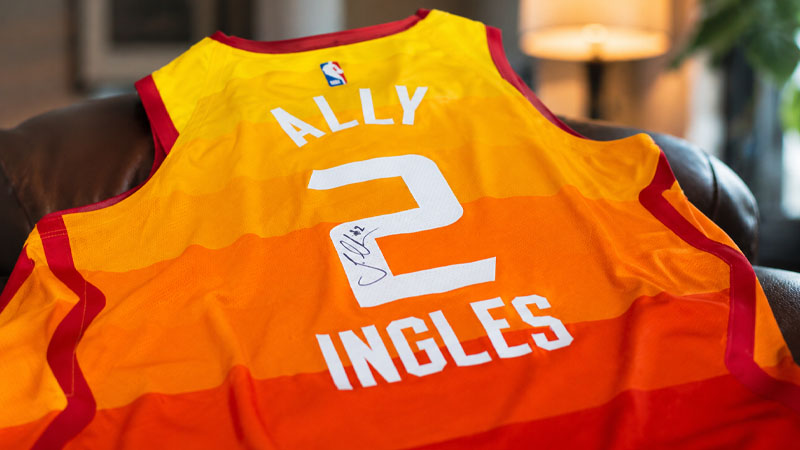
In the 2020 NBA Bubble, Joe Ingles made a powerful statement by replacing his last name with the word “ALLY” on his Utah Jazz jersey. This choice was part of a league-wide social justice initiative following the murder of George Floyd.
For Ingles, a white Australian athlete, wearing “ALLY” signaled a personal pledge to use his privilege and platform to support Black teammates and advocate for systemic change.
It defined an ally as someone from a non-marginalized group who actively works to combat discrimination. This visual commitment transformed the basketball court into a significant stage for global civil rights advocacy.
The Context of the 2020 NBA Bubble and Social Justice
The 2020 NBA season restart in Orlando, Florida, was unlike any other in the league’s history. Following the tragic murder of George Floyd in May 2020, the NBA and the National Basketball Players Association (NBPA) recognized that returning to play required a commitment to social justice. The “Bubble” became a concentrated space for protest and awareness.
The NBA and NBPA Joint Agreement
The league and the players’ union reached a historic agreement to allow athletes to replace their surnames on the back of their jerseys with slogans from a pre-approved list of 29 phrases.
This move was designed to ensure that the fight against systemic racism remained at the forefront of the television broadcast.
Players were given the opportunity to select the message that resonated most with their personal journey or their hopes for societal change.
A Campus Dedicated to Reform
Beyond the jerseys, the NBA implemented several visual cues to keep the focus on reform. The “Black Lives Matter” slogan was painted prominently on the courts where games were played.
This environment allowed players to engage in deep discussions about racial inequality, often using their post-game interviews to speak directly to viewers about the need for legislative changes and community empowerment.
Why Did Joe Ingles Choose the Word “Ally”?
Among the many slogans available, Joe Ingles’ choice of “ALLY” stood out as a unique and personal declaration. As an international player from Australia, Ingles occupied a specific position within the team and the broader league.
His decision was rooted in an understanding of his own identity and the role he could play in supporting his teammates.
Understanding the Definition of an Ally
In the context of racial justice, an ally is defined as an individual who does not belong to a marginalized group but uses their voice and platform to advocate for equal rights.
For Ingles, being an ally meant acknowledging that while he might not experience systemic racism personally as a white man, he had a moral responsibility to combat it.
This involves a continuous process of listening to the experiences of those who are marginalized and standing shoulder-to-shoulder with them in the struggle for equality.
The Australian Perspective on Global Justice
Ingles’ stance was also informed by his background as a prominent international athlete. By choosing “ALLY,” he signaled that the fight for civil rights is not just an American issue but a global human rights concern.
His Australia-to-NBA journey provided him with a broad perspective on how different cultures view justice, and he chose to use that perspective to reinforce the message of solidarity within the Jazz locker room.
Analyzing the 29 Approved NBA Slogans
To understand the weight of Ingles’ choice, it is helpful to look at the broader campaign. The NBA provided a specific list of messages that players could choose to wear during the initial phase of the season restart.
| Slogan Category | Examples of Approved Phrases |
|---|---|
| Direct Action | Vote, Education Reform, Justice Now |
| Solidarity | Ally, Equality, I Am A Man |
| Human Rights | Peace, Freedom, Love Us |
| Memorial/Specific | Say Her Name, Black Lives Matter |
This structured approach ensured that the messages remained focused on the core goals of the social justice movement while allowing for individual expression.
The Utah Jazz: A Team-Wide Message of Solidarity
Joe Ingles was not acting in a vacuum; his choice was part of a unified front presented by the Utah Jazz. The team utilized their platform to highlight various facets of the struggle for justice, showing that different voices can contribute to a singular cause.
Teammates Standing Together
While Ingles wore “ALLY,” his teammates chose slogans that addressed other critical areas of the movement.
Donovan Mitchell famously wore “Say Her Name” to bring attention to Breonna Taylor, while Mike Conley wore “I Am A Man,” a phrase with deep historical roots in the Civil Rights Movement.
Rudy Gobert chose “Equality,” further emphasizing the team’s commitment to a world where everyone is treated with the same dignity.
The Dynamics of Team Unity
The presence of the word “ALLY” on the court next to phrases like “Say Her Name” created a visual representation of how support systems function.
It demonstrated that for a movement to succeed, it requires both those who are directly affected and those who support them from a position of privilege to work in tandem. This collective action was a defining characteristic of the Jazz during the 2020 playoffs.
How the Jersey Initiative Functioned Logistically
The execution of the social justice jersey campaign was carefully managed by the league to ensure maximum visibility. There were specific rules regarding when and how these slogans could be displayed on the court.
Timing and Duration of the Campaign
Players wore the slogans during the “seeding games” and the first four days of the playoffs in late July 2020. This period was when global viewership was at its peak as basketball fans welcomed the return of the sport.
The timing was strategic, ensuring the social justice messages reached the widest possible audience during the most anticipated games of the restart.
Transitioning Back to Surnames
After the initial four-day playoff period, the rules shifted slightly. Players were allowed to keep the slogans on their jerseys, but their last names had to be displayed beneath the chosen phrase.
This transition allowed players to maintain their commitment to the cause while returning to the traditional identification standards of professional sports.
From Slogans to Substantial Change: The NBA Foundation
A common critique of such initiatives is whether they lead to real-world impact. In the case of the NBA Bubble jerseys, the league took steps to ensure the visual protests translated into financial and structural support.
Auctioning Jerseys for Charity
The game-worn jerseys, including those worn by Joe Ingles, were auctioned off following the campaign. The proceeds from these auctions were directed toward the newly formed NBA Foundation.
This ensured that the very fabric worn during the protests became a vehicle for raising capital to support marginalized communities.
The Mission of Economic Empowerment
The NBA Foundation’s primary mission is to support economic empowerment in Black communities through various programs focused on career advancement and education.
By funding organizations that provide job training and mentorship, the league aimed to address some of the systemic barriers that the jersey slogans were originally highlighting.
What it Means to be an Ally in Professional Sports
The legacy of Joe Ingles’ jersey continues to spark discussions about the role of the “ally” in high-profile environments. It serves as a blueprint for how athletes can transition from passive supporters to active participants in social change.
Listening and Learning
A core component of Ingles’ personal stance was the commitment to “listen to and learn from” his Black teammates. In a professional sports environment, this means making space for the stories and lived experiences of others.
Allyship is not about taking over the conversation but about amplifying the voices of those who have been historically silenced.
Using Privilege for Advocacy
Ingles’ Australian background and his status as a veteran player gave him a unique brand of privilege.
By wearing “ALLY,” he demonstrated that using one’s platform to support others is not a sign of weakness, but a sign of leadership. It encourages a culture where teammates look out for one another’s interests both on and off the hardwood.
Frequently Asked Questions About Joe Ingles’ Ally Jersey
What was the exact list of slogans players could choose from?
The NBA and NBPA curated a list of 29 phrases, including “Black Lives Matter,” “Equality,” “Vote,” “Justice,” “Peace,” and “Ally”.
Did Joe Ingles continue to speak on these issues after the Bubble?
Yes, Ingles has been vocal in press conferences and interviews about his responsibility to use his platform for good, particularly regarding racial justice and his advocacy for autism awareness.
Can fans still buy the Joe Ingles “Ally” jersey?
While the original game-worn jerseys were auctioned for charity, various replicas were made available during the 2020 season, with proceeds often benefiting the NBA’s social justice partners.
How did the “Ally” jersey impact the Utah Jazz community?
The initiative helped foster a deeper connection between the team and its fan base in Utah, sparking important conversations about diversity and inclusion within the state.
The Lasting Legacy of Athlete Activism
The 2020 NBA Bubble proved that professional sports can be a powerful engine for social discourse. Joe Ingles and his “ALLY” jersey remain a symbol of that era—a time when the game was about much more than just the final score.
A Shift in League Identity
Since the 2020 season, the NBA has integrated social justice into its brand identity more deeply than ever before. The establishment of the NBA Foundation and the ongoing support for the Social Justice Coalition are direct results of the momentum generated in the Bubble.
The Power of a Single Word
Joe Ingles showed that you don’t need a complex manifesto to make a difference. Sometimes, a single word like “ALLY” is enough to start a conversation, challenge a status floor, and show a teammate that they do not have to fight for justice alone.
His jersey serves as a reminder that everyone has a role to play in the pursuit of a more equitable society.