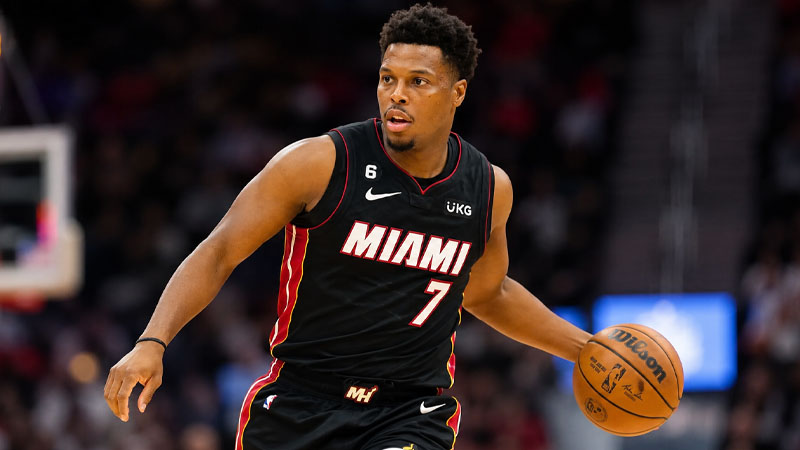
Kyle Lowry earned six consecutive All-Star selections from 2015 to 2020 by serving as the indispensable engine of the Toronto Raptors’ most successful era.
While casual observers often scrutinize his scoring averages, Lowry’s All-Star status was built on elite playmaking, defensive grittiness, and a mastery of “winning plays” that traditional box scores miss.
He consistently led the league in charges drawn and impact metrics like plus-minus. Whether voted in as a starter by a nation of fans or selected as a reserve by NBA coaches, Lowry’s value was defined by transforming a franchise into a perennial champion.
Why Did Kyle Lowry Consistently Make the All-Star Team?
Lowry’s presence in the mid-season classic was not a fluke; it was a reflection of his status as a franchise icon and a consistent winner.
Between 2015 and 2020, he was the absolute engine and undisputed leader of a team that transitioned from a lottery-bound squad to an Eastern Conference powerhouse.
His selection method evolved over time, beginning with heavy fan support and transitioning into consistent recognition from the league’s coaching staffs who valued his impact over his raw statistical output.
| Year | Selection Type | Selection Method | Team Represented |
|---|---|---|---|
| 2015 | Starter | Voted in by fans | Toronto Raptors |
| 2016 | Starter | Voted in by fans | Toronto Raptors |
| 2017 | Reserve | Selected by NBA coaches | Toronto Raptors |
| 2018 | Reserve | Selected by NBA coaches | Toronto Raptors |
| 2019 | Reserve | Selected by NBA coaches | Toronto Raptors |
| 2020 | Reserve | Selected by NBA coaches | Toronto Raptors |
Analyzing the Statistical Paradox of Lowry’s Selection
To understand why Lowry remained an All-Star fixture, one must look past the surface-level numbers that often fuel online debates.
While some critics labeled his inclusion as “ridiculous” due to lower scoring outputs in certain years, his peak performance and consistent impact metrics tell a far more comprehensive story.
He was never just about scoring; he was about controlling the geometry and tempo of the game.
The 2015-16 Peak and Elite Two-Way Production
During his most statistically dominant years, Lowry’s numbers were undeniably elite by any standard. In the 2015–16 season, which earned him an All-NBA selection, he averaged a career-high 21.2 points, 6.4 assists, 4.7 rebounds, and 2.1 steals per game.
This specific campaign showcased his ability to combine dynamic playmaking with high-volume three-point shooting, making him one of the most complete and dangerous point guards in the league at the time.
During this window, he wasn’t just “good for his role”—he was an upper-echelon star carrying a heavy offensive and defensive burden.
Mastery of the “Invisible” Basketball Eye Test
As he aged, Lowry’s value shifted toward the “invisible” aspects of the game that advanced analytics frequently highlight.
Even when his shooting percentages dipped—such as a period in late 2018 where he shot roughly 38% from the field—the Raptors continued to perform significantly better with him on the floor.
His elite plus-minus ratings and Real Plus-Minus (RPM) scores often ranked him among the top 10 players in the entire league.
This discrepancy between raw box scores and on-court impact is why coaches consistently chose him over younger, higher-scoring guards; they understood that he prioritized winning basketball over individual glory.
The Cultural Power of the North: How Fans Voted Him In
The early years of Lowry’s All-Star run were defined by a massive cultural movement that spanned an entire country.
Unlike players in smaller markets who struggle to gain national attention, Lowry benefited from a unique “Canada-wide” voting base that saw him as the face of basketball in the North.
- The 2015 Comeback: In 2015, Lowry trailed Miami Heat legend Dwyane Wade by over 100,000 votes with only two weeks remaining in the voting period.
- High-Profile Endorsements: His surge into a starting spot was fueled by a historic campaign backed by global musician Drake and then-Prime Minister Stephen Harper.
- Home Court Heroics: By 2016, his popularity was so immense that he started the All-Star Game in front of his home fans at the Air Canada Centre in Toronto.
- Breaking Barriers: This level of support allowed him to break through traditional voting barriers that typically favor players in massive U.S. media markets like New York or Los Angeles.
Why NBA Coaches Valued His “Invisible” Basketball Skills
If the fans got him to the game, it was the coaches who kept him there. From 2017 to 2020, Lowry was consistently selected as a reserve by NBA coaches who had to game-plan against him.
These professionals recognized that Lowry’s “hidden” winning plays were more valuable to a successful team than the empty statistics of players on losing squads.
He was the ultimate “coach’s player” because of his willingness to do the dirty work that other stars often avoided.
Leading the League in Charges and Grit
One of the most defining characteristics of Lowry’s game was his absolute lack of concern for his physical well-being if it meant securing a possession.
He routinely led the NBA in charges taken, a grueling and painful stat that directly translates to turnovers for the opponent and extra possessions for his team.
This grittiness established a defensive culture in Toronto that eventually led to a championship. In an era where players are often criticized for lack of effort on defense, Lowry’s willingness to “stand on business” and take a hit from a moving giant became his trademark.
Defensive Versatility as an Undersized Guard
Despite being an undersized guard at just 6-foot-1, Lowry’s lower-body strength and high basketball IQ allowed him to be a defensive disruptor against much larger opponents. He prioritized deflections, dived for loose balls, and was a master of managing game clock scenarios.
His defensive impact wasn’t just about steals; it was about positioning, communication, and the physical toughness required to keep the Raptors’ defensive scheme from collapsing.
Coaches valued this two-way reliability, especially in the Eastern Conference, where his defensive tenacity was essential for perennial playoff runs.
Is Kyle Lowry’s All-Star Legacy Considered Ridiculous?
The debate surrounding Lowry’s All-Star status often highlights a deep divide in how basketball is consumed. On platforms where raw highlights and box scores dominate, Lowry was frequently a target for skepticism.
Critics would point to younger players like D’Angelo Russell, Luka Doncic, or Pascal Siakam as more “deserving” candidates based on their scoring ability or individual trajectories.
The Box Score vs. Impact Debate
The primary argument against Lowry was often his scoring average, which hovered around 14 points per game in later years with shooting splits that frustrated casual fans.
Skeptics argued that he was merely a “bum” benefiting from the rise of teammates like Pascal Siakam or the gravity of superstars like Kawhi Leonard.
However, those who actually watched the games—rather than just “regurgitating stats”—noted that the team was a “completely different beast” with him on the floor.
His ability to function as the primary floor general allowed his teammates to flourish, a trait that isn’t always captured in a shooting percentage.
Addressing the “Snub” Arguments and Narrative
Every year, the “snub” list grows, and Lowry was often the player critics wanted to replace with names like Zach LaVine, Bradley Beal, or Tobias Harris.
Some went as far as suggesting that his selections were a “joke” intended to please other league stars like LeBron James or Chris Paul. Yet, these arguments often ignored the context of team success.
Lowry wasn’t just accumulating “empty” stats on a lottery team; he was leading a squad that consistently held a top seed in the Eastern Conference.
In the eyes of the decision-makers, a winning engine is always more valuable than a high-volume scorer on a losing team.
The 2020 All-Star Game: Redefining Competitive Spirit
If there is one single moment that validates Lowry’s All-Star legacy, it was the 2020 game under the new Elam Ending format. While the All-Star Game is historically an exhibition characterized by lack of defense, Lowry refused to change his DNA for the sake of a show.
- Game 7 Mentality: While other players treated the event like an exhibition, Lowry famously treated it like a Game 7.
- The Charge King: In the closing minutes of a high-stakes, competitive game, Lowry drew two (some accounts say three) critical charges to help Team Giannis.
- Validating His Identity: This performance showcased exactly why he was there: he was a player who would put his body on the line to win a game, even when it didn’t count in the standings.
- Peer Respect: His actions during the 2020 game earned him immense respect from his fellow stars, who saw firsthand that his commitment to winning was never a performance—it was who he was.
The Path of the Late-Bloomer: A Historic Trajectory
Lowry belongs to a very exclusive group of NBA players who did not reach their peak until much later in their careers. Most All-Stars make their first appearance by age 23, yet Lowry didn’t earn his first nod until his ninth season in the league.
Following in Billups’ Footsteps
Lowry is only the second player in the history of the NBA to earn five or more All-Star selections after being unselected through his first eight league seasons. The only other player to achieve this feat was Detroit Pistons legend Chauncey Billups.
This “late-bloomer” arc is rare and speaks to a relentless work ethic and an ability to adapt his game as the league evolved.
It also reinforces the idea that his success was built on intellectual mastery of the sport, which often takes years to develop, rather than just raw youthful athleticism.
Sustaining Excellence into his 30s
While many guards see a steep decline as they reach their mid-30s, Lowry remained the heart of the Raptors’ organization long after he was expected to fade.
He put “blood, sweat, and tears” into his tenure with the team, ultimately helping lead them to their first-ever NBA Championship in 2019.
Even as younger stars emerged, his role as the veteran floor general was viewed as the stabilizing force that kept the championship culture alive in Toronto.
Frequently Asked Questions About Lowry’s All-Star Status
How many times was Kyle Lowry an All-Star?
Kyle Lowry was selected as an NBA All-Star six times consecutively from 2015 to 2020.
Did Kyle Lowry ever start in an All-Star Game?
Yes, he was voted in by fans as a starter for two consecutive years in 2015 and 2016.
Is Kyle Lowry considered a future Hall of Famer?
Lowry’s six All-Star selections, coupled with his 2019 NBA Championship and All-NBA status, make him a strong candidate for the Hall of Fame.
Why did coaches keep voting for him when his stats were low?
Coaches valued his “invisible” contributions, such as leading the league in charges drawn, elite defensive positioning, and his ability to improve the performance of everyone else on the court.
The Final Verdict: A Jersey in the Rafters
Kyle Lowry’s legacy is not found in a spreadsheet of points per game; it is found in the championship banner hanging in Toronto and the deep respect of his peers. He was a player who proved that being an All-Star is about more than just highlights.
- Franchise Icon: Many within the Raptors organization believe his #7 jersey should be the first one retired by the franchise.
- The Ultimate Teammate: His willingness to sacrifice individual stats for team success became the blueprint for the most successful era in Toronto basketball history.
- A Standard of Effort: From drawing charges in exhibition games to diving for loose balls in the finals, he set a standard for what it means to be a leader.
- Defining Greatness: Ultimately, Lowry was an All-Star because he was a winner, serving as the absolute engine of a team that refused to be overlooked.