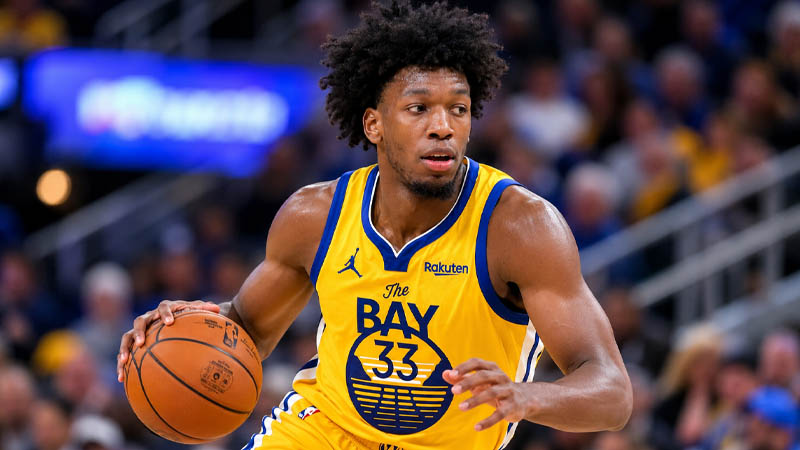
James Wiseman had to pay back $11,500 because the NCAA classified a 2017 relocation payment from Penny Hardaway as an impermissible recruiting inducement.
Although Hardaway was Wiseman’s high school coach at the time, his 2008 donation of $1 million to the University of Memphis established him as a “booster in perpetuity” under strict NCAA regulations. This designation meant any financial assistance provided to a recruit’s family violated amateurism rules.
Consequently, the NCAA mandated a 12-game suspension and a charitable donation of the full amount. Ultimately, Wiseman withdrew from college, citing the repayment as an impossible financial burden.
The $11,500 Payment: Why the NCAA Flagged James Wiseman
To understand the complexity of this case, one must look back at the timeline of events that occurred years before James Wiseman ever stepped onto a collegiate basketball court.
The controversy began with a simple relocation, a common occurrence for high-level recruits looking to optimize their competitive environment.
However, the financial mechanics behind this move eventually became the centerpiece of one of the most high-profile eligibility battles in recent athletic history.
The 2017 Relocation from Nashville to Memphis
In the summer of 2017, James Wiseman and his family made the decision to move from Nashville to Memphis. The primary motivation for this move was to allow Wiseman to play at Memphis East High School and participate in the Team Thad AAU circuit.
During this transition, Penny Hardaway provided Wiseman’s mother with $11,500 to help facilitate the family’s moving expenses.
At that specific moment, Hardaway was acting in his capacity as Wiseman’s AAU and high school coach. For many observing from the outside, this appeared to be a mentor helping a talented young athlete manage the logistical hurdles of a significant life change.
However, the NCAA’s retrospective analysis of this transaction was far less charitable, viewing the funds not as a gesture of support from a high school coach, but as an illegal incentive.
Penny Hardaway’s Role as a High School Coach
During the 2017 transaction, Penny Hardaway was not yet the head coach of the University of Memphis men’s basketball program. He was a prominent figure in the local basketball community, leading Memphis East High School and a successful AAU program.
Because Hardaway was not officially employed by the university at that time, the Wiseman family likely believed that accepting moving assistance was a permissible interaction between a player and his high school coach.
The NCAA eventually flagged this transaction in 2019, shortly after Wiseman enrolled at Memphis to play under Hardaway, who had taken over the college head coaching role in 2018.
The timing created a perfect storm where a past financial interaction collided with a future collegiate career, leading to a clash over the definition of amateurism.
The Transition from High School to Collegiate Scrutiny
When Wiseman committed to the University of Memphis, he was the top-ranked recruit in the nation.
The NCAA initially cleared him to play, but subsequent investigations uncovered the documentation regarding the 2017 payment. This discovery transformed a routine high school transfer into a federal-level athletic inquiry.
The NCAA’s stance was that the $11,500 served as an “impermissible recruiting inducement,” a term used to describe any benefit that could unfairly influence a player’s decision to attend a specific university.
By the time the investigation concluded in November 2019, the governing body decided that Wiseman’s eligibility was compromised by a payment made two years prior to his enrollment.
Why Was Penny Hardaway Classified as an NCAA Booster?
The technicality that dismantled Wiseman’s eligibility centered on Penny Hardaway’s status as a “booster.”
In the eyes of the NCAA, a booster is not just someone who cheers for a team; it is a legal designation that carries lifelong implications for how that individual can interact with recruits.
Hardaway’s past philanthropy, intended to help the university, ironically became the weapon used to penalize his star player.
The $1 Million Donation and the Hall of Fame
The roots of the booster classification trace back to 2008, more than a decade before Wiseman arrived on campus. In that year, Penny Hardaway donated $1 million to the University of Memphis athletic department to fund the Penny Hardaway Athletic Hall of Fame.
While this was a massive act of generosity from a former NBA star and alumnus, it triggered a specific NCAA regulation. Under these rules, any individual who makes a significant financial contribution to a university’s athletic department is designated as a booster in perpetuity.
This means that for the rest of his life, Hardaway was legally bound by NCAA rules regarding “prospective student-athletes,” regardless of whether he was a coach, a fan, or a private citizen.
The Concept of “Booster in Perpetuity”
The “booster in perpetuity” rule is one of the most stringent and often criticized aspects of NCAA bylaws.
It dictates that once you have provided a certain level of financial support to an institution, you are forever prohibited from providing financial benefits to any high school athlete who might eventually attend that school.
Because Hardaway had donated $1 million in 2008, his $11,500 payment to Wiseman’s mother in 2017—despite being for moving expenses and occurring while he was a high school coach—was legally viewed as a booster providing a financial benefit to a recruit.
The NCAA amateurism rules strictly forbade boosters from providing any financial incentives or assistance to prospective student-athletes or their families.
The Impact of Hardaway’s Long-Term Philanthropy
It is a striking irony that Hardaway’s history of community philanthropy and university support is what led to the violation.
In 2022, when the Independent Accountability Resolution Process (IARP) finally closed the case, they noted Hardaway’s long history of separate community philanthropy as a reason why he escaped personal penalties.
However, this same philanthropy is what triggered the booster status in the first place. This case highlighted a massive gap in the regulatory framework: a person acting as a high school coach is still viewed through the lens of their donor history, creating a situation where any act of kindness or professional support can be recontextualized as a recruiting violation years later.
Why the Repayment Was Labeled an “Impossible” Penalty
When the NCAA handed down its punishment, it didn’t just suspend Wiseman; it demanded a “repayment” of the $11,500.
This mandate was essentially an order for an unpaid college student to produce a five-figure sum and donate it to a charity of his choice to regain his eligibility.
The absurdity of this request became a national talking point, illustrating the inherent contradictions of the amateurism model.
The Constraints of the Pre-NIL Era
The Wiseman saga took place in 2019, a time before the current Name, Image, and Likeness (NIL) rules were implemented.
In this era, college athletes were strictly forbidden from holding outside employment that capitalized on their fame, signing endorsement deals, or even accepting small gifts.
As an unpaid student-athlete, Wiseman had no legal way to earn the $11,500 while remaining a student. He was trapped in a regulatory catch-22: he had to pay a massive fine to play, but the rules of playing prevented him from earning the money to pay the fine.
Wiseman himself remarked that he was just a regular college student and that obtaining that sum on his own was “pretty impossible”.
Blocking Crowdfunding and the Jay Williams Incident
The public outcry over the penalty led to creative attempts to help Wiseman. Former NBA player and current analyst Jay Williams attempted to start a GoFundMe campaign to raise the $11,500 on Wiseman’s behalf.
However, the NCAA quickly intervened, clarifying that accepting any crowd-funded money would count as a separate violation and would permanently end Wiseman’s career.
This intervention underscored the absolute control the NCAA exerted over the finances of its athletes. Even if the public wanted to pay the fine for him, Wiseman was not allowed to accept it.
This rigidity left him with no viable path to eligibility other than sitting out a significant portion of the season and somehow finding a way to pay a debt he wasn’t legally allowed to earn the money for.
The Ultimate Choice: Withdrawal Over Compliance
Faced with a 12-game suspension and a mandatory $11,500 donation, Wiseman reached a breaking point. Rather than sitting through the suspension and struggling to source the funds, he officially withdrew from the University of Memphis in December 2019.
By leaving the college system entirely, he was able to sign with an agent and begin training independently for the 2020 NBA Draft. This decision was a direct result of the NCAA’s refusal to offer a realistic pathway for a student-athlete to correct a technical violation.
Wiseman’s departure served as a catalyst for the eventual shift toward NIL rights, as it demonstrated how the old system could drive the nation’s best talent away from college sports.
The Final Outcome of the Wiseman Case
| Key Event | Date | Resulting Action |
|---|---|---|
| Relocation Payment | Summer 2017 | Penny Hardaway pays $11,500 for family move. |
| NCAA Investigation | Nov 2019 | Violation identified due to Hardaway’s booster status. |
| Initial Penalty | Nov 2019 | 12-game suspension and $11,500 repayment mandate. |
| Legal Injunction | Nov 2019 | Restraining order allows Wiseman to play 3 games. |
| Withdrawal | Dec 2019 | Wiseman leaves Memphis to prepare for NBA Draft. |
| Final IARP Ruling | Sep 2022 | Memphis placed on 3-year probation; wins vacated. |
Frequently Asked Questions
Did James Wiseman ever actually pay the $11,500?
No, Wiseman never paid the $11,500 donation. Rather than fulfilling the repayment mandate and serving a 12-game suspension, he chose to withdraw from the University of Memphis to prepare for the NBA Draft.
By leaving the NCAA’s jurisdiction, the requirement to pay the fine to regain eligibility became moot.
Why was the University of Memphis punished later?
In September 2022, the Independent Accountability Resolution Process (IARP) concluded its investigation into the matter. The university was placed on three years of probation and forced to vacate the wins from the games in which Wiseman played.
The ruling was based on the university’s decision to play Wiseman under a temporary restraining order while knowing he was potentially ineligible.
Could this happen today under NIL rules?
Under current Name, Image, and Likeness (NIL) regulations, it is highly unlikely that a similar saga would occur. Today’s athletes are permitted to earn money from endorsements and appearances, which would have allowed Wiseman to earn the $11,500 legally.
Furthermore, many of the rigid “booster” interactions that were once strictly prohibited are now navigated through NIL collectives.
Why wasn’t Penny Hardaway fired or suspended?
The IARP ruling in 2022 decided not to hand down personal penalties to Penny Hardaway. They cited his “long history of separate community philanthropy” as a mitigating factor.
While the university faced probation and vacated wins, Hardaway was allowed to continue his coaching career without a personal suspension.
Where is James Wiseman now?
After withdrawing from Memphis, Wiseman was selected No. 2 overall by the Golden State Warriors in the 2020 NBA Draft.
His decision to walk away from the NCAA allowed him to secure his financial future as a professional athlete, a path that the NCAA’s repayment mandate had made nearly impossible within the collegiate system.