Derrick Rose is not, and has never been, a member of the Gangster Disciples (GD). While persistent rumors have circulated online for over a decade, they are fundamentally based on a single misinterpreted photograph and the geographical context of his childhood in Chicago.
Rose has consistently maintained an anti-gang stance, supported by official statements and verified by law enforcement assessments during the height of the speculation.
His upbringing in Englewood was defined by strict family protection that shielded him from street influence. This comprehensive analysis separates digital myth from the reality of Rose’s professional legacy.
The Origin of the “Derrick Rose GD” Rumors
The speculation linking the former NBA MVP to the Gangster Disciples did not emerge from a history of criminal activity or street involvement.
Instead, the narrative was born from the intersection of a leaked digital image and the public’s perception of South Side Chicago culture.
In June 2009, shortly after Derrick Rose achieved the prestigious honor of being named the NBA Rookie of the Year, a controversial photo surfaced on the internet.
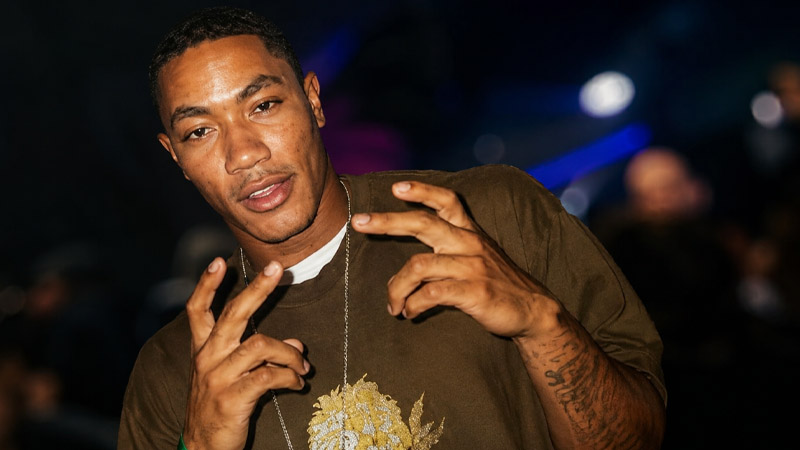
The image depicted Rose alongside another individual at a social gathering, where he was seen performing a hand gesture.
Because this gesture resembled the six-pointed pitchfork—a primary symbol used by the Gangster Disciples—the image quickly became the catalyst for a decade of unfounded allegations.
| Key Fact | Detail |
|---|---|
| Initial Leak Date | June 2009 |
| Primary Evidence | A single photograph featuring a hand gesture |
| Public Sentiment | Immediate media scrutiny following his Rookie of the Year win |
| Official Conclusion | Determined to be a “bad joke” fueled by youthful ignorance |
What Happened in the Controversial 2009 Photo?
To understand why the rumor persisted, one must look at the specific circumstances under which the photograph was taken. The context of the event is often omitted in social media discussions, leading to a distorted view of Rose’s intentions during his youth.
The University of Memphis Connection
Contrary to the popular belief that the photo was taken in the streets of Chicago, it actually originated during Rose’s freshman year at the University of Memphis.
The setting was a college party between 2007 and 2008, a time when Rose was a student-athlete focusing on a national championship run.
The fact that the photo was taken in Tennessee, far from the headquarters of Chicago-based street organizations, supports the argument that the gesture was not a sign of active membership.
Analyzing the Pitchfork Hand Gesture
The specific gesture Rose displayed is known in gang culture as the “pitchfork,” which is indeed a symbol associated with the Gangster Disciples.
However, Rose and the Chicago Bulls organization were quick to address the visual evidence once it became a national headline.
Rose admitted to throwing the sign but clarified that it was done without an understanding of its weight or consequences. He characterized the incident as a display of youthful naivety rather than a signal of criminal affiliation.
Derrick Rose’s Official Stance on Gang Affiliation
The professional response from Derrick Rose was both immediate and emphatic. He understood that his position as a role model and the face of the Chicago Bulls required a definitive rejection of gang culture to maintain the integrity of his career.
The 2009 Public Apology and Disclaimer
Following the leak, Rose issued a formal statement to distance himself from the speculation. He utilized the platform to not only deny the specific GD allegations but to establish his broader personal values.
In a quote that has been referenced throughout his career, he stated, “I want to emphatically state, now and forever, that Derrick Rose is anti-gang, anti-drug, and anti-violence”. He further clarified that he has never been affiliated with any gang at any point in his life.
Law Enforcement’s Verdict on the Case
The rejection of these rumors was not merely a public relations move. During the period of intense media scrutiny, various news outlets contacted law enforcement officials to determine if there was any factual basis for the allegations.
Investigatory bodies confirmed at the time that Rose was never under investigation, nor was he ever suspected of being involved in real-world gang activities or criminal enterprises. This professional clearance provided a layer of validation to his personal denials.
Growing Up in Englewood: A Shield Against the Streets
A significant reason the “GD” label stuck to Rose in the public imagination is his background. Growing up in Englewood, a neighborhood on Chicago’s South Side, meant living in an environment where the Gangster Disciples were an active and visible presence.
The Influence of the South Side Chicago Environment
Englewood has historically been one of the most challenged areas in Chicago regarding gang activity and systemic violence. For many young men in the neighborhood, recruitment into organizations like the GDs was a common pressure.
Because Rose hailed from the heart of this environment, many observers lazily applied the “guilt by association” logic, assuming that his geographic proximity to the gang equated to personal involvement.
How the Rose Brothers Protected an NBA Legacy
The reality of Rose’s childhood was one of extreme isolation—not from his community, but from its dangers.
His three older brothers—Reggie, Dwayne, and Allan—recognized Derrick’s generational talent early on and took it upon themselves to act as a “shield”. They implemented a strict system to ensure he was never recruited or influenced by street elements.
- Constant Supervision: His brothers monitored his whereabouts at all times.
- Physical Protection: They accompanied him to and from practices and games to ensure his safety.
- Focused Environment: The family ensured he could dedicate his entire focus to high school basketball without the distractions of neighborhood conflict.
Why Do People Still Link Derrick Rose to Gangs?
Even with a clear denial and no evidence of criminal behavior, the search query “is Derrick Rose a GD” continues to appear. This is largely due to the way information is indexed and the confusion surrounding separate legal events in his life.
The Persistence of Digital Misinformation
In the digital age, a single image can outlive a thousand corrections. The 2009 photo remains accessible on various forums and image hosting sites, often shared without the context of Rose’s apology or the Memphis party setting.
For new fans or casual observers who see the image for the first time, it creates an immediate but false association that triggers a cycle of renewed speculation.
Legal Terminology Confusion and Search Trends
A significant “gap” in public understanding involves the 2016 federal civil lawsuit Rose faced. During this trial, the media frequently utilized the phrase “Derrick Rose gang rape allegations” to describe the case involving Rose and two childhood friends.
Because the word “gang” appeared so frequently in headlines during this high-profile trial, search engine algorithms often conflate these legal reports with queries about street gangs.
It is vital to note that the 2016 case was a civil matter involving individuals, not a criminal gang enterprise, and a federal jury found Rose and his co-defendants not liable.
Addressing the Most Common Questions
Was Derrick Rose ever arrested for gang activity?
No. Law enforcement has confirmed he was never under investigation for any gang-related crimes.
Did the NBA discipline Rose for the 2009 photo?
While the photo caused significant media scrutiny, Rose’s apology and the context of the incident allowed him to move forward without league suspension.
Why did Rose use the pitchfork sign if he wasn’t in a gang?
Rose described it as a “bad joke” and a product of “youthful ignorance” during his time at the University of Memphis.
Did his family have gang ties?
There is no evidence of this; in fact, his brothers were the primary force keeping him away from such influences.
Conclusion: A Legacy Defined by Basketball and Resilience
The narrative surrounding Derrick Rose and the Gangster Disciples is a cautionary tale of how easily a single moment of poor judgment can be magnified by a person’s background.
Derrick Rose’s journey from the streets of Englewood to the pinnacle of the NBA was made possible specifically because he avoided the gang life that many assumed he embraced.
Supported by his family’s protection and his own commitment to being “anti-gang, anti-drug, and anti-violence,” Rose has spent his career proving that your origins do not have to dictate your affiliations.
The evidence remains clear: the rumors are a relic of a misunderstood past, while his true record is one of athletic excellence and community leadership.