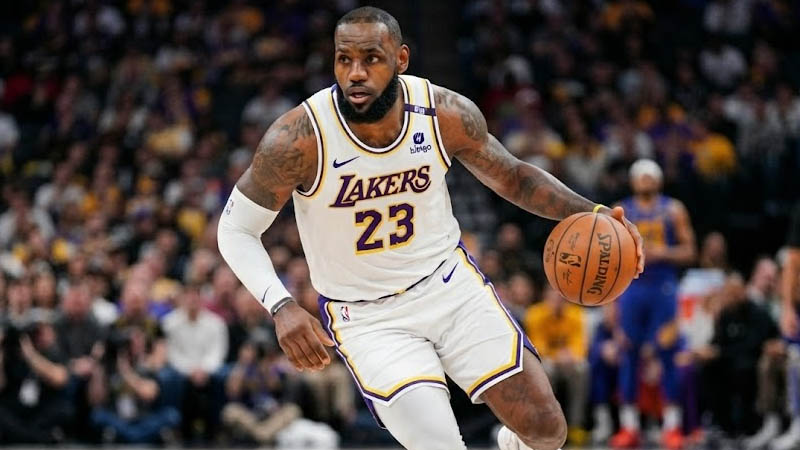
LeBron James plays basketball because of a lifelong dedication to personal evolution, transitioning from a childhood need for survival to a professional obsession with historical longevity. Initially, the sport provided essential stability and an escape from financial hardship in Akron, Ohio.
Today, as he enters a record-breaking 24th season, his motivation stems from a genuine love for the daily training process, a desire to test the absolute limits of human performance, and the historic opportunity to share the court with his son.
His journey is defined by a relentless drive to inspire global change through elite, sustained excellence.
Why Did Lebron James Choose to Play Basketball?
The decision to pursue organized basketball was rooted in a search for structure during a period of extreme domestic instability.
Raised by a single teenage mother, LeBron spent his early years moving frequently between unstable apartments, lacking a consistent daily routine.
Basketball became the framework upon which he built his future, providing a safe environment and a collective goal for himself and his closest friends.
Escaping Poverty and Seeking Financial Freedom
For a young athlete in Akron, basketball was a tangible vehicle to secure financial freedom for his family.
LeBron recognized early on that his natural talent could change his life trajectory, transforming him from a child bouncing between homes into a high school phenomenon.
By the fifth grade, his dominance on the court was evident, making the game his primary tool for escaping the cycle of poverty that defined his early childhood.
The Influence of the Walker Family
At age nine, LeBron’s life changed significantly when he moved in with his youth football coach, Frank Walker. The Walker family introduced him to organized basketball to provide the stability and discipline he lacked.
This environment allowed him to focus on his development, turning a recreational activity into a rigorous daily routine that would eventually support a professional career spanning decades.
The “Fab Four” and Peer Loyalty
In the youth leagues, LeBron formed an unbreakable bond with teammates Dru Joyce II, Sian Cotton, and Willie McGee. Known as the “Fab Four,” these athletes swore to stay together through high school at St. Vincent–St. Mary.
This sense of brotherhood made basketball about more than individual success; it was a commitment to mutual growth and loyalty, ensuring that they used the sport to build a collective future rather than just personal accolades.
Why Did Lebron James Stop Playing Football?
While many fans focus on his basketball dominance, LeBron was also a phenomenal high school football star. Playing as a wide receiver for St. Vincent–St. Mary, he was a top-tier recruit pursued by prestigious college programs like Ohio State and Notre Dame.
However, the physical risks associated with the gridiron eventually forced a difficult professional choice to protect his future in the NBA.
| Factor | Basketball | Football |
|---|---|---|
| Early Talent | High school phenomenon by 9th grade | All-state wide receiver |
| College Interest | Direct to NBA (historical path) | Recruited by Ohio State and Notre Dame |
| Defining Injury | Broken wrist during an AAU game | Risk of career-ending high-impact injury |
| Professional Goal | Targeted as the #1 NBA Draft pick | Potential NFL interest, but less certain path |
| Current Status | 24 seasons of elite play | Retired from the sport after junior year |
The Motivational Cycle of an Elite Athlete
As LeBron aged, his reasons for remaining in the league shifted from external validation to internal satisfaction. He describes his current phase as “squeezing the orange,” a metaphor for extracting every possible drop of elite production from his body.
This transition from a “survival” mindset to a “longevity” mindset is what allows him to compete at a high level at age 41.
Squeezing the Orange: The Battle Against Father Time
LeBron takes his ongoing battle against aging personally, viewing each season as a challenge to defy traditional physical limits. He is motivated by the desire to see exactly how much more dominant play he can achieve, long after most of his peers have retired.
This quest for historical greatness keeps him engaged, even as he navigates the twilight of his career and moves toward a new franchise for his 24th season.
The Psychology of the Daily Grind
A unique aspect of LeBron’s longevity is his genuine love for the “monotonous” elements of the sport that others often dislike. This includes intensive film study, rigorous physical rehab, and grueling offseason conditioning.
By embracing the process rather than just the results, he maintains the mental stamina required to endure over 1,600 regular-season games while averaging an elite 26.8 points per game.
How the Father-Son Bond Redefined His Career Goals
In the later stages of his career, a primary motivator became the historic opportunity to share an NBA floor with his oldest son, Bronny James.
This milestone was not just a personal achievement but a professional responsibility that gave LeBron a renewed sense of purpose during a time when many players consider retirement.
Modeling Greatness for the Next Generation
Sharing a locker room with his son provided LeBron with a unique platform to model daily excellence. He expressed that having Bronny present reinforced his duty to demonstrate the work ethic required to stay at the top.
This family dynamic transformed the NBA experience from a solo quest for rings into a generational passing of the torch, making them the first father-son duo to play together in league history.
Achieving Professional Milestones with Bronny
The presence of his son acted as a catalyst for LeBron’s continued participation in the league. It offered a “renewed sense of professional responsibility” that helped him push through the physical demands of his 21st and 22nd seasons.
Even as he prepares to opt out of his contract with the Lakers, the impact of reaching this family milestone remains a cornerstone of his recent career narrative.
Evolving a Game Built for All Five Positions
To remain relevant over 24 seasons, LeBron had to reinvent his playing style. He is the only player in history officially tracked as having played all five standard positions—Point Guard, Shooting Guard, Small Forward, Power Forward, and Center—as a primary designation at different points in his career.
This versatility is a direct response to his changing physical capabilities and the evolving needs of his teams.
From Rim-Running to High-IQ Playmaking
Early in his career, LeBron relied heavily on explosive athletic dominance and relentless transition scoring. As he aged, he transitioned into a “high-IQ point forward” role, using pinpoint passing and precise dissection of defenses to control the game.
This shift allowed him to maintain a high level of impact without needing to rely solely on the raw power of his youth.
Statistical Dominance and Historical Records
His evolution is backed by unprecedented numbers, including holding the record for the most total regular-season points in history. Over 1,622 games, he has maintained an all-around stat line of 26.8 points, 7.5 rebounds, and 7.4 assists.
His trophy case, featuring 4 NBA Championships and 4 Regular Season MVPs, serves as a testament to the success of his adaptive playing style.
What Is the “More Than an Athlete” Mission?
LeBron views his late-career minutes as a living masterclass and a platform to fuel his massive off-court ambitions.
He believes that his high-level performances provide the cultural real estate and the “microphone” required to drive social change and support his philanthropic ventures.
The I Promise School and Philanthropic Reach
A major reason he continues to play is to fund and bring attention to initiatives like the I Promise School for at-risk children in Akron.
By staying in the global spotlight, he ensures that his “More Than an Athlete” initiative remains a powerful force for youth education and community support.
His basketball career is essentially the engine that powers his ability to provide opportunities for others who grew up in circumstances similar to his own.
Building a Blueprint for Future Icons
LeBron’s longevity serves as a blueprint for the next generation of global icons. He uses his career to show that an athlete’s influence can extend far beyond the court, encompassing business empires and international leadership.
As a global icon who led the US National Team to three Olympic Gold medals, his continued play is an act of inspiration for youth worldwide.
Frequently Asked Questions About LeBron’s Career
Why is LeBron James leaving the Lakers?
Following the 2025–26 season, where he averaged 20.9 points, LeBron’s representation announced he would opt out of his contract to play his 24th season with a different franchise. This move represents a new chapter in his quest for longevity and competitive challenges.
Does LeBron James still love basketball?
Yes, he publicly states that he genuinely loves the “daily grind” of training, film sessions, and rehab. This internal passion is a key reason he has not retired despite being one of the oldest players in the league.
How many positions has LeBron played?
LeBron is the only player in NBA history to be officially designated as playing all five positions (PG, SG, SF, PF, and C) as a primary role at different stages of his career.
What is LeBron’s #StriveForGreatness mantra?
This personal mantra guides his approach to evolving his game from a physically dominant scorer to a high-IQ playmaker, emphasizing constant improvement regardless of age.
The Eternal Legacy of King James
LeBron James continues to play basketball because the game is his ultimate vehicle for human achievement.
Whether it was the childhood need to escape poverty or the adult desire to share a legacy with his son, his motivations have always been deeply tied to family and personal growth.
As he moves toward a historic 24th season with a new team, he remains the gold standard for sustained excellence, proving that “greatness” is not a destination but a continuous process of evolution.
By staying on the court, he isn’t just chasing records; he is redefining the boundaries of what is possible for an athlete in the modern era.