In the high-stakes theater of the NBA, every detail is a calculated component of an athlete’s brand.
From the choice of footwear to the phrasing of post-game interviews, elite players understand that their legacy is constructed through a series of deliberate signals. Perhaps no signal is more immediate or visible than the number stitched onto the back of a jersey.
For most aspiring superstars, the goal is to inherit the mantle of greatness, often leading them to choose the iconic #23—a digit synonymous with Michael Jordan’s six championships and global dominance.
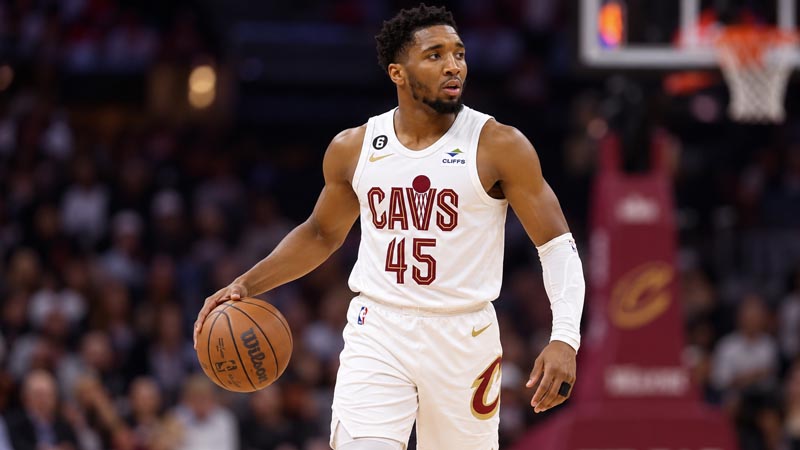
However, Donovan Mitchell, the explosive guard who has redefined the offensive ceiling for both the Utah Jazz and the Cleveland Cavaliers, took a different path. By selecting #45, Mitchell did not just choose a number; he chose a narrative.
This decision is a sophisticated blend of historical homage, personal resilience, and a psychological framework designed to maintain an elite competitive edge.
The Jordan Paradox: Embracing the “Other” Legacy
To understand why Mitchell wears #45, one must first look back at the most scrutinized comeback in the history of professional sports.
In 1995, Michael Jordan returned to the Chicago Bulls after a stint in minor league baseball. Upon his return, he famously abandoned his legendary #23 in favor of #45.
This specific era of Jordan’s career is often viewed through a lens of transition. It was a period defined by a legend reclaiming his throne while simultaneously honoring his late father, for whom #45 held personal significance during Jordan’s childhood. For Mitchell, this “lesser-known” jersey number offered a unique opportunity.
While a generation of players grew up wanting to “be like Mike” by wearing #23, Mitchell recognized that the true essence of Jordan’s journey was captured in that brief, transitional #45 era.
By selecting the number Jordan wore during his 1995 comeback and his time in the minor leagues, Mitchell established a direct link to a version of Jordan that was hungry, proving himself anew, and navigating a shift in professional identity.
This choice suggests a preference for the process of greatness over the finished product of the championship rings.
The Diamond and the Hardwood: A Dual-Sport Heritage
The most compelling aspect of Mitchell’s identity is that he was not always destined for the NBA. Throughout his youth, baseball was his primary passion—a fact that mirrors Jordan’s own professional detour.
Mitchell grew up in and around clubhouses, developing a deep appreciation for the mechanics and discipline of the diamond.
The pivot to basketball was not a simple choice, but a necessity born of hardship. A broken wrist ultimately ended his baseball aspirations and forced a total redirection of his athletic focus toward basketball.
This injury was a defining moment of “creative destruction”—the end of one dream becoming the catalyst for another.
The number 45 serves as the permanent bridge between these two worlds. Because Jordan wore #45 while playing minor league baseball, the number allows Mitchell to maintain a tangible connection to his baseball roots while competing at the highest level of basketball.
It is a tribute to the athlete he was and the superstar he became, ensuring that the lessons learned on the baseball field are never truly left behind.
The Psychology of the Underdog: “Everybody Forgets About 45”
Elite performance is often fueled by a “chip on the shoulder,” a psychological anchor that reminds a player of where they started.
Despite his current status as a perennial All-Star, Mitchell’s rise was not guaranteed. He was a relatively unheralded prospect compared to the “blue-chip” recruits who often dominate the top of draft boards.
Mitchell has been vocal about the mindset that #45 facilitates. He famously remarked, “Everybody wants to be 23, but everybody forgets about 45”.
This philosophy is central to his brand. In a league where everyone is chasing the spotlight associated with the most famous numbers, Mitchell finds strength in the overlooked.
Wearing #45 is a constant internal reminder of his journey. It signifies:
- The Work Ethic: A reminder that he had to outwork those who were given the “superstar” numbers early on.
- The Rarity: A commitment to being unique rather than a derivative of those who came before him.
- The Motivation: A signal that he is still the “underdog” regardless of the accolades he receives.
This mental framework has served him well, from his developmental years at Louisville to his current status as a cornerstone of the Cleveland Cavaliers.
Establishing a Professional Standard: From Louisville to Cleveland
He carried #45 through his collegiate career at the University of Louisville, where he transformed from a defensive specialist into a dynamic offensive force.
When he entered the NBA, the commitment to #45 remained steadfast. During his tenure with the Utah Jazz, he turned the number into a symbol of a new era for the franchise, leading them to multiple playoff appearances and establishing himself as one of the most feared scorers in the league.
Now, with the Cleveland Cavaliers, the #45 jersey continues to represent a standard of excellence. He is no longer just wearing Jordan’s “other” number; he is creating a legacy where #45 is synonymous with Mitchell himself.
The Strategic Value of the Mitchell Brand
From a branding perspective, Mitchell’s choice is a masterstroke in differentiation. In a saturated market of athletic talent, standing out requires more than just skill—it requires a story.
- Market Differentiation: While thousands of children buy #23 jerseys, the #45 jersey belongs uniquely to the Mitchell narrative. It is a specific piece of “intellectual property” in the minds of fans.
- Narrative Depth: Most player-number associations are superficial. Mitchell’s has layers: the baseball connection, the Jordan tribute, and the underdog mentality. This depth creates a stronger emotional bond with the fan base.
- Global Relevance: The story of a player overcoming an injury to find success in a second field is a universal theme. It resonates across cultures, making Mitchell a relatable figure on a global stage.
Enhanced FAQ: Understanding the Legend of 45
Did Donovan Mitchell ever consider wearing #23?
While Mitchell deeply respects the legacy of Michael Jordan, there is no public record of him seeking to wear #23. His focus has always been on honoring the “forgotten” aspects of Jordan’s career and maintaining his own “underdog” identity.
Is the number 45 common in the NBA?
It is far less common than numbers like 23, 33, or 32. Mitchell’s choice to wear it has made it one of the most recognizable numbers in the current era of the league.
How did his baseball injury affect his playing style in basketball?
While the injury forced the switch, the “baseball mentality”—focusing on hand-eye coordination and explosive movements—is evident in Mitchell’s ability to navigate tight spaces and his exceptional finishing at the rim.
Will he ever change his number?
Given his commitment to the number through college and two NBA franchises, it appears that #45 is a permanent fixture of his professional identity.
Conclusion: The Power of Purposeful Identity
Donovan Mitchell’s choice to wear #45 is a powerful reminder that in the world of elite sports, meaning is as important as movement.
By rejecting the traditional path of wearing #23, Mitchell has crafted an identity that honors the past while remaining firmly rooted in his own unique history.
It is a tribute to the “transition” Jordan, a nod to a lost baseball dream, and a badge of honor for every athlete who has ever been overlooked.
As Mitchell continues to dominate the hardwood, the #45 serves as a testament to the fact that you don’t need the most famous number to leave the most lasting impression.