
In the world of professional sports, narratives often become blurred by time and the sheer magnitude of a player’s eventual success.
One of the most persistent searches among NFL fans and sports historians alike centers on a specific question: Why was Jason Kelce given a one-year suspension in college?
If you are looking for the “why,” the answer is both surprising and deeply rooted in the DNA of the most famous brothers in football. To be clear: Jason Kelce was never suspended during his tenure at the University of Cincinnati.
Instead, the legendary center’s college career was defined by an entirely different kind of challenge—acting as the ultimate “lifeline” for his younger brother, Travis, who was the one actually facing a career-ending disciplinary crisis.
1. The Core Misconception: Jason vs. Travis
“Jason Kelce college suspension” query is a classic example of misattributed intent. Because the Kelce brothers are so intrinsically linked in the public consciousness—and because Jason has been the vocal storyteller of their childhood and college days on the New Heights podcast—many fans mistakenly attribute the disciplinary record of the younger brother to the older.
The Reality at the University of Cincinnati (2010)
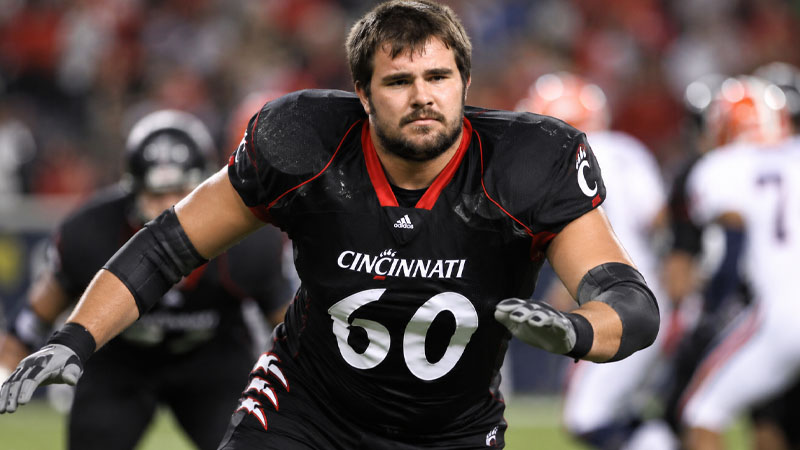
During the 2010 season, both Kelce brothers were teammates at the University of Cincinnati. While Jason was solidifying his status as a dominant offensive lineman, Travis Kelce—then a talented but raw sophomore quarterback—ran into significant trouble ahead of one of the biggest games in program history.
| Feature | Jason Kelce (2010) | Travis Kelce (2010) |
|---|---|---|
| Status | Active Starter / Team Leader | Suspended for the Full Season |
| Scholarship | Intact | Revoked |
| Living Situation | Off-campus housing | Moved into Jason’s room |
| Primary Role | Offensive Line | Scout Team “Athlete” (Walk-on) |
| The Violation | None | Failed drug test (Marijuana) |
2. The 2010 Sugar Bowl Incident: What Really Happened?
The suspension was not a minor slap on the wrist; it was a devastating blow to a young athlete’s future. Travis Kelce violated team rules and failed a drug test for marijuana just before the 2010 Sugar Bowl.
The Immediate Fallout
The University of Cincinnati’s disciplinary response was swift and severe:
- Removal from the Team: Travis was immediately barred from all team activities.
- Scholarship Termination: Perhaps the most crushing blow was the loss of his athletic scholarship, leaving him with no financial means to continue his education or training.
- Reputational Damage: At the time, marijuana use in collegiate athletics carried a heavy “character concern” stigma that could effectively end a player’s NFL prospects before they reached their junior year.
3. The “Lifeline”: Jason Kelce’s Intervention
This is where the story shifts from a cautionary tale of a failed drug test to a masterclass in familial loyalty.
Travis Kelce has stated on numerous occasions, including on the New Heights podcast and Bussin’ with the Boys, that he would not be in the NFL today if it weren’t for Jason.
Living on the Edge (and in Jason’s Room)
When Travis lost his scholarship and his place on the team, he was effectively adrift. Jason Kelce stepped in to provide a total support system:
- Housing: Travis moved into Jason’s room, and the two brothers lived together in close quarters, much like they had growing up.
- Finances: Travis was unable to pay rent or buy his own food. Jason covered all of Travis’s living expenses for “quite a while,” serving as his brother’s primary financial provider.
- Emotional Resilience: Jason kept Travis’s “hope alive” during a year when his future in football was entirely uncertain.
The Negotiation with Coaching Staff
Jason didn’t just provide a bed and a meal; he actively campaigned for his brother’s redemption. He walked into the coaches’ offices and met with numerous members of the Cincinnati staff, essentially putting his own reputation and “honor on the line” to vouch for Travis.
Jason’s message to the staff was clear: Give Travis one more chance, and he will prove he is worth the investment. Because of Jason’s standing as a leader and a player of high character, the coaches eventually listened.
4. The Transformation: From Quarterback to All-Pro Tight End
The suspension was the catalyst for one of the most successful position changes in NFL history. Before 2010, Travis Kelce was a quarterback. When the coaches finally agreed to let him return, it wasn’t on a silver platter.
The Terms of Reinstatement
The Cincinnati staff offered Travis a path back, but with heavy caveats:
- Walk-on Status: He had to return as a walk-on, not a scholarship player.
- The Scout Team: He was relegated to the scout team, where he spent a year acting as an “athlete” to help the starters prepare for games.
- No Quarterback Room: The team told him explicitly, “We don’t need a quarterback”.
Travis has reflected that this “kicked” him into the tight end room. By being forced to play as an “athlete” on the scout team, he discovered his natural aptitude for the receiving and blocking duties of a tight end. This shift allowed his 2012 season to become a breakout performance, setting the stage for his NFL career.
5. The NFL Draft and the “Red Flag” Legacy
Even after Travis successfully returned to the field and dominated in 2012, the shadow of the 2010 suspension loomed large during the 2013 NFL Draft process.
Scouting Concerns and “Character Issues”
Teams in 2013 were significantly more conservative regarding marijuana use than teams are today. Travis recalls that the Dallas Cowboys were particularly aggressive in their questioning, pressing him on the “red flag” of missing an entire year of football.
Key Data Point: Jason Kelce believes that the 2010 suspension cost Travis a full round of draft capital. While his talent suggested he was a second-round talent, he slipped to the third round (63rd overall) due to these character concerns.
A Cultural Shift
On the New Heights podcast, the brothers often joke about how the word “marijuana” sounded so much more “intense” back then.
Jason has pointed out the irony that today, NFL players are far more open about cannabis use, and the league’s policies have shifted significantly.
He even joked that players who drop in the draft for such reasons should sign their second multi-million dollar contracts while smoking a blunt as a “f— you” to the doubters.
Comparison of Career Trajectories: The Kelce Impact
To understand why Jason’s lack of suspension and Travis’s presence of one matters, we must look at how these two paths converged into Hall of Fame-caliber careers.
Statistical and Legacy Overview
- Jason Kelce: A 6th-round pick who became a 7-time Pro Bowler and 6-time First-team All-Pro. His college career was marked by steady, disciplined growth.
- Travis Kelce: A 3rd-round pick who became a 9-time Pro Bowler and 4-time First-team All-Pro. His college career was a “phoenix from the ashes” story enabled by his brother.
Conclusion: A Dynasty Built on a Second Chance
The story of the Kelce brothers is often told through the lens of their on-field dominance or their podcasting charisma.
However, the true foundation of their legacy lies in the 2010 season—a year when one brother was not suspended, but instead chose to carry the weight of the brother who was.
Jason Kelce’s decision to put his “honor on the line” for Travis didn’t just save a college career; it birthed a Hall of Fame trajectory. It turned a struggling quarterback into the greatest tight end of his generation.
For fans asking why Jason was suspended, the answer is simpler and more profound: He wasn’t. He was too busy making sure his brother’s mistakes didn’t define his future.






