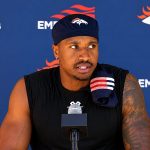
Nakobe Dean fell to the third round (83rd overall) of the 2022 NFL Draft due to a perfect storm of severe medical red flags, physical size limitations, and a complete lack of pre-draft athletic testing data.
Front offices panicked over a severe pectoral strain and reports that he declined surgery, alongside a collegiate medical file noting shoulder, knee, and ankle issues.
Standing at 5-foot-11 with a 229-pound frame and lacking official timed workout metrics, NFL teams chose safety over his elite collegiate tape.
This unusual combination of factors ultimately led to the Philadelphia Eagles stealing him at pick 83.
What Injury Caused Nakobe Dean to Slide in the Draft?
NFL front offices prioritize health above almost all else on draft night. When rumors circulated regarding Nakobe Dean’s medical files, team decision-makers pivoted from excitement to extreme caution.
The Pectoral Injury Controversy
During draft preparation, Nakobe Dean suffered a severe pectoral strain while bench-pressing. Reports emerged from major insiders that he had opted out of having corrective surgery.
NFL front offices feared that bypassing this operation would force him to miss his entire rookie season, creating massive risk for any franchise selecting him early.
A Dense Collegiate Injury File
Beyond the pectoral strain, team physicians uncovered a long history of physical wear-and-tear from his tenure at Georgia. This history included a partially torn shoulder labrum, knee tendonitis, wrist problems, and ankle sprains.
Each individual issue was manageable, but when combined, they raised serious durability questions.
The Medical Clearance Paradox
Dean and his representatives strongly disputed the bleak reports, maintaining he was cleared and fully healthy.
While he proved this by participating immediately in Philadelphia’s rookie minicamp, the conflicting assessments during draft weekend caused risk-averse teams to remove him from their boards.
Size and Length Constraints: The Undersized Middle Linebacker Frame
Physical attributes dictate linebacker value in the modern NFL. Despite his stellar collegiate tape, Dean’s physical measurements failed to match the standard blueprint that professional organizations demand for interior defenders.
The Undersized Middle Linebacker Build
Dean measured just 5-foot-11 and weighed 229 pounds. Traditional front offices look for larger, heavier bodies to absorb interior run-game contact. Scouts feared his smaller frame would struggle to withstand the weekly physical toll of professional blockers.
Shorter Arm Length and Reach
Scouts highlighted Dean’s shorter arms as a technical vulnerability. Shorter reach makes it difficult to shed blocks once offensive linemen lock on, and limits efficiency when trying to disrupt throwing lanes or jam tight ends in coverage.
Missing Metrics: The Lack of Pre-Draft Athletic Testing Data
Raw athleticism can sometimes overshadow physical limitations. However, because Nakobe Dean could not participate in the standard evaluation cycle, front offices had to rely entirely on speculation rather than verifiable proof.
The Pre-Draft Testing Blackout
Due to nagging knee and pectoral issues, Dean did not run the 40-yard dash or complete athletic testing drills. He missed both the NFL Scouting Combine and the Georgia Pro Day workout schedules. This left talent evaluators with a complete data void.
No Timed Speed Verification
While his tape demonstrated elite sideline-to-sideline speed, teams had no official timed numbers to confirm his physical recovery or athletic range.
Without measurable metrics to verify that his quickness could overcome his smaller frame, teams hesitated to spend high draft capital.
How Much Money Did Nakobe Dean Lose During His Slide?
A prospect’s fall is another franchise’s gain. When Dean slipped deep into the third round, the Philadelphia Eagles recognized an undeniable value opportunity, ending his slide with the eighty-third pick.
The True Cost of a Draft Fall
Sliding to the third round cost Dean millions of dollars compared to his projected first-round salary. Instead of a fully guaranteed, high-value rookie deal, he signed a modest four-year, five-point-one-eight million dollar contract.
The Eagles’ Calculated Risk
The Eagles capitalized on the draft-day panic, stopping Dean’s fall with the 83rd overall selection. Their medical staff believed in his recovery, and the gamble paid off immediately when Dean participated fully in rookie camp drills.
Draft Day Reality Check: First-Round Projection vs. Third-Round Selection
To understand the magnitude of Nakobe Dean’s fall, we must analyze the stark contrast between his projected premium value and his actual draft-day reality.
- Draft Valuation Shift: Widely projected as a consensus top-20 talent and the best inside linebacker prospect in the country, Dean plummeted all the way to the 83rd selection in the third round.
- Contractual Value Impact: Falling from the first round cost him millions, resulting in a rookie agreement valued at five-point-one-eight million dollars over four years.
- Medical Divergence: Teams flagged a severe pectoral strain and an extensive collegiate medical history, while Dean’s camp maintained he was cleared and fully healthy.
- Physical Dimensions: Traditional teams coveted larger bodies, viewing his 5-foot-11 frame and 229-pound weight as undersized and his arm length as a block-shedding liability.
- Athletic Verification: Evaluators lacked timed measurements like the 40-yard dash because nagging injuries kept him out of the Combine and Pro Day athletic workouts.
The draft-day drop highlights a crucial reality of modern front-office decision-making. High-risk profiles often scare away franchises even when a player has pristine game film.
In Dean’s case, the complete absence of physical workouts combined with leaked medical data proved too much for risk-averse general managers to overlook.
Analyzing this comparison shows how risk-averse professional front offices become when faced with a lack of testing metrics. A surefire prospect can slide more than fifty slots in a matter of hours if doctors cannot agree on an injury recovery timeline.
For Dean, this meant transitioning from a potential top-tier defensive centerpiece to a developmental value selection.
Frequently Asked Questions About Nakobe Dean’s Draft Process
Did Nakobe Dean require immediate surgery after his slide?
Despite reports that his decision to decline surgery on his pectoral strain would derail his rookie year, Dean did not require immediate operation. He proved his physical health by participating fully in the Eagles’ spring rookie minicamps immediately after being selected.
Which team stopped Nakobe Dean’s slide?
The Philadelphia Eagles ended his draft-day drop by selecting him in the third round with the 83rd pick in 2022. The organization has a history of targeting high-upside college stars who fall due to injury concerns or physical profiles.
How did injuries affect his rookie contract?
By dropping to the 83rd selection, Dean lost out on first-round contract guarantees. He ultimately signed a four-year rookie agreement valued at five-point-one-eight million dollars, which is substantially lower than typical first-round compensation packages.
Conclusion: The Ultimate Draft Day Value Pick
The drop of Nakobe Dean remains one of the most intriguing stories in modern draft history. While physical limitations and medical red flags scared away most of the league, the Philadelphia Eagles secured a premier linebacker talent at a fraction of his projected cost.
Ultimately, his draft status reflected NFL teams’ rigid risk management rather than his true capability on the gridiron.
As we look back at the 2022 selections, the transaction serves as a textbook example of draft valuation market inefficiency. When physical metrics and unconfirmed medical rumors dominate the conversation, elite tape can become undervalued.
For professional teams, managing medical risk is paramount, but for franchises willing to gamble on high-upside stars, the rewards can be massive.
Dean’s journey shows that where a player starts on draft day is far less important than how they adapt once they get their opportunity.