In the long and storied history of international football, many players have achieved greatness, but only one stands alone at the absolute summit of World Cup success.
For fans, historians, and casual observers alike, the question of how many World Cups Pelé won is more than just a trivia point—it is the defining metric of a career that changed the sport forever.
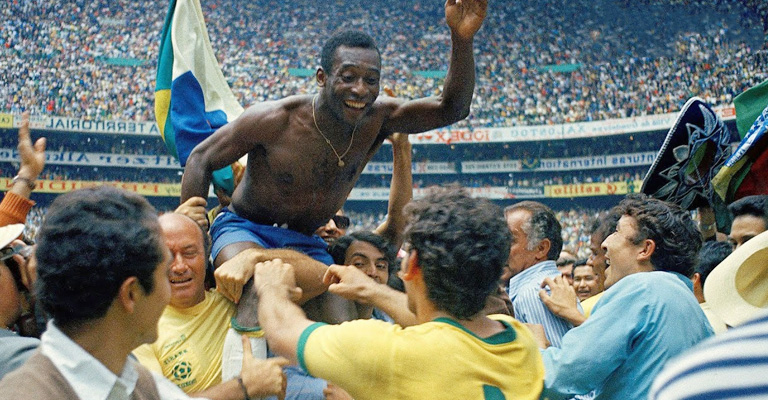
Pelé won three FIFA World Cups as a player with Brazil. This achievement is not merely a record; it is a historical anomaly. To this day, he remains the only player in history to have earned three winner’s medals in the world’s most prestigious tournament, securing titles in 1958, 1962, and 1970.
This blog post provides an in-depth exploration of those three historic campaigns, the statistical brilliance Pelé displayed on the world stage, and why his “Triple Crown” remains the gold standard of footballing excellence.
1958: The Birth of a Teenage Phenomenon in Sweden
The story of Pelé’s World Cup legacy begins in 1958, a year that saw a 17-year-old boy from Brazil transform into a global icon. Before this tournament, Brazil had never won a World Cup; after it, they were the team to beat.
The Youngest Player to Score in a Final
At just 17 years old, Pelé arrived in Sweden as a relative unknown to the European public. However, he quickly made his presence felt by shattering age-related records that still stand today.
His most significant contribution came during the championship match, where he became the youngest player to ever score in a World Cup final.
Brazil’s First Taste of Glory
The 1958 tournament was a turning point for Brazilian football. By helping the national team secure its first-ever title, Pelé helped erase the heartbreak of previous near-misses.
His performance was characterized by a level of technical skill and composure that belied his age, setting the stage for a decade of dominance.
1962: Resilience and Retaining the Title in Chile
Four years after his breakout performance, Pelé returned to the World Cup stage in Chile. This tournament presented a different kind of challenge, highlighting the strength of the Brazilian squad and Pelé’s role within a championship system.
Injury and Adversity
The 1962 campaign was bittersweet for the “King of Football.” While he entered the tournament as the best player in the world, his physical participation was cut short.
Pelé was injured in the second match of the tournament, which prevented him from playing in the knockout stages.
A Rare Defensive Success
Despite his injury, Pelé remained an integral part of the squad that retained the title. Brazil’s victory in 1962 was significant because it marked a rare instance of a nation winning back-to-back World Cups.
Pelé’s contribution in the early stages and his presence within the team helped Brazil maintain its momentum, ensuring he earned his second consecutive winner’s medal.
1970: The Masterpiece in Mexico
If 1958 was about the arrival of a prodigy and 1962 was about the strength of a nation, 1970 was the year of the legend.
After a disappointing 1966 tournament, Pelé returned to the World Cup for a final time in Mexico, leading what many consider to be the greatest football team ever assembled.
Leading the Greatest Team of All Time
In 1970, Pelé was the veteran leader of a mesmerizing Brazilian side. He successfully led the team to a third title, a feat that had never been accomplished by a single player before and has not been repeated since.
The Iconic Final Against Italy
The final match against Italy served as the perfect curtain call for Pelé’s international career. He was directly involved in the destruction of the Italian defense, scoring the opening goal of the match with a powerful header.
Beyond scoring, his vision was on full display as he provided a crucial assist, solidifying his status as a football legend and ensuring Brazil took home the original Jules Rimet Trophy permanently.
The Statistical Dominance of the King
While the three trophies are the primary focus of his legacy, the raw data behind Pelé’s performances is equally staggering. His efficiency on the world stage was nearly unparalleled.
According to historical records, Pelé scored a total of 12 goals in just 14 World Cup matches.
This goal-scoring record is remarkable for several reasons:
- Consistency: He maintained a goal-to-game ratio that most modern strikers would envy.
- Big-Game Impact: His goals weren’t just for show; they came in semi-finals and finals, when the pressure was at its peak.
- Longevity: He remained a scoring threat across three different decades (the 50s, 60s, and 70s).
Why Pelé’s Record May Never Be Broken?
In the modern era, players face grueling schedules and intense physical competition, making the prospect of winning three World Cups seem almost impossible. Pelé’s record stands for several reasons:
- The Only Player: He remains the only player in history to achieve this feat. Even the greatest modern icons of the sport have struggled to match the collective success he enjoyed with Brazil.
- A Unique Era: Pelé played during a golden age for Brazilian talent, but he was undoubtedly the catalyst that elevated them from contenders to three-time champions.
- Versatility: From a 17-year-old scorer to a 29-year-old playmaker, Pelé adapted his game to ensure his team remained at the top.
Final Verdict: The Eternal Legacy of Three Stars
When discussing the greatest of all time, the conversation always returns to the World Cup. It is the ultimate stage, and Pelé owned it like no other.
By winning three FIFA World Cups (1958, 1962, 1970), he created a legacy of success that defines the very essence of the tournament.
From his debut as a teenager in Sweden to his masterclass in Mexico, Pelé’s journey through the World Cup is the story of football’s ascent into a truly global phenomenon.
His 12 goals in 14 matches serve as a mathematical testament to his greatness, but his three winners’ medals are the ultimate proof of his kingly status.
Pelé didn’t just play in World Cups; he defined them. As long as the tournament is played, his name will remain synonymous with the number three and the pinnacle of sporting achievement.