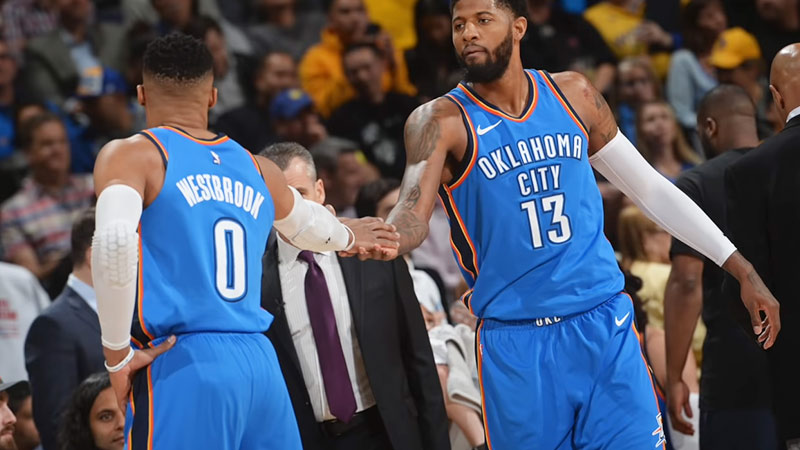
Paul George has an official wingspan of 6 feet 11.25 inches (211.5 cm), a measurement that serves as the bedrock of his elite two-way stardom.
Recorded during the 2010 NBA Pre-Draft Combine, this reach provides a significant advantage for a perimeter player, as his standing reach of 8 feet 11 inches allows him to disrupt opponents with the efficiency of a frontcourt center.
By combining lateral quickness with this nearly 7-foot reach, George excels at contesting shots and intercepting passing lanes, making him one of the most physically imposing wings in professional basketball history.
Paul George Physical Profile and Combine Statistics
When evaluating the physical tools of elite athletes, specific measurements provide a blueprint for their on-court performance.
The data collected during the 2010 Chicago NBA Pre-Draft Combine offers a precise look at the dimensions that have allowed Paul George to remain a perennial All-Star.
| Metric | Measurement |
|---|---|
| Official Wingspan | 6’11.25″ (211.5 cm) |
| Height (Without Shoes) | 6’7.75″ |
| Height (With Shoes) | 6’8.75″ |
| Standing Reach | 8’11” |
| Hand Length | 8.5 inches |
| Hand Width | 9.0 inches |
These statistics highlight that while George is classified as a wing, his vertical and horizontal reach are more comparable to those of a modern “stretch four” or a mobile center. This unique blend of size and agility is what defines his defensive versatility.
Understanding the Impact of the Wingspan-to-Height Differential
In basketball circles, the relationship between a player’s height and their reach is often quantified through the “ape index.” For Paul George, this differential is a key indicator of his ability to play “bigger” than his listed height.
The “ape index” measures how much a player’s wingspan exceeds their barefoot height, providing a clear picture of their functional length.
The Significance of a +3.5 Inch Differential
Paul George possesses a +3.5 inch differential compared to his barefoot height. While an average person typically has a wingspan roughly equal to their height, elite NBA defenders often showcase a significantly positive differential.
This +3.5 inch gap means that George can occupy passing lanes and recover on defense more effectively than a player of identical height with shorter arms.
His nearly 7-foot reach allows him to reach around dribblers and poke balls away while maintaining a legal defensive stance.
Mirroring Frontcourt Dimensions in a Perimeter Body
Despite operating as a versatile perimeter wing, George’s standing reach of 8’11” mirrors that of many traditional 7-foot power forwards or centers. This physical trait is a massive asset in a league that prioritizes “switchability.”
On any given possession, George can transition from guarding a lightning-fast point guard on the perimeter to contesting a shot from a center in the paint.
His length ensures that even if he is slightly out of position, his reach can compensate for the distance, allowing him to disrupt the play effectively.
Defensive Masterclass: The Science of Reach
The defensive reputation of Paul George is built on his ability to be a “disruptor.” His wingspan isn’t just a measurement; it is a tool used to systematically dismantle opposing offensive schemes.
By leveraging his 6’11.25″ wingspan, George has consistently ranked among the league’s best in defensive metrics and accolades.
Disrupting Passing Lanes and Generating Steals
One of the most visible advantages of his length is his ability to intercept the ball. During the 2018-19 season, George famously led the NBA in steals, a feat made possible by his nearly 7-foot reach.
He can “sit” on a passing lane, appearing to give the passer an opening, only to use his wingspan to deflect the ball at the last millisecond.
This ability to create turnovers without gambling or leaving his feet prematurely is what separates him from standard perimeter defenders.
All-Defensive Accolades and Perimeter Contests
His physical profile is a primary reason he has secured 4x NBA All-Defensive honors. On the perimeter, George uses his 8’11” standing reach to comfortably contest outside jumpers.
Because his reach is so expansive, he doesn’t need to jump as high or close out as aggressively to affect a shooter’s rhythm.
This allows him to stay grounded and balanced, reducing the risk of being beaten off the dribble while still forcing the opponent into a lower-percentage shot.
Scoring Over the Top: Offensive Length Utility
While often praised for his defense, Paul George’s wingspan is equally vital to his offensive efficiency. Length provides a shooter with a “clear view” of the rim that shorter players simply cannot replicate.
The offensive utility of elite reach manifests in shot creation, finishing mechanics, and ball security under pressure.
High Release Point for Jump Shooting
When Paul George rises for a perimeter shot, his long arms elevate the release point of the ball significantly. This high release point makes his jumper nearly unblockable for standard-sized shooting guards and small forwards.
Even when defenders are in his face, George can shoot over them, as his reach extends the ball well above the typical contest range. This “unblockable” nature of his shot allows him to maintain high efficiency even when forced into late-clock, contested situations.
Finishing Through Traffic and Shot Creation
Near the rim, George’s wingspan enables him to finish around larger interior defenders. He can extend the ball away from his body, using his reach to find angles for layups that shorter wings cannot access.
Furthermore, his extended reach facilitates shot creation by allowing him to create clean looks over smaller defenders. By utilizing a high-dribble or a step-back maneuver, he can use his length to shield the ball while finding the necessary space to get a shot off cleanly.
Physical Longevity and Tactical Positioning
A hidden benefit of having an elite wingspan is the impact it has on an athlete’s career longevity. Length allows a player to exert less energy while achieving the same results as a more explosive, yet shorter, counterpart.
- Reduced Vertical Dependency: Because George has an 8’11” standing reach, he does not need to rely solely on high-impact jumping to contest shots or grab rebounds.
- Space Management: His wingspan allows him to cover more ground with fewer steps, reducing the wear and tear on his joints over an 82-game season.
- Recovery Ability: On defense, his reach allows him to recover from a blow-by without having to sprint at maximum velocity, as he can still reach back to contest from behind.
- Positional Versatility: As he ages, his length will allow him to transition into a more stationary role as a “small-ball” power forward, where his reach will keep him competitive against larger players.
How Paul George’s Wingspan Compares to Modern NBA Peers
In the modern era of basketball, wingspan has become a primary metric for scouts and front offices. Understanding how George compares to other elite wings provides context for his sustained success.
| Player | Listed Height | Reported Wingspan |
|---|---|---|
| Paul George | 6’8″ | 6’11.25″ |
| Kawhi Leonard | 6’7″ | 7’3″ |
| Kevin Durant | 6’11” | 7’5″ |
| Jayson Tatum | 6’8″ | 6’11” |
While George may not have the outlier length of a Kevin Durant, his 6’11.25″ reach combined with his elite lateral movement makes him one of the most balanced physical specimens in the game.
He possesses enough length to bother bigs and enough speed to stay with guards, representing the “gold standard” for the versatile two-way wing.
Comprehensive FAQ: Understanding Paul George’s Measurements
How much does Paul George wingspan impact his steals per game?
His wingspan is a direct contributor to his high steal rate. By having a reach of nearly 7 feet, he can intercept passes that would normally be out of reach for a 6’8″ player.
This length allows him to maintain a safe distance from his opponent while still being close enough to poke the ball away, leading to his status as a league leader in steals during his prime.
Did Paul George’s wingspan change after his draft combine?
While a player’s height can occasionally change if they have a late growth spurt, wingspan measurements taken at the NBA Combine are generally considered the most accurate and “official” data points.
Paul George’s 6’11.25″ wingspan was recorded at the 2010 Chicago Combine and has remained the standard reference for his physical profile throughout his career.
How does his hand size complement his wingspan?
George has a hand length of 8.5 inches and a width of 9.0 inches. While these are not the largest in the NBA, they are more than sufficient for high-level ball control and security.
Combined with his long arms, his hand width helps him “palm” the ball or control it during complex finishing moves at the rim, further enhancing the advantages provided by his wingspan.
Is Paul George’s standing reach elite for his position?
Yes, an 8’11” standing reach is considered elite for a small forward or shooting guard. For perspective, many centers have standing reaches in the 9’0″ to 9’4″ range.
Having a reach just an inch or two shy of a center while playing on the perimeter gives George a massive “catch radius” on offense and a “defensive shadow” that few other wings can match.
Final Summary of the Paul George Physical Blueprint
Paul George stands as a testament to how elite physical measurements, when paired with high-level skill and IQ, create a Hall of Fame-caliber career.
His 6’11.25″ wingspan is not just a statistical anomaly; it is the foundation of his “Lockdown” defensive identity and his unblockable offensive game.
By maintaining an 8’11” standing reach, George has successfully navigated the transition from a young, explosive athlete to a refined, veteran star who uses positioning and length to dominate his peers.
As the NBA continues to value versatile, multi-positional players, the physical profile of Paul George will remain the benchmark for what a perfect “two-way” wing looks like.