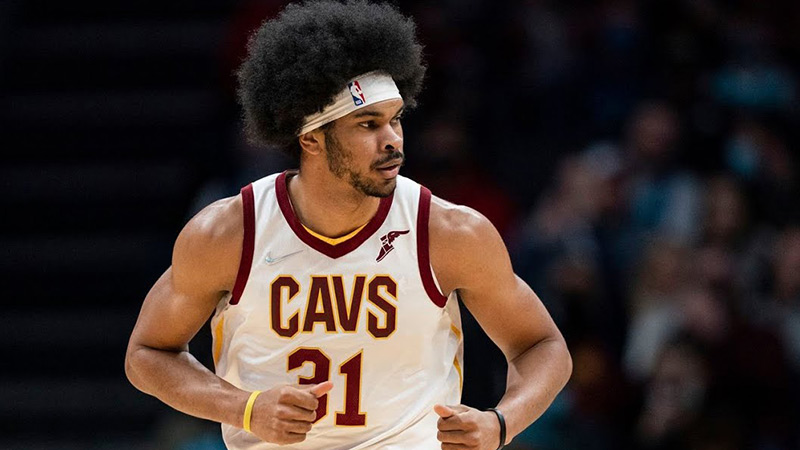
Currently, Jarrett Allen is the most recent player to officially replace James Harden in an NBA All-Star Game, stepping in for Team LeBron in 2022 after Harden suffered a hamstring strain.
However, since 2022, the question of “who will replace Harden” has shifted. Harden has not been selected for the mid-season classic in recent years, making him a perennial “snub” rather than an injured participant requiring a sub.
In 2023, the league bypassed him for Pascal Siakam, and in 2026, younger stars like Austin Reaves and Alperen Sengun led the replacement discussions instead.
The Official History of All-Star Replacements for James Harden
Analyzing the historical data regarding injury substitutions provides a clear timeline of how the league has handled Harden’s absences and his eventual transition away from the All-Star roster.
The 2022 Selection of Jarrett Allen
In 2022, James Harden was selected as an All-Star reserve but was unable to play due to a left hamstring strain. At the time, Harden had recently been traded to the Philadelphia 76ers.
NBA Commissioner Adam Silver selected Cleveland Cavaliers center Jarrett Allen to take his place on Team LeBron.
This selection was strategically significant because Cleveland was the host city that year; by choosing Allen, the league ensured the home crowd had two representatives, as Allen joined teammate Darius Garland.
The 2023 Bypassing of James Harden
By 2023, the narrative surrounding “who will replace Harden” changed from medical necessity to selection controversy. Despite a strong season in Philadelphia where he eventually led the league in assists, Harden was not named an initial reserve.
When injury replacement spots became available in the Eastern Conference, many analysts expected Harden to be the first call.
However, the NBA bypassed him, opting instead to name Toronto Raptors forward Pascal Siakam as the injury replacement. This marked a pivotal moment where Harden’s status as a “perennial” choice began to fade.
Understanding the 2026 NBA All-Star Snub Dynamics
The most recent discussions regarding the 2026 All-Star Game highlight a league that has moved toward a new generation of talent, leaving veteran superstars like Harden in a difficult position.
The 2026 Top Five Snub Label
Following a mid-season trade from the LA Clippers back to the Cleveland Cavaliers, James Harden found himself categorized as one of the “top five” snubs of the 2026 season. While his production remained high, he was left off the initial rosters entirely.
This led to a significant wave of fan campaigning, particularly when an injury spot opened up following a withdrawal by Stephen Curry.
Despite the nostalgia and the veteran’s brand power, the league’s internal selection process did not favor the former MVP for a return to the stage.
The Rise of Austin Reaves and Alperen Sengun
The primary reason Harden was not selected as a replacement in 2026 was the emergence of younger, high-impact players who dominated the conversation.
Austin Reaves and Alperen Sengun were cited as the primary candidates who overshadowed Harden in the replacement hierarchy.
These players represent a shift in the league’s marketing and competitive focus, prioritizing rising stars with high engagement metrics over aging veterans.
Consequently, for the 2026 game, there was no official replacement for Harden because he never made the roster to begin with.
Why James Harden is No Longer an Automatic All-Star
To understand why a 10-time All-Star has become a frequent snub, one must look at the intersection of age, statistical trends, and the sheer depth of the guard position in the modern NBA.
The Evolution of Guard Depth in the NBA
The league is currently experiencing an unprecedented era of talent at the guard position. Both the Eastern and Western conferences are saturated with young superstars who produce elite numbers on a nightly basis. This depth creates a mathematical challenge for veteran players.
With only a limited number of reserve spots available, coaches and fans have increasingly leaned toward “dynamic” younger players who are perceived to have a higher ceiling or more immediate impact on winning.
Natural Decline and Statistical Shifts
While Harden remains a highly productive starting guard, his game has fundamentally changed since his peak years with the Houston Rockets. During his prime, Harden was a 3-time scoring champion (2018–2020) and a consistent threat for 40-point games.
In the latter stages of his career, his explosive scoring output has naturally tapered off. Although he remains an elite playmaker—evidenced by his 2023 assist title—the “All-Star” criteria often favor high-volume scorers, which has contributed to his recent omissions.
All-Star Selection and Replacement Summary Table
The following data summarizes the most recent instances where Harden’s All-Star status resulted in a replacement or a notable omission.
| Year | Harden’s Status | Replacement Player | Selection Reason |
|---|---|---|---|
| 2022 | Selected as a Reserve (Injured) | Jarrett Allen | Left hamstring strain |
| 2023 | Not Selected (Snubbed) | Pascal Siakam | Bypassed for injury reserve spots |
| 2026 | Not Selected (Snubbed) | None | Left off initial and replacement rosters |
Hall of Fame Status vs. Current All-Star Snubs
There is a stark contrast between James Harden’s current struggle to make All-Star teams and his standing in the history of professional basketball.
The Naismith Memorial Hall of Fame Resume
Despite his recent “snub” status, James Harden’s legacy is beyond reproach. He is considered a 100% lock for the Naismith Memorial Basketball Hall of Fame.
According to historical probability metrics, Harden sits at a 1.000 rating, the highest possible score for induction. His career accolades include a regular-season MVP award (2018), seven All-NBA selections, and ten consecutive All-Star appearances from 2013 to 2022.
These achievements ensure that his eventual retirement will lead directly to Springfield, regardless of how many more All-Star games he attends.
Comparing Legacy with Contemporary Performance
The disconnect between being a “top snub” and a “Hall of Fame lock” is a common phenomenon for aging superstars.
Fans often expect legendary players to be rewarded for their career longevity, but the All-Star game is designed to reflect the best players of a specific season.
While Harden’s past ensures he is one of the most prolific three-point shooters and isolation scorers in history, his current trajectory makes future All-Star selections a “long shot”.
The league has moved on to a faster, more athletic style of play that often leaves the veteran “iso-heavy” style behind.
The Path Forward: Will James Harden Ever Be an All-Star Again?
Looking at the current landscape of the NBA, the probability of Harden returning to the All-Star stage appears slim but not impossible.
The Role of the Veteran Anchor
For Harden to earn another nod, he would likely need to serve as the primary engine for a top-seeded team while maintaining elite efficiency.
His move to Cleveland in 2026 was intended to provide veteran leadership, but as the data shows, it resulted in another snub.
The path to being an injury replacement is also blocked by a “queue” of younger talent like Reaves and Sengun, who are often prioritized by the Commissioner to encourage league growth.
Navigating the “Snub” Narrative
Harden has expressed frustration with being left off rosters, particularly in 2023 when he was playing at an elite level for a contender. However, the “snub” narrative can sometimes be a double-edged sword.
While it keeps his name in the headlines, it also reinforces the idea that he is no longer part of the “inner circle” of the league’s elite.
For Harden, the focus has shifted from individual mid-season accolades to chasing the one thing missing from his Hall of Fame resume: an NBA Championship.
Frequently Asked Questions
Who was the last player to replace James Harden in the All-Star Game?
The last official injury replacement for James Harden was Jarrett Allen in 2022. Allen was selected after Harden withdrew due to a hamstring injury.
Is James Harden a Hall of Famer?
Yes, James Harden is a 100% lock for the Hall of Fame. His MVP award, three scoring titles, and 10 All-Star selections make his induction a mathematical certainty.
Why was James Harden snubbed in 2023 and 2026?
In 2023, he was bypassed in favor of Pascal Siakam for injury replacement spots. In 2026, younger guards like Austin Reaves and Alperen Sengun dominated the conversation for replacement roles, leaving the veteran Harden off the roster.
Will James Harden be an All-Star again?
It is considered highly improbable. The combination of his age, the depth of the guard position, and a general trend toward voting for younger stars suggests his 10-year run ended in 2022.
The Impact of Team Context on All-Star Selections
Harden’s frequent team changes—from Houston to Brooklyn, Philadelphia, LA, and eventually Cleveland—have arguably impacted his All-Star consistency. Each move required him to adapt to a new role, often as a second or third option.
In 2022, the trade to Philadelphia happened right as the All-Star break approached, contributing to the injury-related withdrawal that allowed Jarrett Allen to step in.
By the time he reached the Cavaliers in 2026, he was no longer the centerpiece of a franchise’s marketing campaign, making it easier for voters to look elsewhere.
Final Verdict: The Evolution of the All-Star Guard
The story of “who will replace Harden” is ultimately the story of the NBA’s natural lifecycle. In 2022, it was a traditional big man in Jarrett Allen.
By 2026, it was a collection of versatile young guards and “unicorns” who captured the league’s imagination. While Harden remains a statistical marvel and a historical titan, the All-Star game has moved on.
His legacy is secure in the Hall of Fame, but the mid-season spotlight now belongs to the players who once grew up watching “The Beard” dominate the court.
For fans of Harden, the focus is now on the postseason, where a veteran’s experience often outweighs an All-Star’s flash.