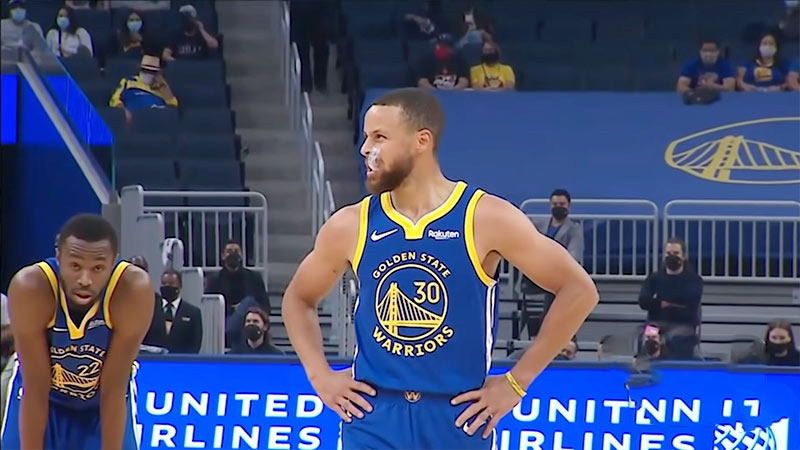
Steph Curry’s primary weaknesses are his physical limitations, defensive vulnerability to mismatch hunting, and high-risk passing decisions.
Standing at 6’2″, he is often targeted through postseason “switch-hunting” to exploit his size and slight frame. Additionally, his improvisational flair leads to a career average of 3.1 turnovers per game.
These vulnerabilities, combined with a history of lower-body fragility and a lack of vertical explosiveness, form the tactical blueprint opponents use to disrupt his legendary offensive gravity.
Understanding these specific gaps reveals how elite defenses strategize to neutralize his efficiency while managing his long-term durability constraints.
The Defensive Target: Navigating Physical Mismatches
While Curry is a highly intelligent team defender, his individual physical dimensions create a specific blueprint for elite offensive coordinators to attack during high-stakes playoff series. His height and wingspan are the primary entry points for opposing game plans.
The Postseason Switch-Hunting Strategy
Elite playoff offenses, such as the LeBron James-led Cleveland Cavaliers or James Harden’s Houston Rockets, have historically utilized endless pick-and-roll switches to isolate Curry defensively.
By forcing him to defend larger, physical wings or more athletic guards, opponents hope to drain his stamina and reduce his offensive efficiency on the other end of the court. This “mismatch hunting” is a core tactic designed to turn the greatest offensive asset into a defensive focal point.
When he is forced to move his feet constantly against elite isolation scorers, it takes a toll on his legs, which are vital for his long-range shooting accuracy.
Physical Profile and Foul Accumulation
Standing at 6’2″ with a 6’3.5″ wingspan, Curry has a naturally small physical profile compared to modern professional standards for elite guards and wings.
Because he lacks top-tier lateral quickness and significant size, he can become overly aggressive when contesting drives to the basket in an attempt to compensate for his lack of reach.
This tendency regularly leads to early foul trouble, forcing him to sit on the bench during critical stretches of a game. This disruption not only affects his individual rhythm but also handicaps the entire offensive system, which relies on his presence to create space.
High-Risk Ball Security and Playstyle Vulnerabilities
Curry’s improvisational genius is a hallmark of his greatness, yet it simultaneously powers one of his most significant offensive flaws: a high turnover rate fueled by a preference for high-difficulty plays.
The Impact of Careless Passing and Flair
Throughout his legendary career, Curry has averaged 3.1 turnovers per game. This volume often stems from a documented tendency to attempt high-risk, “home-run” passes, such as one-handed hook feeds or behind-the-back tosses that carry a high degree of difficulty.
A famous historical example of this vulnerability occurred during the 2016 Finals, where an unforced, flashy behind-the-back pass resulted in a critical turnover during the closing minutes.
These unforced errors are often the result of his flair for the dramatic, which can occasionally transition into carelessness during high-pressure moments.
Defending the Trap and Blitz
When defenses implement aggressive schemes like a “box-and-one” or blitz him 30 feet from the basket, Curry’s insistence on threading risky cross-court passes becomes a liability.
While he is an exceptional playmaker, his flair occasionally translates into errant tosses when he tries to beat double-teams with spectacular feeds rather than making the simple basketball play.
This decision-making remains a focal point for defensive coordinators who believe they can bait him into unforced errors by applying extreme pressure at the point of attack.
Perimeter Physicality and Rhythm Disruption
Physicality is often the most effective tool for slowing down a shooter of Curry’s caliber, as it targets both his off-ball movement and his overall physical stamina.
Off-Ball Wear and Tear
To counter his legendary off-ball movement, defensive schemes frequently resort to holding, grabbing, and physically bumping Curry as he runs through screens.
When referees allow this high level of contact, particularly during the intense environment of the postseason, his hyper-efficient shooting can experience minor drop-offs due to the cumulative effect of physical harassment.
This constant contact is designed to knock him off his preferred spots and disrupt the timing of his release, which is otherwise nearly impossible to stop.
Stamina Depletion Tactics
Opposing offenses intentionally force Curry to work continuously on the defensive end specifically to drain the energy required for his offensive sprints.
By making him fight through heavy screens and defend primary ball-handlers for extended minutes, teams hope to neutralize his shooting rhythm through sheer physical exhaustion.
The goal is to make his “legs heavy,” which often leads to front-rimmed shots and decreased accuracy during the fourth quarter of competitive games.
Vertical Limitations and Rim Protection Constraints
Unlike many elite guards who possess the ability to explode over defenders, Curry does not have the vertical lift to dominate above the rim, creating specific tactical disadvantages.
Lack of Vertical Lift and Chasedown Risks
Curry is a master of using floaters and creative angles to finish around the basket, but he completely lacks vertical explosion.
This makes him a frequent target for spectacular chasedown blocks on fast breaks, as he cannot rely on athletic verticality to finish over elite rim protectors who are trailing the play.
His 6’3.5″ wingspan further limits his ability to recover or contest shots against taller, more athletic opponents at the rim, making him a vulnerable target during transition.
Finishing Under Physical Duress
Because he cannot bail himself out with raw athleticism, Curry must rely entirely on extreme skill, timing, and finesse on the ball.
When athletic defenders close the gap quickly, his lack of height and verticality can lead to blocked shots or forced adjustments that lower his efficiency in the paint compared to larger, more explosive guards.
This lack of vertical gravity means that if his outside shot is not falling, he has fewer “easy” ways to generate points at the rim against elite shot-blockers.
Historic Lower-Body Fragility and Durability Management
Perhaps the most significant non-skill weakness in Curry’s profile is his history of lower-body injuries, which requires constant medical attention and workload management.
The Ankle Injury History
Early in his career, recurrent right ankle sprains required multiple surgeries and nearly derailed his professional journey before it truly began. During the 2011–12 season, for instance, he was limited to just 26 games due to these persistent issues.
This history established a narrative of fragility that the medical staff has worked tirelessly to overcome through specialized training programs and biomechanical adjustments.
Permanent Workload Management
Even after successfully rebuilding his entire kinetic chain to shift landing forces from his ankles to his hips, managing lower-body wear-and-tear remains a vital factor in his longevity.
This inherent fragility means he cannot be pushed to the same physical extremes as some of his larger peers without risking significant health issues.
Consequently, his career has required strict workload management and a specialized approach to strength training to ensure he remains available for the postseason.
Statistical Breakdown of Performance Vulnerabilities
The following data provides a clear overview of the specific areas where opponents find success when game-planning against his historic offensive profile.
| Area of Vulnerability | Statistical or Contextual Metric | Strategic Impact |
|---|---|---|
| Ball Security | 3.1 Turnovers Per Game | Triggers easy opponent transition points and momentum shifts. |
| Defensive Profile | 6’2″ Height / 6’3.5″ Wingspan | Target of isolation “switch-hunting” in high-stakes series. |
| Verticality | Below-average vertical lift | Highly susceptible to chasedown blocks and rim protection. |
| Durability | Early career ankle surgeries | Requires permanent workload management and medical oversight. |
| Physicality | Off-ball rhythm disruption | Efficiency drops when referees allow heavy physical contact. |
Frequently Asked Questions About Curry’s Weaknesses
Why Do Teams Target Stephen Curry on Defense?
Teams target him because of his relatively small 6’2″ frame and lack of elite lateral quickness compared to top-tier defensive specialists.
By utilizing pick-and-roll switches, offenses isolate him against larger, physical wings to either draw fouls or force him to expend defensive energy that he would otherwise use for scoring.
Is Stephen Curry’s Turnover Rate a Major Issue?
Yes, his career average of 3.1 turnovers per game highlights a consistent vulnerability. While much of his playmaking is elite, his preference for “home-run” passes and flashy behind-the-back feeds often leads to unforced errors that gift the opposing team easy transition opportunities.
How Does Physicality Affect His Shooting Rhythm?
Aggressive defenses that hold, bump, and physically harass him off-ball can disrupt his timing and deplete his stamina.
This physical wear-and-tear is a primary strategy used to lower his hyper-efficient shooting percentages, particularly in the later stages of a series where fatigue becomes a major factor.
What Was the Biggest Threat to His Career Longevity?
The most significant threat was his early-career “lower-body fragility,” specifically recurrent right ankle sprains that required multiple surgeries.
While he has managed this through elite conditioning, it remains a factor that necessitates careful workload management even today.