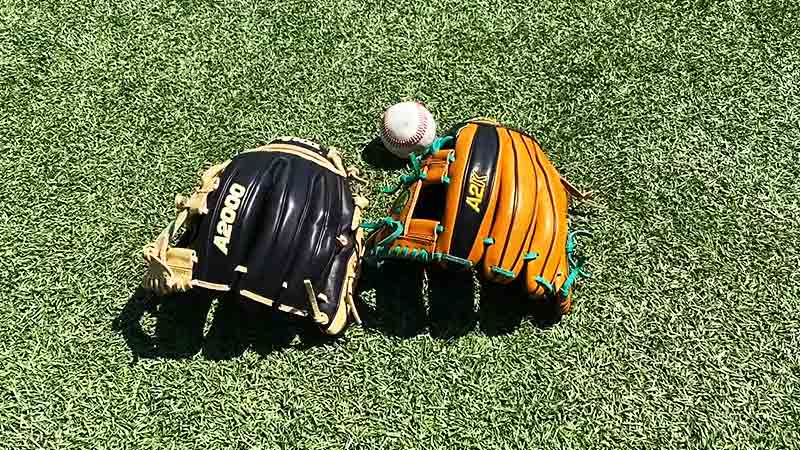
Is a Wilson A2000 worth the money? For most serious players, the answer is yes. It costs several times more than a big-box glove, but it lasts for years, holds its shape, and plays like the gloves you see in professional baseball.
The A2000 has been on baseball fields since 1957, and very few pieces of sports equipment carry that kind of history.
Walk through any high school dugout or college bullpen and you will likely spot the familiar red Wilson patch on more than one hand.
Still, a premium price deserves a hard look before you spend it. In this Wilson A2000 review, we break down the leather, the fit, the break-in process, durability, the most popular models, and how the glove stacks up against the competition. By the end, you will know whether the A2000 fits your game and your budget.
What Is the Wilson A2000?
The Wilson A2000 is a premium, pro-level baseball glove made by Wilson Sporting Goods. It sits near the top of Wilson’s lineup, just below the A2K, and it is built for players who want professional quality without paying top-tier prices.
Wilson introduced the A2000 in 1957, and it is widely credited with helping shape the modern glove. Earlier gloves were flatter and less structured. The A2000 helped popularize a deeper pocket and a more defined shape, which made catching and transferring the ball easier.
Over the following decades, the A2000 became one of the most trusted gloves in the game. Generations of Major League players have used it, and many young players grew up wanting one because their heroes wore it. That legacy is part of what you pay for.
The A2000 is not coasting on nostalgia, though. Wilson has updated it over the years with new materials, refined patterns, and features aimed at modern players. Today it comes in dozens of patterns, sizes, and colorways for both baseball and fastpitch softball.
Materials and Build Quality: Where Your Money Goes
The biggest reason the Wilson A2000 costs more is the leather. Wilson builds it from its Pro Stock leather, a full-grain leather chosen for strength and consistency. It is thicker and stiffer than the leather in budget gloves, which is exactly why it lasts longer and keeps its shape.
Cheaper gloves often use thin cowhide or synthetic blends. They feel soft and game-ready on day one, but they tend to flatten out, lose their pocket, and tear at the laces within a season or two. Pro Stock leather asks for more work up front, then rewards you for years.
Several other construction details add to the value:
- Dri-Lex wrist lining: This moisture-wicking material keeps your hand cooler and drier, and it helps limit sweat damage inside the glove.
- Double palm construction: An extra layer in the palm helps the glove hold its shape and adds durability where the ball hits most.
- Tight, consistent lacing: Well-made laces keep the pocket stable and mean fewer trips to a repair shop.
- SuperSkin options: Some models replace part of the leather back with Wilson’s SuperSkin, a lighter synthetic material that resists water and wear.
Put together, the A2000 is built like a tool you rely on, not a toy you replace every spring.
Fit, Feel, and the Break-In Process
A new Wilson A2000 feels firm out of the box. That stiffness surprises some first-time buyers, but it is intentional. Wilson ships the glove with only part of the break-in done so the player can shape the pocket to their own hand and catching style.
Expect to spend a few weeks of regular catch and practice before the glove feels truly game-ready. Many players speed things up by playing catch daily, working the hinge with their hands, and storing the glove with a ball in the pocket.
Avoid shortcuts like ovens, microwaves, or soaking the leather, since heat and water can dry it out and shorten its life.
Once broken in, the A2000 feels excellent. The pocket closes cleanly, the ball sits where you expect it, and the glove responds quickly on transfers. Players often say it feels like an extension of the hand.
Fit matters too. Standard A2000 patterns suit most adult hands. Players with smaller hands can look at the Pedroia Fit models, which use a snugger hand opening for better control. A glove that fits well is easier to close and much more comfortable over a long season.
Durability and Long-Term Value
Durability is where the A2000 earns its price. With basic care, many players use the same A2000 for five seasons or more, and some keep one in their bag for a decade. The leather softens over time but rarely loses its structure the way cheaper gloves do.
The math helps here. Say an A2000 costs around $300 and lasts five seasons. That works out to about $60 per season. A $70 budget glove that needs replacing every year costs more over the same stretch, and it performs worse the entire time.
The A2000 also holds resale value better than most gloves. A well-kept A2000 often sells for a solid share of its original price on the used market, because buyers know the name and trust the build. That softens the cost if you ever decide to upgrade or switch positions.
Of course, durability depends on care. Leave any glove in a hot car trunk or a wet bag and it will suffer. Treat the A2000 well, and it will return the favor for years.
Popular Wilson A2000 Models by Position
One reason the A2000 offers strong value is its range. You can find a pattern built for almost every position, so you are not forced into a one-size-fits-all glove. These are some of the best-known models:
|
Model |
Size |
Best for |
|---|---|---|
|
A2000 1786 |
11.5″ |
Shortstops and second basemen who want quick transfers |
|
A2000 1787 |
11.75″ |
Third basemen and infielders who want a bit more reach |
|
A2000 DP15 |
11.5″ |
Infielders with smaller hands (Pedroia Fit) |
|
A2000 1799 |
12.75″ |
Outfielders who need a long, deep pocket |
|
A2000 M1 |
33.5″ |
Catchers who want a classic, structured mitt |
Wilson also makes A2000 first base mitts, pitcher’s gloves, and fastpitch softball versions. Many patterns come in SuperSkin editions for players who want a lighter feel.
Choosing the right pattern for your position does more for your game than any single feature, so pick the model first and the color second.
Wilson A2000 vs. Other Gloves
The A2000 sits in a sweet spot: true pro-level quality at a price below the most expensive gloves. Here is how it compares with common alternatives. Prices are approximate and vary by model, size, and retailer.
|
Glove |
Approx. price (USD) |
Leather feel |
Break-in time |
|---|---|---|---|
|
Wilson A2000 |
$300–$380 |
Firm, durable Pro Stock |
Moderate |
|
Wilson A2K |
$400–$480 |
Premium, more hand-shaped |
Shorter |
|
Rawlings Heart of the Hide |
$280–$350 |
Stiff, heavy steerhide |
Longer |
|
Mizuno Pro |
$400–$550 |
Soft, buttery premium leather |
Short |
|
Budget gloves |
$40–$120 |
Thin leather or synthetic |
Little to none |
Against the Wilson A2K, the A2000 gives you most of the performance for noticeably less money. The A2K uses more select hides and extra hand-shaping, but many players cannot feel enough difference to justify the jump.
Against Rawlings Heart of the Hide, it is mostly a matter of feel and brand loyalty. Both are excellent; the A2000 often breaks in a little faster.
Against budget gloves, there is no real contest. Cheaper gloves win on day one, but the A2000 wins every season after.
Who Should Buy the Wilson A2000?
The A2000 is worth the money for players who take the game seriously and play often. It is a smart buy for:
- High school, college, and adult league players who practice and play several times a week.
- Teen players whose hands have mostly stopped growing, since the glove can last through the rest of their playing years.
- Players committed to one position who want a pattern built for that job.
- Anyone tired of replacing cheap gloves every season.
Who Should Skip It?
The A2000 is not the right fit for everyone. Consider a less expensive glove if:
- Your child is young and still growing. A pricey glove may be outgrown in a year or two.
- You play only a few casual games a year. A mid-range glove will serve you fine.
- You need a glove ready for tomorrow’s game. The A2000 needs break-in time before it performs at its best.
- You are still trying different positions. Settle on a role first, then invest in the right pattern.
How to Get the Most Value From Your A2000
A few simple habits can stretch the life of your glove and make every dollar count:
- Condition it lightly. Use a small amount of glove conditioner a few times per season. Too much makes the leather heavy and floppy.
- Store it with a ball in the pocket. This keeps the shape consistent between games.
- Keep it dry and out of the heat. Wipe off moisture after rainy games and never leave it in a hot car.
- Tighten and replace laces early. Fixing a loose lace is cheap; letting it snap mid-season is not.
- Shop off-season sales. A2000 models often drop in price during late fall and winter, which makes the investment easier.
Conclusion: Is the Wilson A2000 Worth the Money?
So, is a Wilson A2000 worth the money? For serious players, absolutely. It costs more than a budget glove, but its Pro Stock leather, smart construction, and long lifespan deliver real value.
Spread across several seasons, it often costs less per year than replacing cheap gloves again and again. It also plays better, holds its shape, and keeps strong resale value.
The A2000 is not ideal for growing kids or casual players, and it does require patience during break-in. But if you play often and want a glove you can trust for years, the Wilson A2000 is a smart investment.