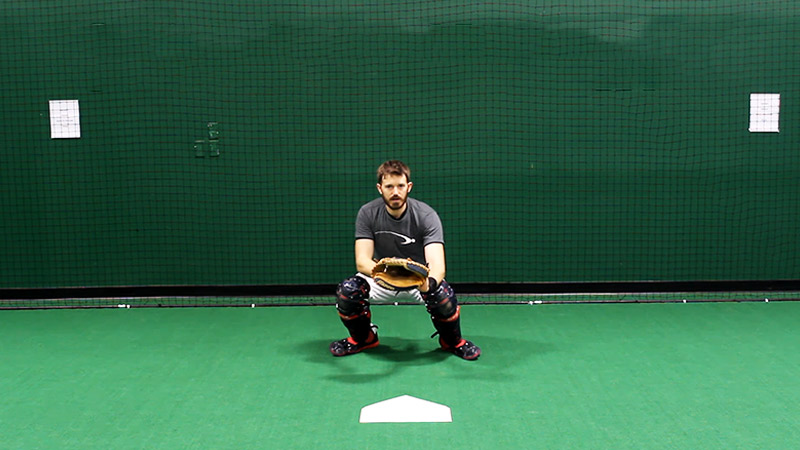
Watch any baseball game and you’ll notice one player who spends nearly every pitch crouched low behind home plate.
The catcher drops into a squat well over 100 times a game, then pops up to throw, chase a foul ball, or block a pitch in the dirt. It looks exhausting, and it is.
So why do catchers have to squat? Why not stand up or kneel the whole game? The answer comes down to the strike zone, game strategy, and simple body mechanics.
In this guide, we break down every major reason behind the catcher’s stance. You’ll also learn what the rulebook actually says, how the crouch developed over time, and how catchers protect their bodies from all that squatting.
The Short Answer: Why Catchers Squat
Catchers squat because it puts their body and glove at the height of the strike zone. From a crouch, a catcher can give the pitcher a clear target, catch low pitches cleanly, block balls in the dirt, and stay out of the umpire’s line of sight.
The squat also hides signals from the other team and keeps the catcher balanced enough to throw out base runners. No other position asks a player to handle all of these jobs at once, and no other stance handles them as well as the squat.
1. It Gives the Pitcher a Low, Steady Target
The strike zone runs from the hollow beneath the batter’s kneecap up to roughly the middle of the torso. Pitchers often aim for the lower part of that zone because low pitches are harder to drive for extra-base hits. A squatting catcher puts the glove right where those pitches should finish.
Standing up would put the glove near chest height, which is the wrong target for most pitches. From 60 feet, 6 inches away, a pitcher needs a clear and still reference point. The crouch lets the catcher set the mitt low, hold it steady, and shift inside or outside with a small move of the body instead of a big lunge.
That steady target helps pitchers repeat their mechanics and hit their spots, pitch after pitch.
2. Squatting Helps Catchers Frame Pitches
Pitch framing is the skill of catching a borderline pitch so it looks like a strike. Umpires make hundreds of split-second calls each game, and the way the ball enters the glove can shape what they see.
A low stance lets the catcher receive pitches at the bottom edge of the zone with the glove holding still or working slightly upward. A catcher reaching down from a standing position would drag those same pitches out of the zone. That small difference turns strikes into balls.
Coaches value framing because a few extra strikes per game can change counts, at-bats, and final scores. Good framing starts with a quiet, low body, and the squat provides exactly that.
3. It Makes Blocking Pitches in the Dirt Possible
Not every pitch arrives where the catcher wants it. Curveballs, sliders, and splitters often bounce in front of home plate, especially when a pitcher is chasing a strikeout. With runners on base, a ball that gets past the catcher becomes a wild pitch or passed ball and hands the offense a free base.
From a squat, the catcher is already close to the ground. That makes it possible to drop both knees quickly, close the gap between the legs, and angle the chest protector so the ball rebounds toward the plate.
A standing catcher would have to fall a long way to get in front of the bounce, and the ball would be gone before he arrived. Blocking is one of the clearest reasons the crouch matters.
4. It Keeps the Umpire’s View Clear
The home plate umpire sets up directly behind the catcher, usually looking over the catcher’s shoulder into the slot between catcher and batter. That arrangement only works if the catcher stays low.
If the catcher stood up, the umpire would be staring at a back and a helmet instead of the strike zone. Ball and strike calls would turn into guesswork, and arguments would slow the game down.
By crouching, the catcher gives the umpire a clean view of the plate while still sitting close enough to catch the pitch. In a sense, the squat is a quiet partnership that lets both the catcher and the umpire do their jobs.
5. It Hides Signs From the Other Team
Before almost every pitch, the catcher tells the pitcher what to throw and where to throw it. Traditionally, that means finger signals flashed low between the thighs.
The squat creates a natural pocket for those signs. With the knees spread and the glove resting near the left knee, the catcher can show signals to the pitcher while blocking the view of base coaches and runners.
Some professional teams now use electronic signal devices, but youth, high school, and amateur leagues still rely heavily on hand signs. For those players, the crouch remains the best way to keep the game plan private.
6. It Keeps Catchers Ready to Throw and Field
A catcher isn’t only a receiver. With runners on base, the catcher must throw out base stealers, pick off runners who wander too far, and field bunts and pop-ups.
That is why catchers use more than one squat. With the bases empty, many sit in a lower, more relaxed stance. With runners on or two strikes in the count, they shift into a slightly higher stance with the hips raised and the weight on the balls of the feet.
From that ready position, a skilled catcher can explode up, transfer the ball, and deliver a throw to second base in about two seconds. The crouch is not a resting position. It is a loaded spring.
Do the Rules Require Catchers to Squat?
Surprisingly, no rule forces a catcher to squat. The rulebook only requires the catcher to stay inside the catcher’s box, the marked area behind home plate, until the pitch leaves the pitcher’s hand. Stepping out too early, such as during an intentional walk, can result in a balk.
Beyond that, catchers can set up however they like. In recent years, many catchers have adopted a one-knee-down stance, especially with nobody on base. Dropping one knee to the ground lowers the glove even further, which helps with framing low strikes and eases strain on the knees.
The trade-off is that the one-knee stance can make blocking and throwing a little slower. So while squatting isn’t required, it remains the most balanced option for everything a catcher must do.
A Brief History of the Catcher’s Crouch
Catchers did not always squat. In baseball’s early days, they stood well behind home plate with no mask, no chest protector, and often no glove. They caught many pitches on a bounce, which kept them safer but made them far less useful on defense.
As pitchers threw harder and the game rewarded catchers for handling the ball cleanly, catchers moved closer to the plate. Protective gear followed. The catcher’s mask appeared in the late 1870s, chest protectors spread during the 1880s, and shin guards arrived in the early 1900s.
With that equipment in place, catchers could safely crouch right behind the batter. The modern squat grew out of better gear and a constant demand for better defense.
The Physical Toll of Squatting
Squatting more than 100 times a game puts heavy stress on the knees, hips, ankles, and lower back. Add foul tips off the mask, plays at the plate, and the constant up-and-down motion, and it’s easy to see why catcher is called the most demanding position in baseball.
Catchers fight back in several ways. Many wear knee savers, wedge-shaped pads attached to the shin guards that sit behind the knee and limit how deeply the joint bends. Others use the one-knee stance when the situation allows.
Leg and core strength training, hip mobility work, and regular days off also help. Even so, many catchers eventually shift to first base or designated hitter to extend their careers.
Tips for Young Catchers Learning to Squat
Learning a proper squat early helps young players stay healthy and play better behind the plate. Coaches and parents can focus on a few basics:
- Set the feet slightly wider than the shoulders, with the toes turned out a little.
- Keep the weight on the balls of the feet, not the heels, so the body can move quickly.
- Stay relaxed through the shoulders and arms, and present a still, quiet glove.
- Learn two stances: a lower one with nobody on base and a higher, ready one with runners on.
- Wear well-fitted catcher’s gear, and try knee savers if they feel comfortable.
- Stand up and stretch between innings, and build leg and hip strength away from the field.
Above all, young catchers should never play through knee or hip pain. Rest and sound technique protect a player’s future in the game.
Conclusion
So, why do catchers have to squat? The crouch puts the glove at the height of the strike zone, gives pitchers a steady target, and lets catchers frame borderline pitches.
It keeps them close to the ground to block balls in the dirt, gives umpires a clear view, and hides signs from opponents.
It keeps catchers ready to spring up and throw. No rule demands it, yet no stance does the job better.
The squat is tough on the body, but smart technique, good gear, and proper rest help catchers handle it. Next game, appreciate the player behind the plate.